Furnace Safety Check
What Homeowners Should Know
A furnace safety check is a professional answering one question before the cold arrives: is this system safe to run all winter? It goes deeper than a filter swap and says more than the furnace looks fine.
The check covers the equipment, the controls, the combustion, and the path exhaust takes out of the house. On a gas or oil furnace that last part carries weight, because the system burns fuel and can produce carbon monoxide.
For a Frederick County homeowner, the useful question is which of three things you are looking at: routine maintenance, a symptom that needs diagnosis, or a safety condition that means stop using the furnace.
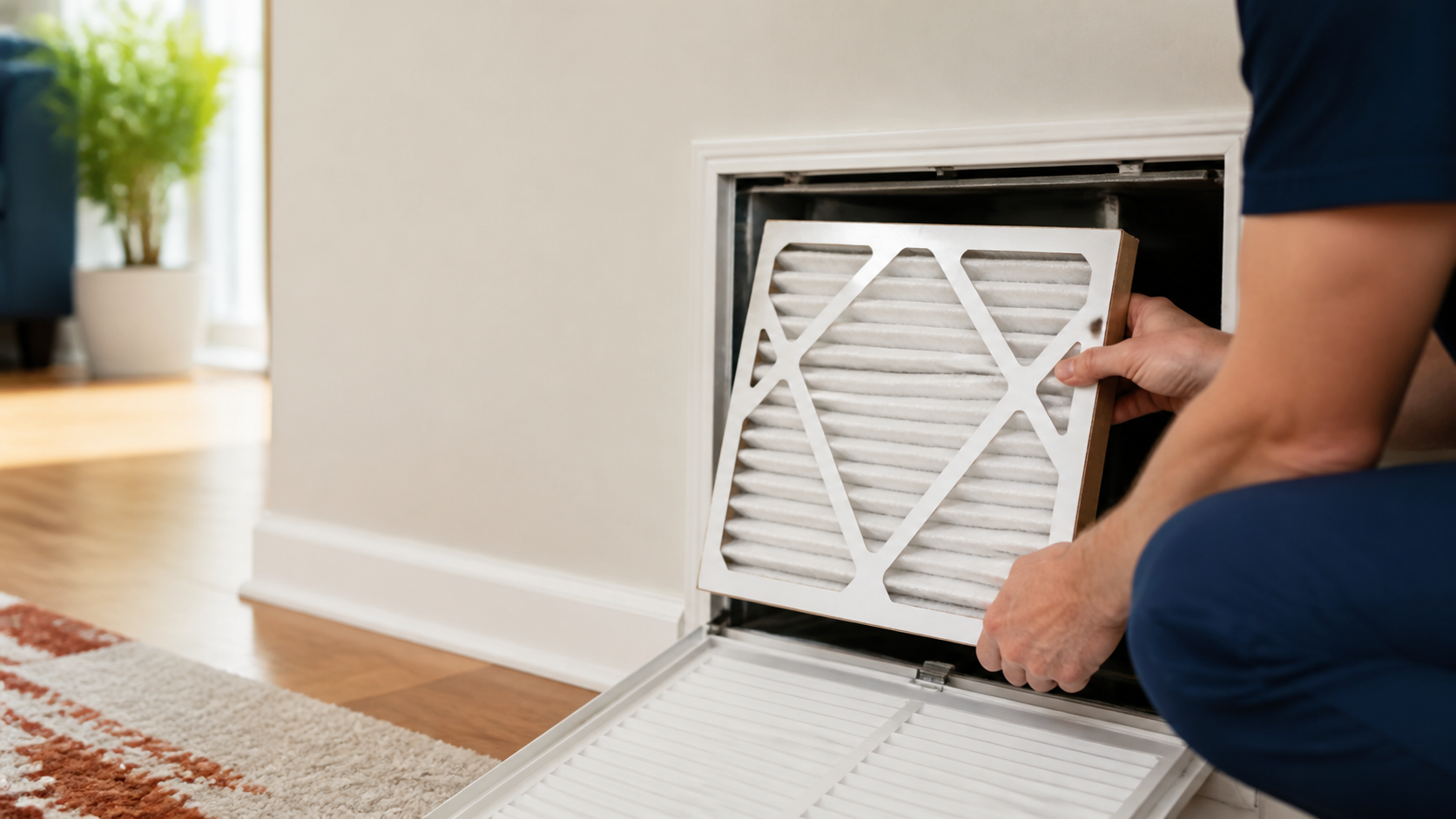
What it checks
Combustion, the heat exchanger, controls, safety switches, airflow, and the flue, chimney, or connector that carries exhaust outside.
What you can do
Look at the filter, keep the furnace area clear, notice new sounds or odors, and test CO alarms per their instructions. Leave the panels and adjustments alone.
Leave first
A CO alarm, possible CO symptoms in anyone, or a gas smell means get outside to fresh air and call for emergency help from outside the building.
What a safety check is meant to find
The check hunts for conditions that make a furnace unsafe, unreliable, or hard to operate: the burner and combustion process, the heat exchanger, electrical and mechanical components, thermostat controls, and the automatic safety switches.
The heat exchanger is the wall between the burning fuel and the air moving through the house. A dirty burner or a damaged exchanger changes how safely the furnace performs, which is why that inspection stays with a qualified professional.
The exhaust path gets followed too. A cabinet can look spotless while the flue, chimney, or connector hides a blockage, a loose joint, rust, or a crack.
The system has to vent as designed, not just look tidy.
- The burner and combustion process
- The heat exchanger, where exhaust and house air must stay separated
- Thermostat controls, electrical and mechanical parts, and safety switches
- The flue, chimney, or connector carrying exhaust outdoors
What you can check around the furnace
Homeowner checks are real but bounded. Start with the filter: ENERGY STAR recommends inspecting, cleaning, or changing it about once a month, following the instructions for your equipment.
A dirty filter raises energy costs and can shorten equipment life.
Keep the area around the furnace and its venting clear and reachable. Watch for new staining, rust, or damage on nearby walls and ceilings and along the chimney line.
Listen and smell while it runs. A new bang, scrape, rumble, repeated clicking, or odd odor is useful information for whoever evaluates the system.
Removing panels to watch the burner, adjusting gas pressure, altering the vent, bypassing a limit switch, or attempting combustion repair is not.
- Inspect or change the filter per the equipment instructions
- Keep the furnace and venting area clear and accessible
- Note new sounds, odors, staining, rust, or visible damage
- Leave panels, gas controls, venting, and combustion parts alone
When should you schedule one?
For a fuel-burning furnace, annual professional service is the sensible baseline, booked before the first sustained cold rather than on the first night the furnace falls behind.
The timing matters more if you do not know the last service date, you just moved in, or the furnace is older with a repair history. A planned check gives a technician room to work before the heating workload peaks.
If the furnace is short cycling, leaving rooms cold, moving weak air, tripping a breaker, refusing to start, or making a new sound, book a diagnosis instead of maintenance. Maintenance reads condition; diagnosis chases a symptom.
- Annual service for a gas, oil, or other fuel-burning furnace
- Schedule before heavy winter use when possible
- Switch to diagnosis when a persistent symptom exists
- Unknown service history, age, repairs, or rising bills are reasons to ask for an honest condition read
Why carbon monoxide belongs in the conversation
Carbon monoxide has no color and no smell, so your senses cannot clear the air. Fuel-burning equipment, furnaces included, can produce it, which is why the check covers combustion and the venting path.
The recognized symptoms are headache, dizziness, weakness, upset stomach, vomiting, chest pain, and confusion, and they imitate the flu well enough that a working alarm and a plan matter.
If a CO alarm sounds, or anyone has symptoms that could be CO, get everyone outside to fresh air and call for emergency help from outside the building. Do not stay in hunting the source, silencing the alarm, or keeping the house warm.
- CO gives your senses nothing to work with
- Fuel-burning equipment and blocked venting create the risk
- Keep battery-operated or battery-backup alarms near sleeping areas
- An alarm or possible symptoms means leave first, call from outside
Safety check, tune-up, or repair?
The names describe different errands. A safety check or maintenance visit reads condition, operation, controls, airflow, and combustion equipment before anything fails.
A diagnosis explains a symptom that already exists. A repair fixes a confirmed problem.
Lead with the symptom, not a part. It starts and stops every few minutes hands a professional more than I need a new limit switch ever will.
A new smell near the furnace is an observation, not proof of a cracked heat exchanger; testing decides.
Frequent repairs and rising bills are reasons to evaluate the equipment, not proof replacement is required. Ask for the cause, the condition, and the choices that follow from both.
- Maintenance reads condition and operation
- Diagnosis explains a symptom
- Repair fixes a confirmed problem
- Age and repair history inform the decision without deciding it
A practical next step for Frederick County homeowners
Running normally? Check the filter, keep the area clear, test the CO alarms, and put annual professional maintenance on the calendar before heavy heating use.
Persistently symptomatic? Request a diagnosis and describe exactly what changed.
Have the model and fuel type handy if you know them, plus the last service date, recent symptoms, and any alarm activity.
A good safety check ends with three answers: what was found, what needs attention now, and what can safely wait. That is the line between a useful visit and a mystery invoice.
- Filter and visible surroundings, when the system is safe
- Annual professional maintenance before heavy heating use
- Symptoms described, not parts guessed
- What needs attention now versus what can wait
What the professional half covers
Combustion, the heat exchanger, controls, safety switches, airflow, and the exhaust path: that is the professional half of the safety picture, and none of it is visible from the hallway.
Keep the findings with the furnace's service history so next year's check starts from a baseline instead of zero.
- One page of findings is worth a decade of guesses.
And the homeowner half
Filter checked monthly, area kept clear, ears and nose on duty, CO alarms tested on schedule. That is the whole homeowner list, and it stays outside the cabinet.
Hand those notes to whoever performs the check. Condition plus observations is what a useful safety visit is built from.
- Outside the cabinet is your side of the line.
Answers to the usual follow-up questions
How often does a furnace need a safety check?
For a fuel-burning furnace, annual professional service is the sensible baseline, scheduled before the first sustained cold. Move it up if the last service date is unknown, you just moved in, or the furnace is older with a repair history.
How often does a furnace need a safety check?What can I safely check myself?
You can inspect or change the filter per the equipment instructions, keep the furnace area clear, notice visible staining or damage, and test CO alarms on their schedule. Do not remove panels, adjust gas pressure, alter venting, or touch combustion components.
What is the difference between a safety check and a diagnosis?
A safety check or maintenance visit evaluates condition and operation before something fails. A diagnosis explains a symptom such as short cycling, weak airflow, a breaker trip, or a no-start. A repair then fixes the confirmed cause.
What should I do if my carbon monoxide alarm sounds?
Get everyone outside to fresh air and call for emergency help from outside the building. Do not stay inside to find the source, silence the alarm, or keep heating. The furnace and other fuel-burning appliances need professional evaluation before normal use resumes.
Can I inspect the heat exchanger myself?
No. Homeowners should not open the furnace or inspect combustion components. The heat exchanger separates combustion gases from the air moving through the house, and evaluating it safely takes a qualified professional.
What information should I have ready for the service visit?
The furnace model and fuel type if you know them, the last service date, recent symptoms, when the change began, and any alarm activity. Describe what the furnace is doing rather than guessing which part failed.