Fall Furnace Tune-Up Frederick
What to Check Before Heating Season
If the furnace has been quiet since April, early fall is the moment to find out whether it is ready to work for a living again. A fall furnace tune-up in Frederick is a before-season check of the equipment, the controls, the airflow, and the safety-related parts, done before the house starts leaning on them every day.
It is also the cheapest time to catch a change in performance. A weak ignition, restricted airflow, a noisy blower, a control fault, or a venting concern found in October is an appointment. The same problem found during the first January cold snap is an emergency.
This guide covers what you can check without opening the furnace, what a professional tune-up includes, and which signs mean you need diagnosis or emergency help instead.
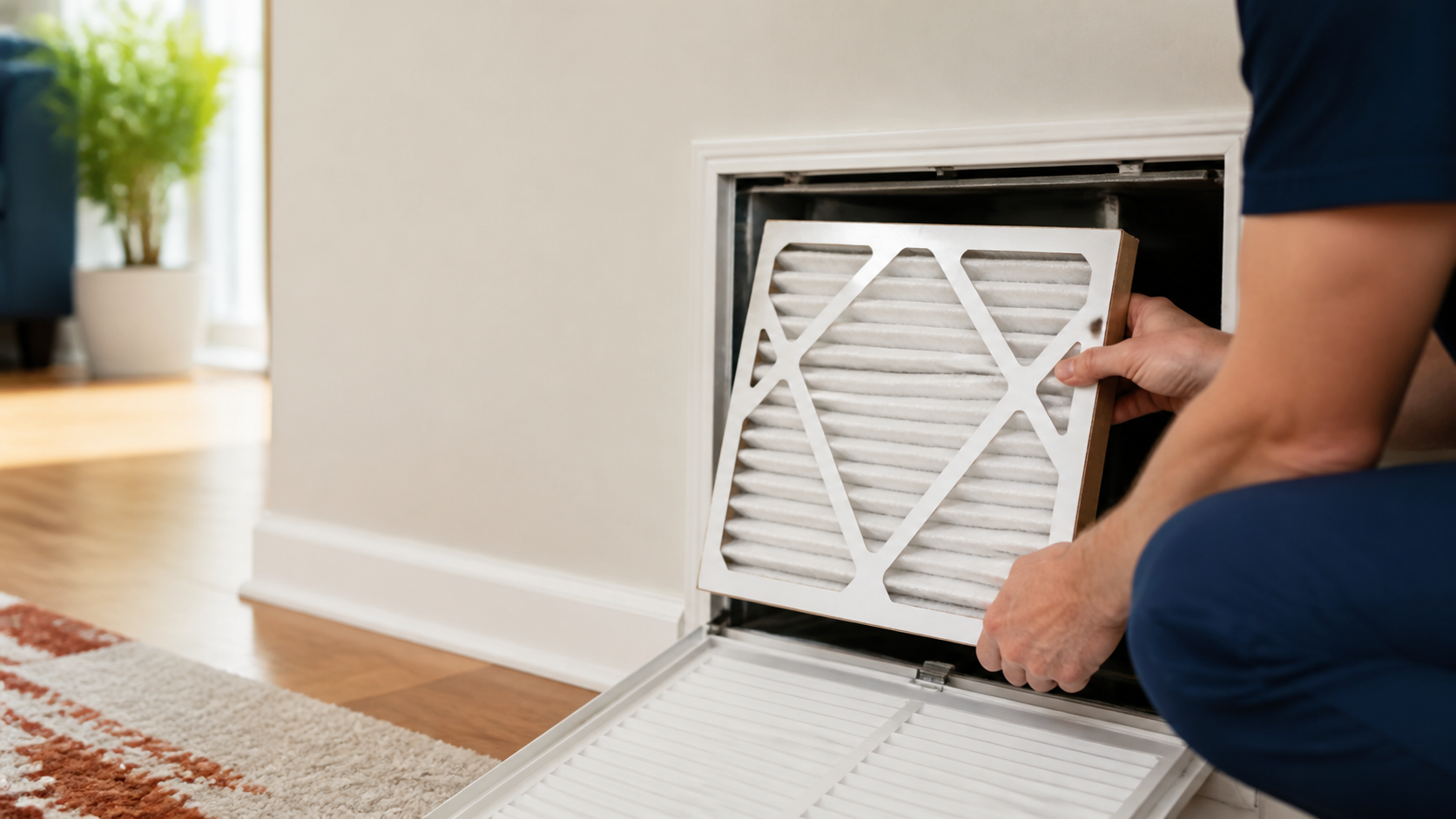
Check first
Set the thermostat to Heat with the set point above room temperature, look at the filter, and make sure vents and returns are clear. Note anything new in sound, smell, cycle length, or comfort.
Stop here
A gas smell, a CO alarm, smoke, sparks, or a strong electrical burning smell means leave the house and call from outside. Do not open the furnace, flip switches, relight anything, or hunt for the source.
What to tell us
The thermostat setting, when the symptom began, how often it happens, what the furnace sounds and smells like, and whether a new filter changed anything. Naming the broken part is our end of the job.
Why fall is the right time
Timing is the whole argument. A furnace that sat idle for months can wake up with a weak ignition, restricted airflow, a noisy blower, a control fault, or a venting issue.
Finding it in October leaves room to decide calmly; finding it during the first hard cold snap does not.
A tune-up is not a guarantee against ever breaking. It is a structured look at how the equipment is running right now: thermostat settings, electrical connections, controls, the starting cycle, fuel connections, burner combustion, and the heat exchanger, with the exact list varying by furnace type and condition.
In Frederick, Urbana, Walkersville, Middletown, or any other corner of the county, the appointment should answer one practical question: is this furnace running normally, or is there a condition that needs attention before the season gets busy?
- Fall leaves time to fix things before sustained cold.
- A tune-up reads current operation; it is not a never-fail promise.
- The work varies with the furnace type and condition.
- The deliverable is a clear maintenance, repair, or monitoring call.
What you can check before the appointment
Stick to what you can do without opening the cabinet or touching wiring, gas parts, or combustion components. Set the thermostat to Heat with the set point above the room temperature.
If the furnace ignores it, write down what happens instead of resetting it repeatedly.
Look at the filter. Note whether it is visibly loaded, whether it fits the slot without bending, and when it was last changed.
Buy the size and type the equipment calls for, not simply the highest rating on the shelf.
Walk the rooms and clear supply vents and return grilles of furniture, rugs, curtains, and storage. Keep the area around the furnace accessible, and keep combustible storage away from the cabinet and venting.
Finally, note changes in sound, smell, cycle length, and comfort. A sentence like it runs five minutes, shuts off, and restarts is something we can work with; a guess about a limit switch is not.
Leave the burner, flame sensor, heat exchanger, wiring, and gas line inside the cabinet where they belong.
- Confirm the thermostat is calling for heat.
- Check the filter and how it fits.
- Clear vents, returns, and the space around the furnace.
- Record what changed instead of guessing which part failed.
What a professional tune-up covers
Professional maintenance exists to inspect and test what you cannot evaluate from outside the cabinet: the thermostat and controls, electrical connections, motor operation, blower condition, how the furnace lights, combustion, fuel connections, the heat exchanger, and venting.
These checks connect to each other. A furnace can have a clean filter and an airflow problem anyway.
The thermostat can call for heat while an ignition or control fault keeps the burners off. A furnace can even heat the house while a venting or combustion issue quietly makes it unsafe.
What you want verified is the whole arc: how it starts, how it runs, how it shuts off.
Afterward, ask what was checked, what changed, and whether the recommendation is maintenance, repair, or watchful waiting. You do not need a page of part names.
You need a plain account of what the furnace is doing, what is outside normal, and what comes next.
- Thermostat, controls, electrical connections, and motor operation.
- Blower condition, the light-off sequence, and full-cycle behavior.
- Fuel connections, combustion, heat exchanger, and venting.
- A plain-English finding and the next decision.
When it is a repair call, not a tune-up
Maintenance fits equipment that runs normally and wants a pre-season look. Diagnosis fits a furnace that is not heating, cycling strangely, or has grown a new noise or smell.
Weak or uneven airflow from several vents, water near the equipment, or a breaker that trips twice also point to diagnosis.
Short cycling, where the furnace starts and stops before the house reaches the setting, is one signal. So are banging, screeching, rattling, or an ignition that has gotten loud.
A burning smell that does not clear quickly belongs on the list too.
Before you call anyone in Frederick County, write down the thermostat setting, when the symptom began, how often it happens, what the furnace sounds and smells like, and whether a filter change mattered. The appointment starts with the real problem when the notes exist.
- No heat, or air that stays cool in Heat mode.
- Weak airflow at several vents, or repeated short cycling.
- Banging, screeching, rattling, or a loud ignition.
- Lingering odor, water near the equipment, or a repeat breaker trip.
Safety signs that end the troubleshooting
Treat a gas smell, a CO alarm, smoke, sparks, or a strong electrical burning smell as a full stop. Do not open the furnace, flip switches, relight anything, or go looking for the source.
If you smell gas, leave and call the gas company from outside. If a carbon monoxide alarm sounds, get everyone into fresh air, call 911 or emergency services, and stay out until responders clear the house.
Carbon monoxide has no color and no odor, so your nose is not the instrument here.
A CO alarm is one layer of a safety plan, not a substitute for maintaining fuel-burning equipment. Once the house is safe, a qualified professional can go over the furnace and venting.
- Gas smell: leave and call from outside.
- CO alarm: fresh air, then 911 or emergency services.
- Smoke, sparks, or burning electrical smell: leave the equipment alone.
- Do not go back in until responders say it is safe.
Maintenance or repair this fall?
Book the tune-up when the system works and you want its operating and safety condition checked before the long haul. Book diagnosis when there is already a symptom: no heat, weak airflow, short cycling, a new noise, an odor, water, or any change that needs explaining.
If the inspection turns up a major component or safety condition, the repair-versus-replacement question rides on the equipment's condition, age, repair scope, and what the house needs for comfort. There is no useful answer before the problem has a name.
A maintenance plan can put the fall heating visit and the spring AC visit on one calendar. The goal either way is to know what is ready for winter and what needs attention before it becomes a midnight no-heat call.
Running normally? Ask about seasonal maintenance.
Showing symptoms? Ask for diagnosis and a clear next step.
- Working system, no new symptoms: seasonal maintenance.
- Existing no-heat or performance problem: diagnosis.
- Repair or replacement depends on the identified condition, age, and scope.
- A plan can bundle the fall heat and spring AC visits.
Your half of the tune-up
Set the thermostat to Heat above room temperature, look at the filter, clear the vents and returns, and note anything new in sound, smell, cycle length, or comfort. That is the whole homeowner list.
Keep the notes with the furnace's service history so the professional visit starts with facts instead of impressions.
- Five minutes of notes saves an hour of guessing.
And the line you do not cross
A gas smell, a CO alarm, smoke, sparks, or a strong electrical burning smell means leave the house and call from outside. Opening the furnace, flipping switches, relighting, or hunting the source is never on the homeowner list.
Once everyone is safe and responders have cleared the house, the furnace and venting can be inspected properly.
- Safety first, tune-up second.
Answers to the usual follow-up questions
When should I schedule a fall furnace tune-up in Frederick?
Aim for September or October, before the first sustained cold spell. That window leaves time to handle a weak ignition, an airflow problem, a control fault, or a venting concern before the heating season gets busy.
What can I check myself before a furnace tune-up?
Set the thermostat to Heat, check the filter, clear the supply vents and return grilles, keep the furnace area accessible, and write down changes in sound, smell, cycle length, or comfort. Leave the cabinet closed and the wiring, gas, and combustion parts alone.
What does a professional furnace tune-up include?
It can cover the thermostat and controls, electrical connections, the motor and blower, how the furnace lights, combustion, fuel connections, the heat exchanger, venting, and the full start-run-shutdown arc. The exact work depends on the furnace type and condition.
How do I know if I need furnace repair instead of maintenance?
Maintenance fits a system that runs normally and needs a pre-season check. Ask for diagnosis when there is no heat, weak airflow, short cycling, a new or loud noise, a lingering odor, water near the equipment, or a breaker that trips again.
What should I do if I smell gas or my CO alarm goes off?
Leave the house and call from outside. Do not open the furnace, flip switches, relight anything, or investigate. With a CO alarm, get everyone to fresh air, call 911 or emergency services, and wait for the all-clear before reentering.
Is a heating maintenance plan worth considering?
A plan can put the fall heating visit and the spring AC visit on one calendar. It is worth comparing if you want routine seasonal checks and a running record of how the equipment is aging.