Duct Inspection During HVAC Maintenance
What to Check
When we inspect ducts, we follow the air: out of the equipment, down every run we can reach, into the rooms, and back through the returns. The point is to tie what you are feeling in the house to a specific place in the air path, instead of shrugging and calling it a ductwork issue.
An inspection is not the same as a cleaning, a repair, or a leakage test. Looking can find a crushed flexible duct or a connection that came apart. A leakage test puts the ducts under pressure and measures how much air escapes. Which one you need depends on what the looking finds.
In Frederick County that distinction matters practically. Some homes have ductwork you can walk beside in the basement; other homes hide it behind finished ceilings or bury it under attic insulation. A good inspection tells you whether the problem lives in the ducts, the equipment, or somewhere else in the house entirely.
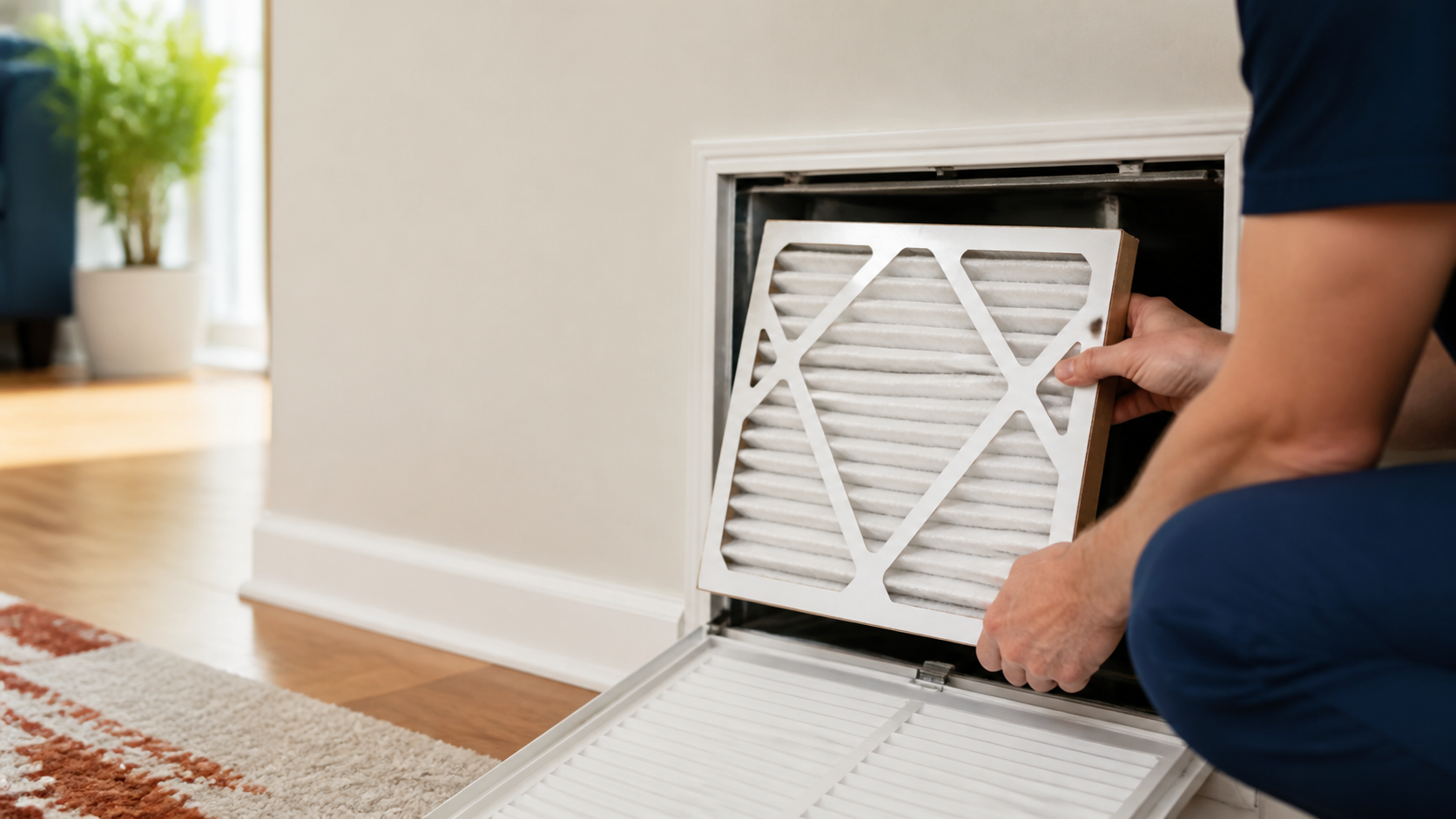
Follow the air path
We trace air from the equipment to the rooms and back through the returns. Every finding gets written down with a location and a condition, not just a shrug and the words ductwork problem.
When to add a leakage test
If most of the ducts are hidden, several rooms get weak air, or the problem never quits, a pressure test gives you a number that a visual check cannot.
Stay on solid ground
Compare registers, keep vents clear, and photograph ducts from a safe spot. Skip the attic crawl when there is no safe floor, and leave the equipment panels closed.
What a duct inspection actually is
A forced-air system pushes conditioned air through supply ducts and pulls room air back through returns. Inspecting ducts means looking at that loop: where it runs, what shape it is in, and what it touches along the way.
The person looking is hunting for sections that came apart, holes, boots that wobble where ducts meet floor or ceiling, torn insulation, blocked registers, and flexible duct that has sagged or folded on itself. Ducts that pass through an unconditioned attic or crawlspace get noted too, because temperature and moisture out there work on them all year.
One caution: an inspection observes, it does not measure. It cannot tell you how much air the system is losing.
When the ducts are mostly hidden or the problem keeps coming back, ask whether a duct leakage test makes sense. That test uses a calibrated fan and pressure gauges, so it answers a different question than a torn boot does.
- Looking finds damaged, disconnected, blocked, or sagging sections.
- It cannot put a number on leakage without a separate test.
- Both the supply and return sides belong in the visit.
- Each finding should point to a place and a next step.
Signs the ductwork needs a look
One symptom never convicts the ducts by itself. A room can run warm because air is escaping, because the insulation above it is thin, because a register is closed, or because the sun hits that wall all afternoon.
Put a few symptoms together, though, and the air path starts looking like the place to check.
Patterns beat single readings. ENERGY STAR lists high summer or winter bills, rooms that are hard to heat or cool, stuffiness, ducts running through attics, crawlspaces, and garages, and tangled or kinked flex duct as the signs of ducts that are not performing.
Cracks, kinks, loose boots, and missing insulation are clues, not a verdict. What you want at the end is something in writing that says what was seen and where.
- One or two rooms stay uncomfortable while nearby rooms feel fine.
- Airflow at one register is clearly weaker than at the others.
- A room stays stuffy even after the thermostat says it hit the set point.
- Dust or a smell arrives from a register fed from the attic or crawlspace.
- A boot wiggles, a joint has separated, or insulation has slid off.
- A flex duct takes a sharp bend, sags, or got crushed somewhere along the run.
What we check during the inspection
The visit follows air, not the nearest register. Both sides matter.
A loose supply connection starves the room at the end of the line; a return-side problem can choke the equipment or pull air in from a space you did not ask to breathe.
Register grilles, boots, takeoffs, trunk lines, branch runs, cabinet connections, visible seams, blocked registers, and missing supply registers are all fair game. The write-up should name a location and a condition, not just the words ductwork problem.
Flexible duct does best pulled taut, supported, with gradual turns. So we note sagging, kinks, compression, tears, disconnected collars, and missing hangers.
A duct that is merely hard to reach is different from a duct that is damaged, and a section behind drywall or buried under insulation gets described as not fully visible, because that is the truth.
Ducts outside the conditioned space lose or gain heat, and insulation with a vapor barrier also limits condensation on metal in those spaces. Sealing and insulation are related but they are not the same job: sealing stops air moving through joints and holes, insulation slows heat transfer.
Wrapping insulation over a leaking seam does not make the seam tight.
Water gets its own line in the notes. It may be condensation, a plumbing leak, a roof leak, or a crawlspace issue, and it may need its own fix before any duct work makes sense.
- Supply and return connections, boots, takeoffs, trunks, branches, and cabinet ties.
- Flex duct that sags, kinks, compresses, tears, disconnects, or lost its support.
- Insulation that is missing, displaced, wet, or torn, plus gaps at penetrations.
- Blocked registers, missing supplies, and whatever surrounds the reachable runs.
- The honest limits: what sits behind walls or under insulation.
When to ask for a leakage test
Looking comes first; measuring comes when looking is not enough. If the ducts are mostly hidden, the problem has outlived a filter change, or you need a number before deciding how much sealing to pay for, a test is the next move.
The test seals the registers temporarily and uses a duct blower to pressurize the system. A calibrated fan and a pressure gauge produce a result usually reported as airflow at 25 pascals, written CFM25.
The test can tell you how much air the connected system loses overall and how much of it leaves the conditioned space entirely. A leak into a finished basement is a different animal from a leak into a vented attic.
Paired with a blower door, the numbers get sharper about leakage to outside.
If someone quotes a code number at you, ask which test, which code edition, which floor area, and which system it describes. Rough-in testing and after-construction testing follow different limits, and energy-code editions differ.
Those numbers are context, not a universal pass-fail for an older Frederick County home.
The bottom line: order the test when the answer will change what you do. A visibly disconnected joint does not need a measurement before someone reconnects it, but if other rooms still complain afterward, testing is a reasonable next conversation.
- Weighing whether to seal a long hidden run of ductwork.
- Chasing weak delivery into several rooms at once.
- Checking leakage before and after a repair.
- Deciding whether opening up an inaccessible area is justified.
- Splitting total leakage from leakage into the attic, crawlspace, or garage.
Safe checks you can make yourself
You can gather real information without going anywhere dangerous. Inside the house: confirm the supply and return registers are open, compare airflow at similar registers with the system running, and note which rooms are uncomfortable and whether it happens in heating, cooling, or both.
Check the filter and write down anything odd about dust, moisture, or airflow at the return grille. Visible duct connections in an unfinished basement or mechanical room are fair game; equipment panels are not.
If you do go into an attic or crawlspace, turn around when there is no safe walking surface, weak light, sharp sheet metal, standing water, suspected asbestos, or anything else that bites. Do not step on ceiling drywall, lean on ducts, or dig through insulation hunting a leak.
A photo from solid ground beats an injury every time.
One more caution: sealing is not a casual weekend project. Tightening a house and its ductwork can make fuel-burning equipment backdraft in some setups.
If that risk applies to your home, ask how combustion safety gets handled before anyone seals anything.
- Keep supply and return registers open and clear of furniture and storage.
- Compare airflow at similar registers while the system runs.
- Write down the affected rooms, the timing, the mode, and anything odd.
- Photograph ducts only from a safe position.
- Turn back for bad footing, standing water, sharp metal, or suspected asbestos.
- Leave panels alone, leave insulation in place, and stay clear of fuel-burning gear.
Inspection, testing, and cleaning are different errands
An inspection asks what shape the ducts are in and where the trouble sits. A leakage test asks how much air escapes under test pressure and where it goes.
Cleaning asks whether there is enough contamination in there to justify removing it. Related questions, but answering one does not answer the others.
Dust on a return grille is normal and proves nothing about a leak. A leak is air moving through a gap it was never supposed to use.
Cleaning removes dust and debris; it does not reconnect a duct that fell apart, un-crush a flex run, or seal a boot.
The EPA does not recommend routine duct cleaning and says it should be considered as needed. If someone proposes cleaning because of mold, pests, or heavy debris, ask to see the evidence and ask which parts of the system the work covers.
When the concern is comfort, airflow, or energy bills, ask which service is actually on the table: inspection, testing, sealing, insulation, repair, or equipment diagnosis. Naming the real problem keeps the fix from being a guess.
- Inspection describes condition and location.
- Testing measures air loss under pressure.
- Cleaning handles contamination when evidence supports it.
- None of them proves the next one is needed.
What happens after the inspection
The next step should match the finding, not the most expensive line on the price sheet. A blocked register or an accessible loose connection is a quick fix followed by a check that air actually improved.
A crushed, kinked, punctured, or disconnected flex run may need reconnecting, rerouting, re-supporting, or replacing.
Wet or missing insulation means finding the water first and insulating second. Several weak rooms with nothing visibly wrong is exactly the case for leakage testing or a broader airflow diagnosis.
Visible contamination, pests, or moisture is a cleaning-and-remediation conversation, separate from sealing.
In Frederick County, ask whoever inspects to tell you what was visible, what was not reachable, whether they considered both supply and return, and what evidence backs the proposed work. If they recommend a test, ask what it measures and how the result changes the plan.
If sealing is on the table near fuel-burning equipment, ask about combustion safety.
You do not have to diagnose the house from the attic floor. What you need is a plain account of the symptom, the duct condition, and the next measurement or repair that makes sense.
That is what makes an inspection worth the visit.
- Fix the blocked register or loose connection, then confirm the airflow changed.
- Reconnect, reroute, support, or replace damaged flex as needed.
- Solve the water source before touching wet insulation.
- Test or diagnose further when the visible findings do not explain the rooms.
- Keep cleaning and remediation decisions separate from sealing.
- Ask for condition, limits, evidence, and repair logic in plain words.
Where the inspection starts and ends
Follow the air from the equipment to the rooms and back through the returns, and write down a location and condition for everything you find. That habit turns a vague ductwork problem into a specific one.
Keep those notes with the rest of your service history. When the next decision comes up, you will be choosing based on what the system actually did, not on a hunch.
- One pass along the air path beats a dozen guesses.
Answers to the usual follow-up questions
Can a technician inspect ducts without tearing into walls?
Usually, yes. Attics, basements, garages, and crawlspaces offer enough accessible runs to learn a great deal. What is behind finished walls stays a question mark, but static pressure and leakage testing can still show where air is going missing without opening anything up.
How do I know if my ducts are leaking?
Uneven rooms, weak register airflow, stuffiness, extra dust, or bills that changed for no reason are all clues, and none of them is proof. A technician can put a number on the leakage with a test when the number would change what you do.
How do I know if my ducts are leaking?Is a crushed duct a serious problem?
It can be, for the room it feeds. A crushed or kinked flex run restricts airflow, leaves that room uncomfortable, and makes the system work harder than it should. The fix may be support, rerouting, reconnection, or replacing that section.
Should I crawl into my attic to check the ducts myself?
No. Do the checks from safe ground and photograph what you can see without stepping on anything that will not hold you or moving insulation. Ducts in unsafe or hidden spaces wait for a technician with the right equipment.
Does duct leakage make my home dustier?
A leaking return can pull air from an attic or crawlspace and carry dust and grit into the house with it. But dust at a register does not prove a leak. Inspect first and test when the answer would change the repair.
Does duct leakage make my home dustier?When is a duct leakage test worth requesting?
Ask about a test when most of the ductwork is hidden, when several rooms get weak air, when the problem outlasts the obvious fixes, or when a number would decide whether sealing or opening up a space is worth it.