Blower motor failure signs
what Frederick homeowners should check
When a furnace is running but the rooms are not getting enough warm air, the blower motor is one possible cause. The same is true when the blower is silent, starts and stops, makes a new grinding sound, or trips the circuit breaker.
Those symptoms do not prove that the motor has failed. A dirty filter, blocked return, thermostat setting, control problem, ignition fault, or safety switch can create a similar problem.
The useful question is what the system is doing, what you can check safely, and when the equipment needs a professional diagnosis.
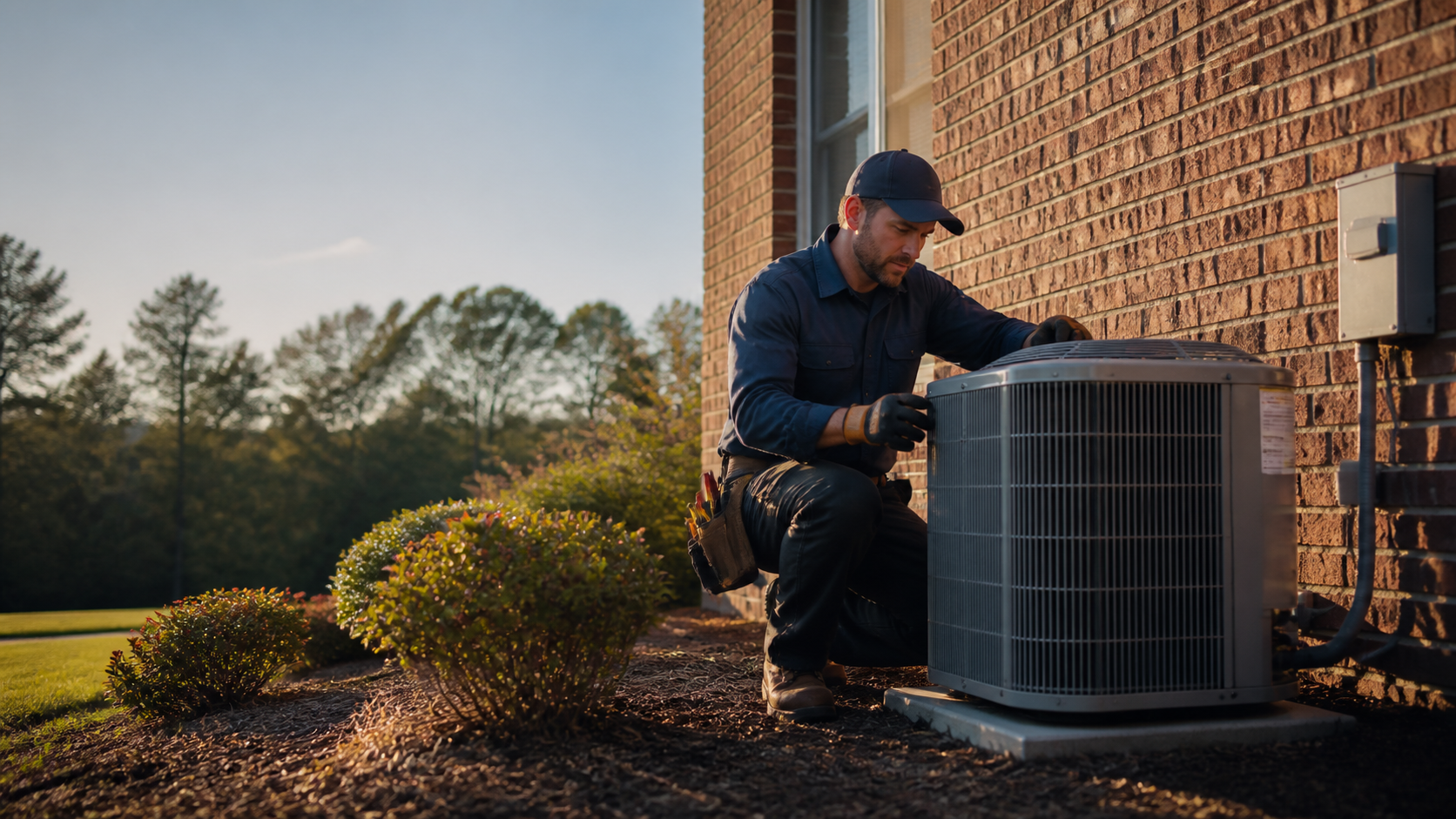
Common signs
Weak airflow from several registers, little or no air, new grinding or squealing, a fan that starts and stops, a burning smell, or repeated breaker trips.
Safe to check
Confirm the thermostat, replace a visibly dirty filter with the correct type, open supply registers, and clear return grilles. Do not open the blower compartment or touch electrical parts.
What to tell us
Describe the airflow, sound, smell, fan timing, rooms affected, display message, and when the change began. The description is the job — the part-naming is ours.
What the blower motor does
The blower motor is the electric motor that powers the blower fan. The fan pulls air from the return side of the duct system, moves it across the furnace heat exchanger or an air conditioning coil, and pushes conditioned air through the supply ducts.
That means the motor can affect both heating and cooling. A furnace may produce heat normally, but the house can still feel cold if the blower cannot move that heat into the rooms.
The motor and the fan are related, but they are not the same part. A problem with the wheel, capacitor, wiring, control board, filter, or ductwork can look like a motor problem from the thermostat or supply registers.
- The blower motor powers the fan that circulates conditioned air.
- A blower problem can affect both heating and cooling.
- The motor, fan wheel, capacitor, controls, filter, and ductwork are separate possible causes.
Common blower motor failure signs
Weak airflow from several registers is one of the clearest reasons to investigate the blower assembly. You may notice that air is coming out, but the stream feels much weaker than it used to.
Several rooms may stay cool, or the furnace may run longer without making the house comfortable.
If the furnace starts but the blower does not turn on, the home may get no warm air even though the burner or the heat-start sequence begins. A failed motor is one possibility.
A thermostat setting, tripped breaker, blower door, ignition problem, or another defective component can create the same result.
Noise can point toward a worn bearing, a loose part, or a problem with the blower wheel. A new grinding, squealing, rattling, or banging sound deserves attention before the blower stops completely.
Intermittent operation can mean the motor is overheating, but it can also involve the thermostat, a limit switch, a control board, a dirty filter, or a blocked return. A fan that continues for one to five minutes after a heating or cooling cycle may be operating normally.
Continuous operation with the thermostat set to Auto needs attention.
A hot or burning smell near the furnace can occur when a motor is struggling or overheating. Repeated breaker trips or a sudden rise in energy use can also signal abnormal electrical load, although neither symptom identifies the failed part by itself.
- Weak airflow from several registers or rooms that stay cool.
- Little or no air while the furnace appears to be running.
- New grinding, squealing, rattling, or banging from the blower area.
- A fan that starts and stops, runs continuously, or runs at the wrong time.
- A persistent burning smell, repeated breaker trips, or unusual energy use.
When weak airflow is not the blower motor
The symptom at the register does not identify the failed part. Check the filter and make sure return grilles and supply registers are not blocked before assuming the motor needs replacement.
A clogged filter can reduce airflow, increase furnace runtime, and add wear to the motor. Furniture or closed registers can restrict the air reaching a room.
A blocked, leaking, or constricted duct can reduce airflow after the blower has already done its job.
The thermostat may be set to Fan On, making the fan run continuously, or it may not be calling for heat correctly. A limit switch may shut the furnace down when excessive temperature is detected.
The blower can also run while the furnace fails to ignite, leaving the ignition system, flame sensor, thermostat, or another control as the actual problem.
Replacing a motor will not fix a blocked return, failed control board, or furnace that cannot get through lighting its burners. Diagnosis matters because several different faults can feel the same from a hallway register.
- Dirty filters can restrict return air and increase motor wear.
- Furniture, closed registers, and blocked or leaking ducts can limit airflow.
- Thermostat, limit-switch, ignition, and control problems can mimic blower trouble.
- A blower motor replacement will not correct a separate airflow or ignition fault.
Safe checks you can make before calling
Confirm the thermostat is set to Heat when you need heat, the temperature is above the current room temperature, and the fan is set to Auto unless you intentionally want continuous fan operation.
Look at the filter. If it is visibly dirty, replace a disposable filter with the correct size and type for the system, or clean a reusable filter according to its instructions.
Also make sure return grilles and supply registers are open and not covered by furniture or stored items.
Check that the furnace access door is fully closed and that the thermostat or furnace display is not showing an obvious fault message. If a breaker has tripped once, follow the equipment instructions before restoring it.
If it trips again, leave it off and arrange service.
Do not remove the blower compartment, touch a capacitor, test live wiring, oil a motor, or attempt to force the fan to turn. Those checks involve electrical components and moving parts.
- Set the thermostat correctly and confirm the fan is on Auto.
- Replace or clean the filter using the system's correct instructions.
- Open supply registers and clear return grilles.
- Check the closed access door and any visible display message.
- Do not touch capacitors, wiring, the motor, or the moving fan.
When to turn the system off and get help
Turn the furnace off and seek urgent help if you notice smoke, a persistent burning smell, repeated breaker trips, a furnace that overheats, or a blower that stops while the furnace continues trying to heat. Do not keep restarting equipment that is showing an electrical or overheating pattern.
Carbon monoxide adds a separate emergency concern for fuel-burning furnaces. Carbon monoxide is colorless and odorless, so you cannot rely on smell to detect it.
If a CO alarm sounds, leave for fresh air, call emergency services, and do not reenter until responders say it is safe.
No heat on a cold Frederick night is urgent from a comfort standpoint, but it is different from smoke or a CO alarm. Match the response to what the equipment is doing, and give safety symptoms priority.
- Smoke, a persistent burning smell, overheating, or repeated breaker trips: turn the system off and seek urgent help.
- A blower that stops while the furnace keeps trying to heat should not be repeatedly restarted.
- A carbon monoxide alarm: leave for fresh air, call emergency services, and do not reenter until cleared.
- No heat is a comfort emergency, but it is not the same as a smoke or CO emergency.
What a blower motor diagnosis should cover
A good diagnosis starts with the symptom history: Is airflow weak everywhere or only in one room? Does the fan start at all?
Does it hum, squeal, or stop after running? Did the problem begin after a filter change, power interruption, or unusual noise?
The technician may inspect the filter, return and supply paths, blower wheel, motor condition, wiring, controls, and other components that affect the heating sequence. The exact checks depend on the equipment.
If a motor must be replaced, the replacement needs to match the system's controls and airflow requirements. Before service, write down the thermostat setting, rooms affected, sound or smell, whether the fan runs continuously, and any display code.
Take a photo of the equipment data label if it is accessible without removing panels.
- Record whether airflow is weak everywhere or only in one room.
- Note whether the fan starts, hums, squeals, stops, or runs continuously.
- Expect the filter, airflow paths, blower wheel, motor, wiring, and controls to be considered.
- Share the symptom history and equipment label without removing panels.
Repair the motor or replace the furnace?
One failed blower motor does not automatically mean the entire furnace needs replacement. Start with the diagnosis and ask what caused the failure.
If the issue is isolated and the rest of the equipment is in reasonable condition, a motor repair or replacement may be the appropriate path. If the furnace is older, has a history of repeated repairs, has multiple failing components, or has a safety-related condition, a broader replacement discussion may make more sense.
Ask for the choice in plain language: What failed? What else was checked?
Is the proposed repair addressing the root cause? What condition are the heat exchanger, blower assembly, and control system in?
Does the repair restore safe operation, or is another issue likely to remain?
Annual inspection and maintenance are especially important for fuel-burning heating systems. Maintenance cannot prevent every motor failure, but it can reveal airflow restrictions and worn components before a no-heat call.
- A failed motor does not automatically require a new furnace.
- Compare the isolated repair with the furnace's age, history, and overall condition.
- Ask what failed, what was checked, and whether the repair addresses the root cause.
- Regular filter care and professional maintenance can reveal restrictions and wear earlier.
The next step for a Frederick County home
If the blower motor failure signs continue after a filter and thermostat check, arrange a furnace diagnosis rather than ordering a part based on the symptom alone. Tell the HVAC company whether you have weak airflow, no airflow, unusual noise, a burning smell, repeated trips, or a fan that runs constantly.
For homeowners in Frederick County, the right next step depends on the symptom. Use routine maintenance when the system is operating normally, request diagnosis when airflow or operation has changed, and seek urgent help for smoke, repeated electrical trips, overheating, or a carbon monoxide alarm.
A clear diagnosis gives you a better path back to a home that feels comfortable and normal.
- Request diagnosis when a filter and thermostat check do not restore normal airflow.
- Describe the symptom instead of guessing which part failed.
- Give smoke, overheating, electrical trips, and CO alarms urgent priority.
- Use routine maintenance when the system is operating normally.
Answers to the usual follow-up questions
What are the signs of a failing furnace blower motor?
Common signs include weak airflow from several registers, little or no air at the vents, new grinding or squealing, a fan that starts and stops, a burning smell, or repeated breaker trips. A dirty filter, blocked return, thermostat setting, or another control problem can look similar, so a technician needs to test the cause.
Why is my furnace running but no air comes out of the vents?
The furnace may be starting its heating sequence while the blower is not moving air. A failed motor or capacitor is one possibility, but so are a thermostat setting, tripped breaker, closed blower door, ignition problem, or another defective component. Check the thermostat, filter, registers, and visible power status safely; do not reach into the furnace.
Can a bad capacitor stop my furnace blower?
Yes. A capacitor problem can keep the motor from starting or make it hum without moving the fan. It is only one possible cause, though. A technician should test the capacitor, motor, wiring, and airflow before a part is replaced.
Is a grinding noise from my furnace serious?
A new or worsening grinding sound can point to a worn bearing, loose part, or blower-wheel problem. Turn the system off if the noise is accompanied by a burning smell, overheating, or repeated electrical trips, and arrange urgent service rather than continuing to restart it.
Is a grinding noise from my furnace serious?Why does my furnace heat then shut off after a while?
A weak blower, dirty filter, blocked return, closed registers, or another airflow problem can let heat build until a limit switch shuts the burners off. Check the filter and visible airflow restrictions safely. If the furnace keeps overheating or shutting down, stop restarting it and request a diagnosis.
Why does my furnace heat then shut off after a while?How much does a blower motor repair cost?
The cost depends on whether the failed part is the motor, capacitor, control, or another component, as well as the equipment and labor involved. Ask what failed, what else was checked, and whether the proposed repair restores safe operation before comparing repair and replacement.
Can a dirty filter really cause blower problems?
Yes. A clogged filter can restrict return airflow, increase furnace runtime, and add wear to the blower motor. It can also contribute to overheating and make another problem look like a motor failure. Replace a disposable filter with the correct size and type, then request diagnosis if airflow does not return to normal.