Should You Repair or Replace Your AC in Frederick?
If your air conditioner is not keeping up, the right answer is usually not as simple as 'old means replace' or 'repair is always cheaper.' The useful question is what the system is doing, how often it is failing, what the repair involves, and whether the rest of the home can support the equipment.
For a homeowner in Frederick, Urbana, Walkersville, New Market, or another Frederick County community, start with a diagnosis. A repair may make sense when the problem is isolated and the system has otherwise been reliable. It's time to talk about replacing when an older system needs repeat repairs, energy use is climbing, or the equipment and the house no longer work well together.
These are decision signals, not an automatic order to replace. The goal is to understand the condition of the system and the needs of the home before you approve either path.
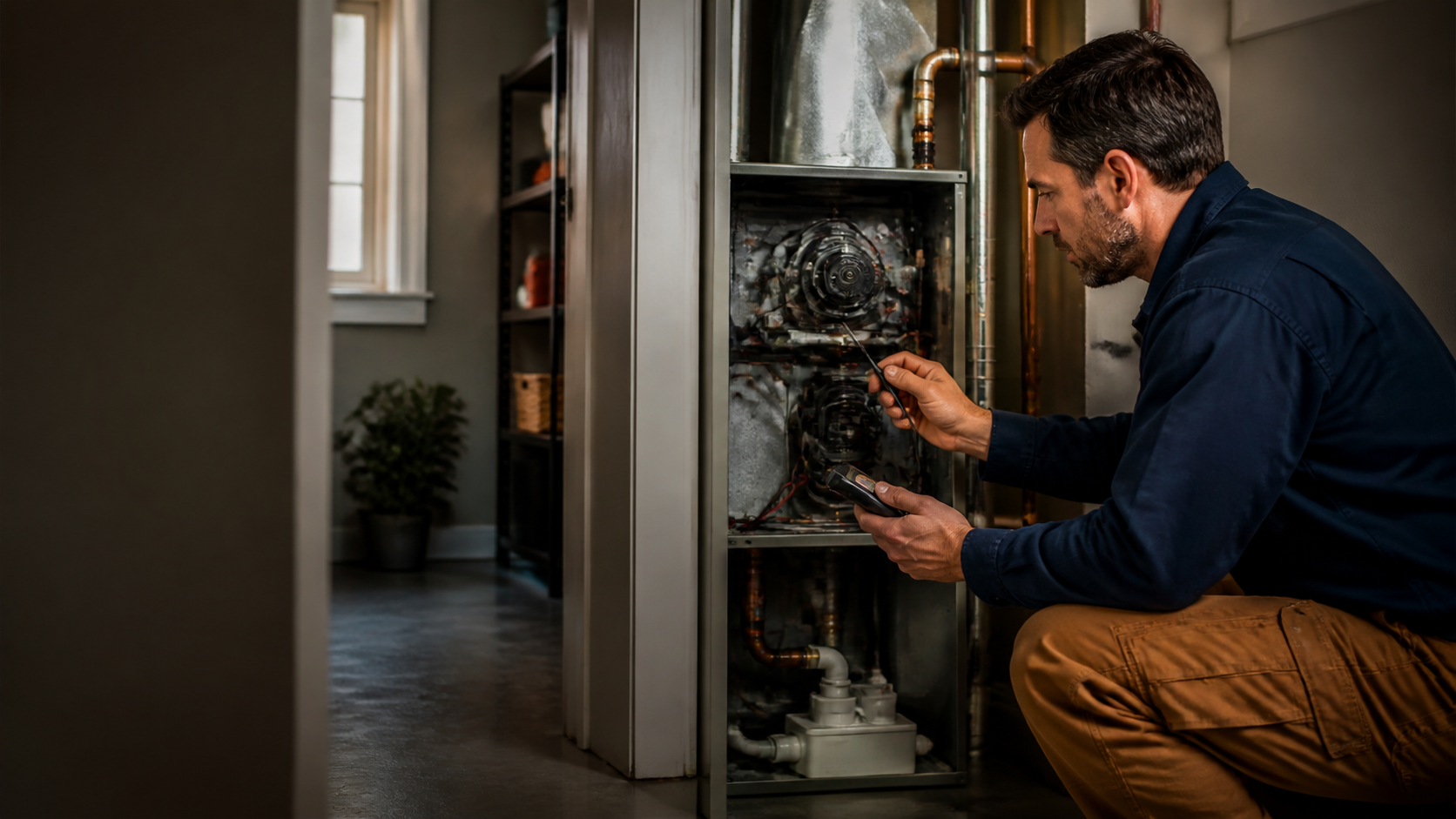
Start with diagnosis
Ask what was tested, what failed, whether the system can be repaired safely, and whether airflow, ducts, sizing, or insulation are part of the comfort problem.
Lean repair
A focused repair may fit when one problem is confirmed, the system has otherwise been reliable, and the repair is likely to restore dependable operation.
Compare replacement
Replacement belongs in the conversation when failures repeat, energy use rises, comfort stays poor, or the equipment no longer fits the home and its air-delivery system.
Repair or replace? Start with the condition of the system
Age is useful context, but it can't tell you what failed. A 12-year-old unit with a manageable electrical or airflow problem may still be worth repairing.
A younger unit with a major refrigerant leak, repeat failures, or a serious installation problem may be the one that needs the bigger conversation.
Look at five things together: what changed, how old the equipment is, what has already been repaired, whether the home is comfortable, and what exactly failed. Weak airflow, warm air, a system that starts and stops every few minutes (short cycling), ice, water, new noises, high humidity, and an unresponsive thermostat are all useful clues to report.
Find the model and serial numbers on the outdoor unit and check any installation records. A single service call means something different from several failures in a short period.
Hot bedrooms, long run times, uneven temperatures, and humidity can point to airflow, duct, insulation, sizing, or control issues.
'The AC is old' is not a diagnosis. Before approving replacement, ask what was tested, what failed, whether the system can be repaired safely, and whether the proposed replacement addresses the actual comfort problem.
- What changed, and does the problem affect the whole home or one room?
- How old is the equipment, and what does its repair history show?
- What component or condition was confirmed as the cause?
- Are airflow, ductwork, insulation, sizing, or controls part of the symptom?
When AC repair is usually the right first step
Repair is often the sensible first conversation when the system has one clear symptom and no pattern of repeated failure. The symptom may be weak airflow from one area, a clogged drain, a dirty coil, a control problem, or an electrical component that needs attention.
These possibilities cannot be confirmed from a thermostat setting or a quick glance at the outdoor cabinet.
Maintenance items can also look like major equipment failure. The filter, the drain line, the coils, the blower, the controls, and the electrical connections should all be part of a professional evaluation.
A plugged drain can cause water damage and affect indoor humidity, while dirty coils can make the system run longer and cool less.
Airflow deserves special attention. A filter loaded with dust, a restricted return, a blower problem, or a duct issue can make the home feel undercooled even when the refrigeration circuit is operating.
A replacement decision should include an airflow check rather than assuming the equipment is behind everything.
Call for professional diagnosis when the system is leaking water, freezing, repeatedly shutting off, making a new electrical sound, or failing to cool the home. Do not open refrigerant circuits or attempt electrical repairs yourself.
The point of diagnosis is to learn whether the problem is repairable and whether the repair is likely to restore reliable operation.
- The problem is isolated and the system was otherwise reliable.
- A clear diagnosis identifies a manageable component or condition.
- There is no pattern of repeat breakdowns or unresolved comfort problems.
- The proposed repair explains what it solves and what risk remains.
The signals that point toward replacing
Replacement becomes more reasonable when several signals point in the same direction: the system is more than 10 years old and major components are beginning to fail, repairs keep returning, energy bills are rising while cooling performance falls, or the equipment and home no longer work well together.
Other signals include older refrigerant service concerns, rooms that never become comfortable after basic maintenance and repair issues are addressed, and equipment that is poorly matched, badly sized, or unable to work with the home's ductwork and building envelope.
Age is a point to consider replacement, not an automatic order to replace. A decision should account for efficiency, performance, reliability, cost, and the alternatives available for the equipment.
If a system needs a major repair and already has several age-related problems, compare the repair with a complete replacement scope before deciding.
Be careful with comfort symptoms. Rooms that are too hot or too cold may result from duct problems or inadequate insulation.
Replacing the outdoor unit will not automatically correct a leaking return, a blocked supply, poor air sealing, or an undersized duct. If the same room has been uncomfortable for years, tell the contractor before discussing equipment.
- The system is over 10 years old and major components are beginning to fail.
- Repairs keep returning or the repair history is becoming difficult to manage.
- Energy use is rising while cooling performance is falling.
- Comfort problems remain after basic maintenance and repair issues are addressed.
- The equipment, ductwork, sizing, or home envelope no longer work well together.
How R-22 and newer refrigerant rules affect the decision
An R-22 system does not have to be replaced simply because it uses R-22. Existing equipment can continue to be used and serviced, and a homeowner does not have to get a new system or convert an existing unit solely because of the phaseout.
Availability and service economics may change over time, so those details belong in the discussion.
That does not make every R-22 repair a good investment. If the system has a leak, ask whether the leak can be located and repaired rather than simply adding refrigerant.
Alternative refrigerants are not drop-in replacements for R-22 and may require changes to system components.
Ask what refrigerant the equipment uses and where that was verified. Confirm whether there is a leak, whether it can be repaired, what other parts could be affected, and whether the proposed refrigerant is compatible with the equipment.
If replacement is recommended, ask whether the indoor coil and outdoor unit are being evaluated as a matched system. A condensing-unit swap can change the scope of the system, so understand the full equipment plan before approving an outdoor-unit-only replacement.
- What refrigerant does the equipment use, and where was that verified?
- Is there a confirmed leak, or is the charge low for another reason?
- Can the leak be repaired, and what other parts could be affected?
- Are the indoor and outdoor components being evaluated as a matched system?
Check the whole cooling system, not just the outdoor unit
A central AC system is a chain. The outdoor condenser and compressor, indoor evaporator coil, blower, thermostat, refrigerant lines, filter, returns, supplies, ducts, insulation, and home envelope all affect the result.
A new cabinet cannot compensate for every problem elsewhere in that chain.
Ductwork is especially important when one floor or bedroom is always too warm. The amount of air reaching each zone depends on the size of the connected supply ductwork.
Check exposed ducts for holes and gaps, and include air leaks or under-insulated attics and ducts in the evaluation.
Sizing matters too. An undersized system may struggle on hot days.
An oversized system may cycle on and off too often and control humidity poorly. Proper sizing should account for the home's age, windows, insulation, number of stories, square footage, and local conditions.
The right replacement is not simply the biggest unit that fits the outdoor pad. It is equipment selected for the home and connected to an air-delivery system that can move the required amount of air.
If a proposal does not address sizing, return airflow, supply ducts, insulation, or rooms that have always been uncomfortable, ask why.
- Outdoor and indoor equipment should be evaluated as one system.
- One hot room can point to ductwork, insulation, air sealing, or sizing.
- An oversized unit can run shorter cycles and control humidity poorly.
- A new outdoor cabinet cannot correct every broken air path.
What to ask before approving AC replacement
You do not need to know every HVAC term to compare a repair with a replacement. You do need a written explanation of what is being proposed.
Ask for the diagnosis, including the component or condition that failed, along with the age, model, refrigerant type, and repair history of the existing system.
For the repair option, ask what it includes and what condition would remain after the repair. For the replacement option, ask which indoor and outdoor equipment will be changed, what sizing method was used, whether a load calculation was performed or considered, and whether the indoor and outdoor units are a matched combination.
Compare the cooling-efficiency rating and the assumptions behind any operating-cost estimate. A higher efficiency rating can be useful, but it is not a guarantee of a particular monthly bill.
Ask what work will connect, test, drain, control, and start the new system, and whether duct or airflow problems are included in the scope.
A matched split system matters for achieving its rated efficiency. Ask whether the proposed combination can be verified by the equipment manufacturer or an industry certification record.
That gives you a concrete question when comparing proposals.
- The diagnosis and failed component or condition.
- The repair option, remaining condition, and likely risk after repair.
- The replacement equipment, sizing method, efficiency, refrigerant, and match.
- The full labor, electrical, drain, control, testing, permit, and warranty scope.
- Any duct, airflow, insulation, or comfort work needed beyond the equipment swap.
A practical repair-or-replace path for Frederick homeowners
Start by writing down the symptom and when it appears. Note whether the problem affects the whole home or one room.
Check the thermostat setting and filter, but do not keep resetting a breaker or operating equipment that shows signs of electrical damage or active water problems.
Find the model, serial number, installation date if available, and refrigerant information on the equipment nameplate. Gather recent repair records and note whether the same problem has returned.
This gives a technician useful context without asking you to diagnose the part.
Request a diagnosis that separates equipment failure from airflow, duct, insulation, sizing, or control issues. If repair is proposed, ask what it solves and what risk remains.
If replacement is proposed, ask for system match, sizing, efficiency, and full scope details before comparing options.
For a homeowner searching for AC repair or replacement in Frederick, this process keeps the decision tied to the actual house rather than a generic age rule or a rushed sales conversation. A healthy, well-supported system may need a focused repair.
An older system with repeated failures, rising operating costs, refrigerant concerns, and unresolved comfort problems may be ready for a replacement evaluation.
- Write down the symptom, timing, affected rooms, and visible clues.
- Gather the equipment information and recent repair history.
- Ask for a diagnosis that includes the equipment and the air-delivery system.
- Compare written repair and replacement scopes before approving major work.
Three questions before you approve anything
What was tested? What failed?
Can it be repaired safely — and are the ducts, the sizing, or the insulation part of the comfort problem? Those four questions turn a sales pitch back into a diagnosis.
Write the answers down with the quote. A proposal that can't answer them isn't ready for a signature.
- Tested, failed, repairable, and house-side causes — in writing.
Answers to the usual follow-up questions
Is a 10-year-old AC automatically ready for replacement?
No. More than 10 years is a reason to consider replacement, not an automatic order to replace. Combine age with repair frequency, energy use, reliability, comfort, and the condition of the failed component. A diagnosis still matters.
Does an R-22 system have to be replaced?
No. Existing R-22 systems can continue to be used and serviced. Ask about leak repair, equipment condition, service options, and whether replacement would provide a better long-term fit for the home.
Is a low refrigerant charge proof that the AC must be replaced?
No. A low charge can indicate a leak or another service issue. The leak should be investigated, and the refrigerant must be handled with equipment and procedures appropriate to the system.
What if the AC is new but some rooms are still hot?
Ask about airflow, ducts, insulation, air sealing, controls, and sizing. A new outdoor unit does not prove that the entire cooling system is distributing air correctly.
What should a replacement quote include?
Ask for the equipment, size, efficiency rating, refrigerant, matched indoor and outdoor components, sizing method, labor, electrical and drain work, permits, testing, haul-away, and warranty terms. The quote should explain why the proposed size fits the home.
What is the best next step if I am still unsure?
Ask for a diagnosis and a written repair-or-replace comparison. Bring the model number, symptoms, repair history, and information about the rooms that are uncomfortable. That gives an HVAC professional enough context to evaluate the equipment and the Frederick County home together.