The coil is not getting enough warm air
A clogged filter, blocked return, closed register, dirty evaporator coil, or weak blower can reduce airflow until moisture freezes on the coil.
Frederick AC safety FAQ
Usually, no. A frozen coil's an urgent repair problem, not automatically a 911 emergency. Turn cooling off, let the ice thaw, and keep a separate safety line open for smoke, gas, electrical trouble, or water reaching wiring. We can walk you through it.
Ice, weak airflow, warm air, or water near the indoor unit means shut the system down and call us. Smoke, fire, sparking, a strong burning electrical odor, or a carbon monoxide alarm means get everyone to safety and call emergency services first.
Right now
Do only what you can reach from the room side. Leave the cabinet closed, and leave cooling off while ice is still there.
Set the thermostat mode to OFF so the compressor stops. Don't leave it in COOL and bump the temperature up, hoping that helps. That restarts the cycle before the ice even clears.
If the blower's running normally, set the fan to ON to help the ice melt. Leave the whole system off if the fan sounds strained or smells burned.
From the room side, look at the filter, supply registers, and return grilles. Replace a visibly dirty filter only if you can do it without opening any equipment panels.
Move belongings away from the indoor unit and use towels where water's already reaching a finished surface. Keep clear of wiring and the cabinet.
Why it freezes
The indoor evaporator coil needs warm household air moving across it while refrigerant absorbs heat. Once frost forms, airflow falls further and the problem builds on itself.
A clogged filter, blocked return, closed register, dirty evaporator coil, or weak blower can reduce airflow until moisture freezes on the coil.
A refrigerant leak, blower motor, control fault, thermostat issue, or another restriction can create similar ice. Ice on a copper line does not identify the cause.
A frozen coil may release more water than the pan or drain line can handle. Water near a ceiling, wall, electrical area, or finished floor needs prompt attention.
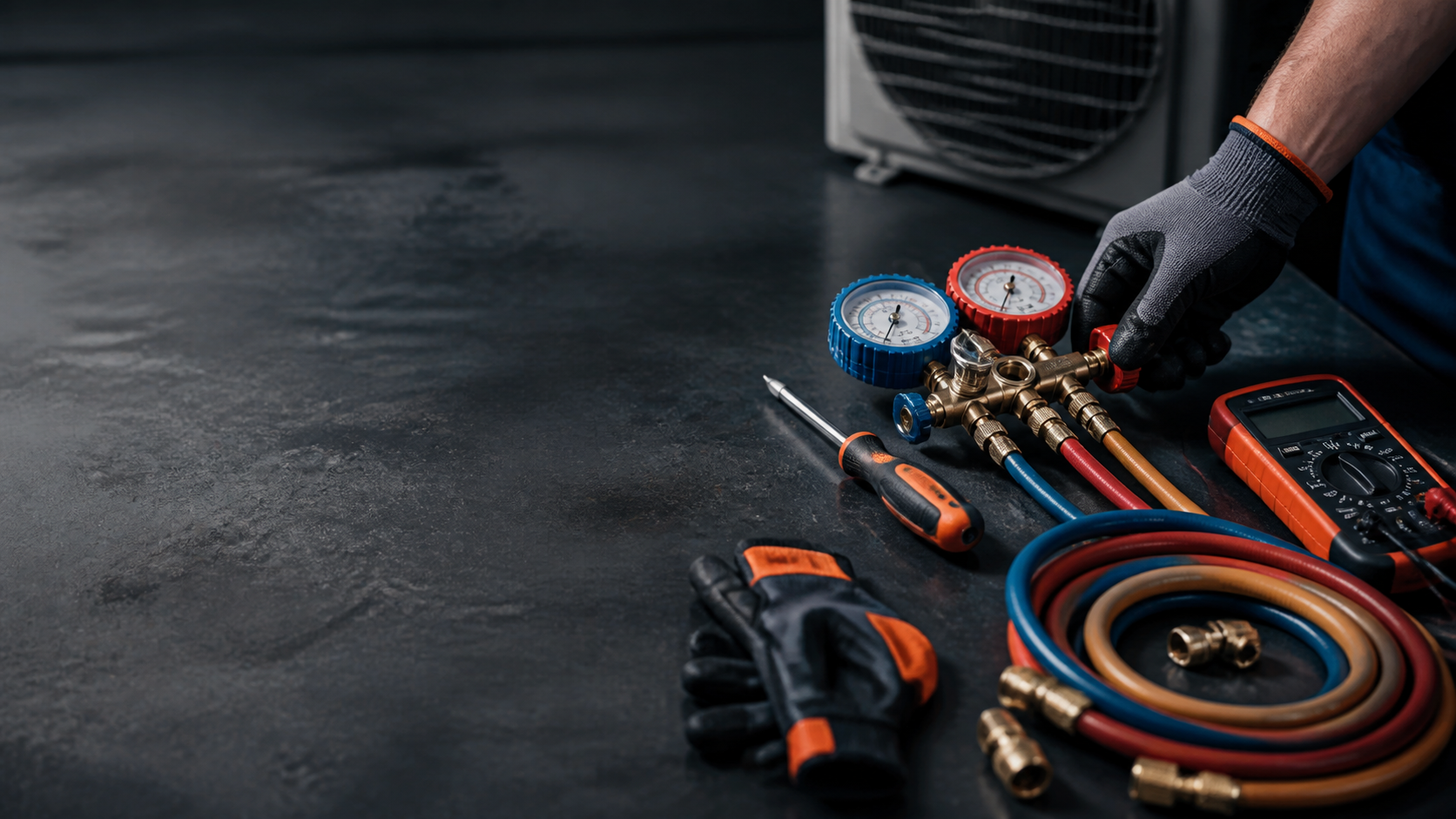
A filter or vent check may turn up an obvious restriction, but refrigerant and electrical faults need equipment-specific testing. We handle that testing. Don't connect gauges or add refrigerant yourself.
Keep the emergency line clear
A frozen coil is usually an equipment problem. These symptoms make safety, health, or property protection the priority.
Leave the home and call 911 from a safe location. Don't open the air handler, reset a breaker repeatedly, or reenergize equipment that smells burned.
Ice during cooling doesn't produce carbon monoxide, but a home may also have a fuel-burning furnace. Get outside and stay out until responders say it's safe to return.
Move infants, older adults, people with medical conditions, and anyone showing signs of heat illness to a safe, cooler place first. We'll fit the HVAC visit around that.
For a carbon monoxide alarm, the CPSC says to move outside and stay out until responders say it is safe. If water reaches an electrical area, do not touch the equipment to find the source.
What repair should answer
Keep the useful details: where you first saw ice, how the airflow felt, whether the fan ran, where water showed up, and whether the freezing came back once the system was off.
Before you call
You don't have to know which part quit. You do need to know when the system should stay off.
Not for ice alone. A frozen coil's usually an urgent repair issue, not a 911 call. Dial 911 for smoke, fire, visible sparking, a carbon monoxide alarm, or anything that makes the home unsafe to stay in.
Fan-only can help if the blower's running normally with no burning smell or odd sound. It isn't a repair, and cooling should stay off while ice is present.
No. Leave the ice alone and let it thaw on its own. A screwdriver, hair dryer, heat gun, or cleaner can damage coil fins, tubing, wiring, or nearby plastic.
A thawed coil doesn't prove the cause is gone. If you fixed an obvious filter or vent restriction, a short test run's reasonable, but stop right away if frost comes back, airflow's weak, the noise changes, or cooling still isn't right. Call us at that point.
Tell us whether ice returned, where meltwater is going, and whether you noticed odor, smoke, noise, or breaker trouble.