Gas, carbon monoxide, smoke, or sparking
Leave immediately and call 911 or the utility from outside. Don't stay inside to find the source, flip switches, or test the furnace.
Emergency HVAC help in Frederick, MD
Start with safety, then sort out the HVAC problem. When heat or air conditioning stops, the first question isn't which part failed. It's whether anyone in the home is at risk. Gas odor, a carbon monoxide alarm, smoke, sparking, or serious symptoms change the next step immediately.
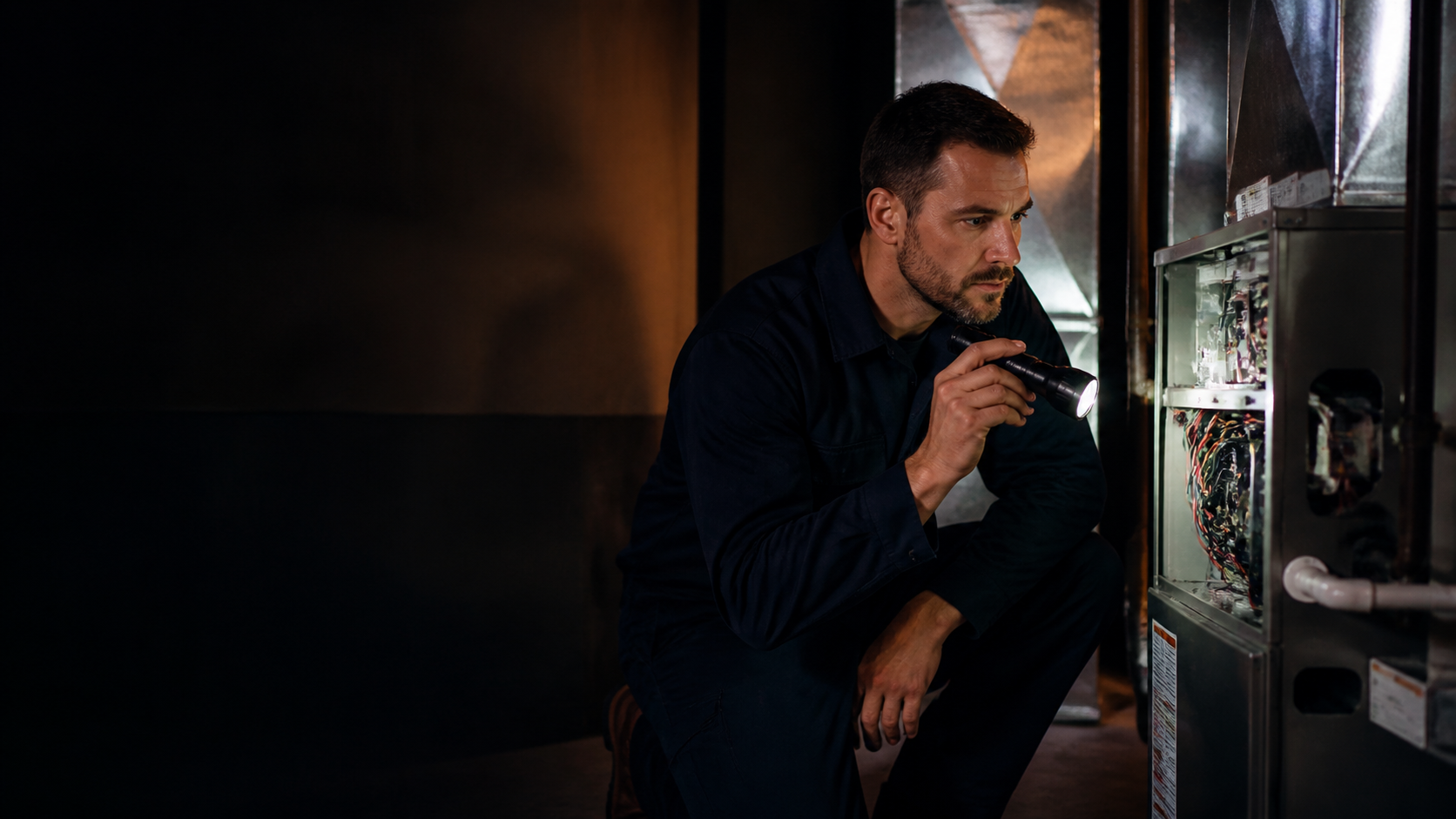
Carbon monoxide is odorless, and it can cause sudden illness and death. If anyone may have been exposed, move to fresh air and call 911 or Poison Control. Don't re-enter or restart the equipment until emergency authorities or the utility says it's safe. Read the CDC's carbon monoxide guidance.
Match the response to the risk
The symptom, the weather, and the people in the home decide what happens next. Start with safety. Then gather only the information you can get without opening equipment.
Leave immediately and call 911 or the utility from outside. Don't stay inside to find the source, flip switches, or test the furnace.
Freezing weather, dangerous heat, and vulnerable people in the home can turn comfort loss into a health concern. Find a safe place to stay while we're on the way.
Protect nearby flooring and belongings when you can do so safely. Don't scrape ice, reach into wet equipment, or keep resetting a breaker to make the system run.
Never use a gas range or oven to heat the house. A generator belongs outdoors, more than 20 feet from windows, doors, and vents. See CDC outage guidance.
When the weather is the risk
The safest choice may be leaving the home, not waiting beside the thermostat. Move people at higher risk to a comfortable location when the house is turning unsafe.
Move children, older adults, and people with chronic health conditions to an air-conditioned location if the home's turning unsafe. Watch for signs of heat exhaustion or heat stroke, and use Ready.gov heat guidance.
Dress in layers, close off unused rooms, and find a warmer place to stay if the home can't hold a safe temperature. Never use a gas range or oven for heat. See CDC winter safety guidance.
Only when the home is safe
Stop here if there's smoke, gas odor, a carbon monoxide alarm, an active leak near electrical equipment, or a repeatedly tripping breaker.
Check the mode, temperature setting, display, and batteries if the thermostat uses them. Make sure the setting matches the season and the display hasn't gone blank.
Check it only if you can reach it without opening an electrical panel. Replace it per the equipment and filter manufacturer's instructions.
Move obvious household obstructions, like furniture against a return or a closed supply register. Don't remove ductwork or change blower settings.
From a safe distance, note whether leaves, snow, or other debris blocks the equipment. Don't disassemble or wash it unless the manufacturer specifically makes that a homeowner task.
Note an error code, unusual sound, odor, water, ice, or operating pattern. Take a photo from a safe position, but don't scrape ice, open a refrigerant circuit, work on wiring, adjust gas components, or bypass a safety control.
Common symptoms
Describe what the equipment's doing now and what changed. That gives us a useful starting point, and you don't have to play repair tech to do it.
Airflow, controls, outdoor conditions, ductwork, and internal operation can all affect comfort. Note the thermostat setting and whether the problem hits the whole home or certain rooms.
Check the filter, supply registers, and return grilles first. If airflow's still weak, the blower, ductwork, controls, or another component may need a look.
Ice can show up with airflow, temperature, drainage, or refrigeration problems. Turn off the system if its instructions say to, protect nearby materials as the ice melts, and call us.
Water can come from a condensate problem, frozen coil, drain pan, plumbing, or another source. Note how long the system runs and how often it restarts instead of guessing at a sensor or motor.
A dirty filter can reduce airflow and make equipment work harder. The Department of Energy explains the connection, while EPA moisture guidance recommends fixing water problems fast and drying wet materials.
Call preparation
Start in your own words: no heat, warm air, weak airflow, water, ice, a strange noise, a blank thermostat, or a burning smell. You don't need to name the failed part.
Reduce the next surprise
Simple observations help, but they don't replace diagnosis, source control, ventilation, or fixing a moisture problem.
Check the filter, and change or clean it per the equipment and filter instructions. Keep supply registers, return grilles, and the outdoor unit clear of household items, leaves, snow, and visible debris.
Book a cooling check with us before heavy summer demand, and a heating check before winter demand. Test smoke and carbon monoxide alarms monthly, with CO alarms on every level and outside sleeping areas.
EPA recommends indoor relative humidity below 60 percent, ideally between 30 and 50 percent. See its indoor air quality guidance.
Before you call
These answers cover the safety questions that matter before an HVAC diagnosis.
Leave the home and call 911 or the appropriate utility when you smell gas, hear a carbon monoxide alarm, see smoke or sparking, or think a fuel-burning appliance is creating unsafe conditions. Don't restart the equipment until emergency authorities or the utility says it's safe.
With no smoke, gas odor, carbon monoxide alarm, active leak near electrical equipment, or repeated breaker trip, check the thermostat, accessible filter, supply registers, return grilles, and outdoor unit from a safe distance. Don't open panels, work on wiring or gas components, scrape ice, or bypass a safety control.
Not every failure has the same urgency. No heat during freezing weather, no cooling during dangerous heat, an active water leak, a frozen system, a blank thermostat, or repeated starts and stops can justify calling us soon. Gas, carbon monoxide, smoke, sparking, and serious symptoms mean call 911 first.
Describe the symptom in your own words, then share the equipment type if you know it. Have the model information, recent maintenance history, thermostat setting, error code, start time, and anything that changed just before the failure, like a power outage, storm, filter replacement, or unusual noise.
If the home's safe to occupy, tell us what changed and what you saw. If there's gas odor, a carbon monoxide alarm, smoke, sparking, or a medical emergency, leave first and call 911.