Emergency Heating Repair
Urgent heating repair in Frederick for no heat, furnace ignition trouble, heat pump faults, boiler issues, thermostat problems, and unsafe heating symptoms.
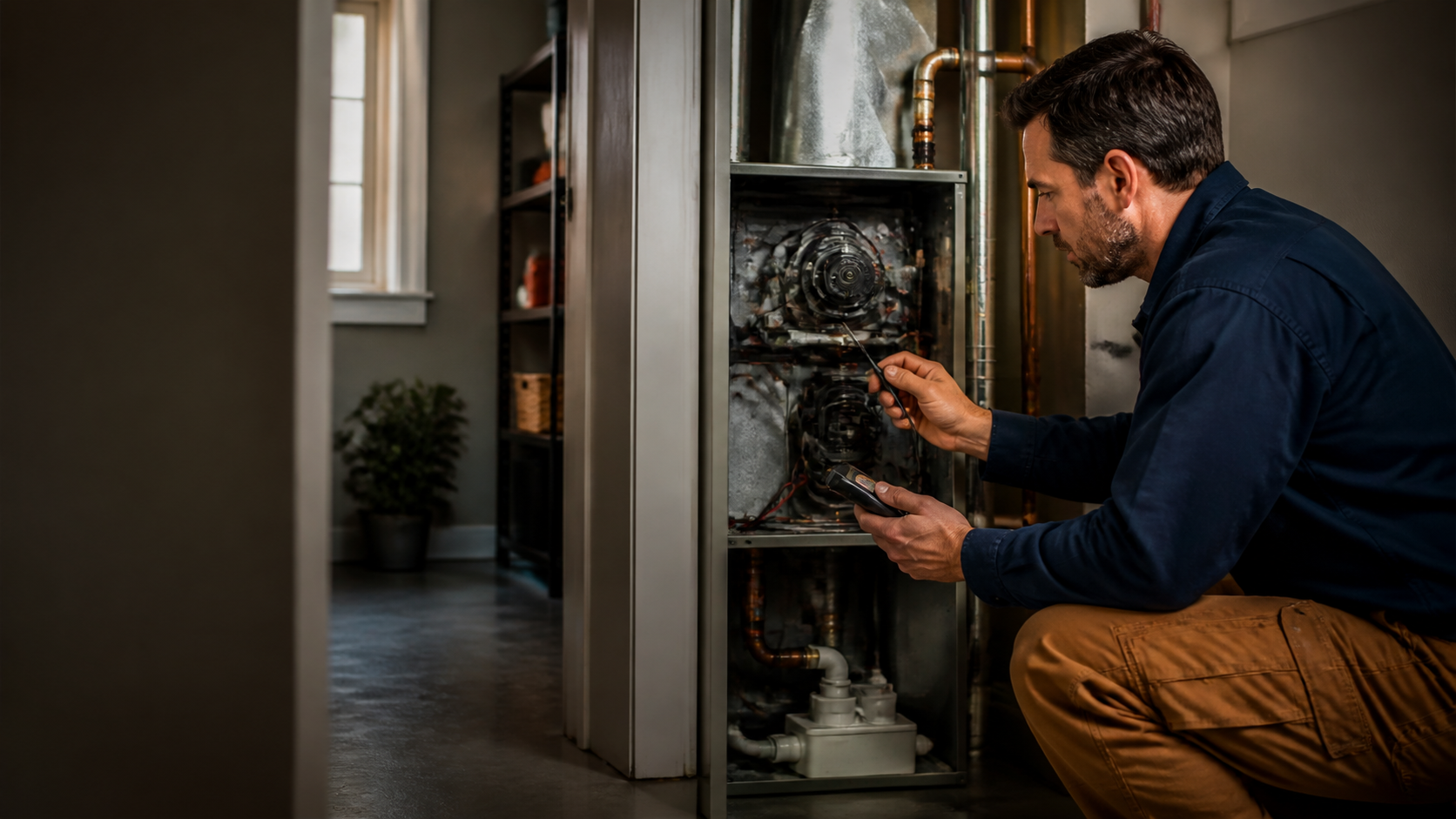
Emergency heating repair in Frederick starts with a safe next step
A cold house needs an answer, not a guess. Furnace failures, heat-pump trouble, boiler symptoms, thermostat issues, and weak airflow can look similar from the living room. The useful first details are what changed, when it changed, and what the system is doing now.
If a carbon monoxide alarm sounds, you smell gas, or you see smoke, fire, or sparking, leave the home immediately and call 911 from a safe location. Do not turn on lights, light a match, reset the system, or open the furnace. HVAC service starts after emergency responders or the utility clear the property.
Heating symptoms worth describing
- No heat or cool air: Note whether the furnace tries to ignite, whether the blower runs, and whether warm air ever follows.
- Short cycling: Record how long the system runs and how often it restarts. Airflow, controls, sizing, and equipment problems can create the same pattern.
- Heat pump not keeping up: Tell the provider whether backup heat runs, the outdoor unit changes modes, or the system runs constantly.
- Water, ice, or a new noise: Protect nearby belongings and arrange service. Do not open equipment or pour chemicals into a drain.
- Blank thermostat or repeated breaker trips: Note what else lost power. Stop resetting equipment when the interruption repeats or a burning smell appears.
Five low-risk checks before you call
- Confirm the thermostat has power, is set to Heat, and is above the room temperature.
- Look at the filter through its normal access point and note whether it is visibly loaded with dust.
- Clear furniture, rugs, or boxes from supply registers and return grilles.
- Write down whether the system starts, stops quickly, blows cool air, or leaves one room colder.
- Observe from a safe distance. Do not remove panels or touch wiring, gas connections, burners, or combustion components.
What a useful heating diagnosis checks
The inspection may follow the thermostat signal, electrical supply, controls, airflow, drain, motors, burners, venting, or heat-pump circuit. The equipment type changes what normal operation looks like: a fuel-burning furnace depends on safe ignition and venting, while a heat pump transfers heat between the home and outdoors.
The repair recommendation should explain what failed, how it accounts for the symptom, and whether repair or replacement is the better next decision. Age alone is not a diagnosis; safety, prior breakdowns, parts support, and the condition of the system matter too.
Keep the first decision clear
Repair can make sense when the failure is defined and the equipment remains safe and supportable. Replacement deserves a closer look when major or unsafe components fail, problems repeat, parts are unavailable, or the equipment no longer meets the home’s comfort needs.
Schedule a pre-season heating check, inspect the filter monthly, test carbon monoxide alarms, and pay attention to early changes in sound, cycling, or airflow. Maintenance cannot prevent every failure, but it can give you more options before the next cold stretch.
Questions before you call.
What should I do if the heat stops working?
Check the thermostat, filter, breaker, and fuel or power source only if it is safe. If you smell gas, hear a carbon monoxide alarm, or the home is unsafe, leave and call for help.
Do you service furnaces and heat pumps?
Yes. We help with gas furnaces, electric furnaces, ducted heat pumps, backup heat, thermostats, and common airflow problems.
What if my furnace needs replacement?
We explain the repair issue first. If age, safety, parts availability, or repeated breakdowns make replacement worth discussing, we separate that from the urgent heat-restoration step.
Can maintenance prevent heating emergencies?
Often, yes. Filter changes, ignition checks, airflow review, drain inspection, and heat pump testing can catch problems before cold weather exposes them.
Need help with emergency heating repair?
Tell us what changed and what the system is doing now. We can start with the symptom and explain the next useful step.