The AC runs, but the house stays warm
Warm vents or unusually long run times can point to the condenser, but airflow, a frozen coil, or a refrigerant issue can cause the exact same complaint.
Cooling in Frederick, MD
When the outdoor AC unit is humming, clicking, or sitting silent while the house gets warmer, the condenser may be part of the problem. But "bad condenser" isn't a complete diagnosis on its own.
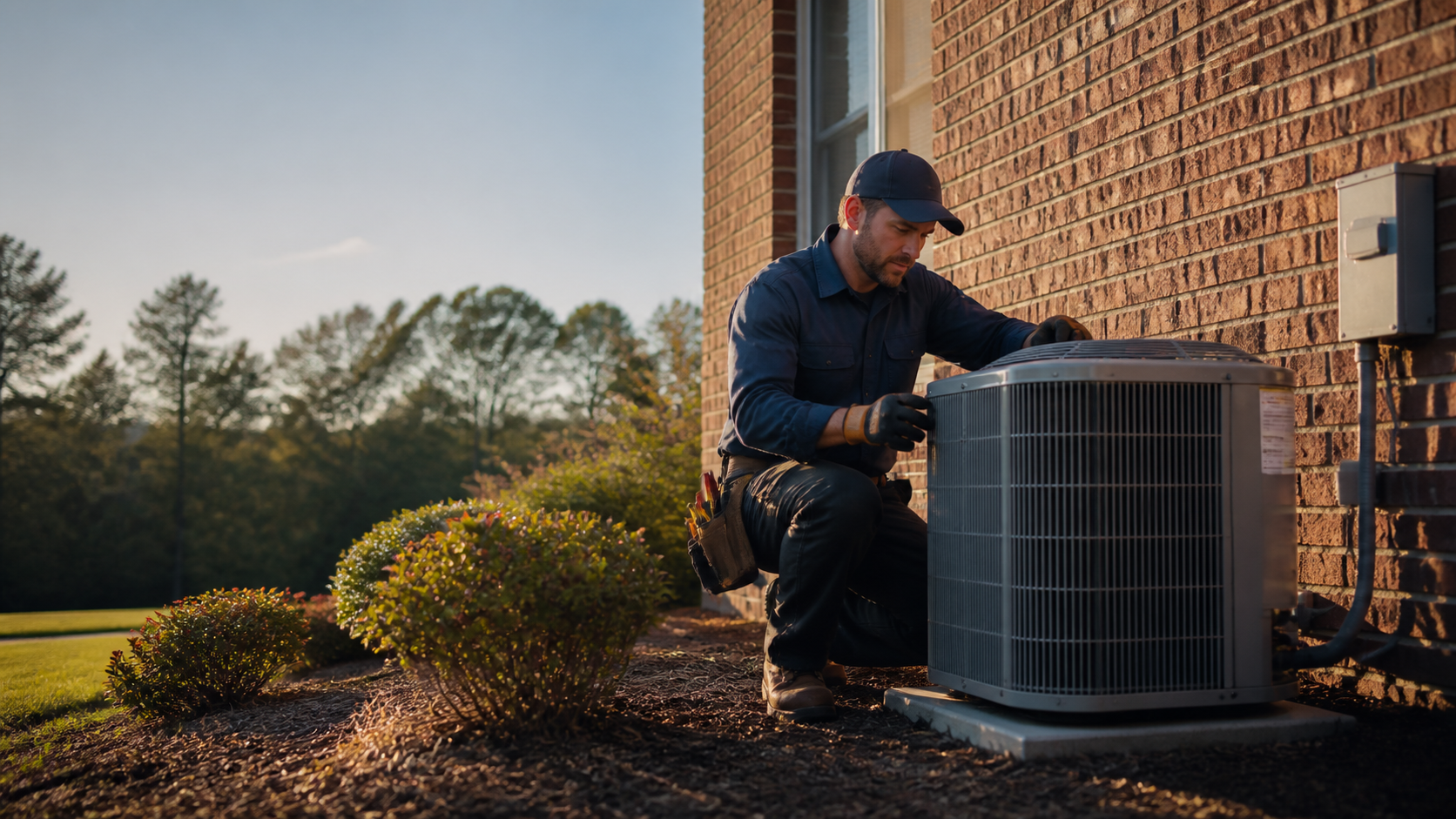
A condenser is more than one part
In a typical split-system air conditioner, the outdoor condenser releases the heat absorbed inside the home so the indoor coil can keep the cooling cycle going. A quiet fan, a strange noise, or warm air at the vents doesn't identify one failed part on its own. Trane explains the condenser coil's role, and Carrier describes the parts in a condensing unit.
Start with what you notice
Warm air, reduced cooling, unusual noise, frequent cycling, and a unit that won't run are clues for us to work with, not proof of a failed condenser.
Warm vents or unusually long run times can point to the condenser, but airflow, a frozen coil, or a refrigerant issue can cause the exact same complaint.
A silent unit, a start-and-stop pattern, or a fan that isn't moving calls for testing, not a guess based on the thermostat alone.
A new noise is useful evidence, but it doesn't identify the failed part by itself. The outdoor unit holds several working components.
Turn cooling off when you see ice. Don't chip it away or add refrigerant; call us for troubleshooting instead.
These symptoms can overlap with problems elsewhere in the system. Carrier's condenser guide lists the common clues and possible failure points.
Ice on refrigerant tubing or the outdoor unit can go along with a frozen coil. Don't chip it away or keep running the system while you wait for it to clear. Carrier explains the risks of a frozen coil.
Low refrigerant can go along with inadequate cooling, long run times, or short cycling, but a leak or another problem may be causing the charge to drop. That needs our testing to sort out.
Before you schedule service
Check the thermostat, filter, and visible clearance. If a breaker trips again, stop. Don't touch capacitors, wiring, the disconnect, compressor, or condenser fan motor.
Make sure the system's set to cooling, the temperature's below the room temperature, and the display's working.
A dirty filter can reduce airflow and leave you with warmer rooms or short cycling. Follow the equipment instructions when you change it.
Keep tall grass, leaves, shrubs, and other obstructions away from the outdoor cabinet. Don't bend coil fins or spray into the unit.
Write down when the problem started, whether the fan runs, whether the system runs constantly, and any new noise, water, or ice.
Don't remove panels, touch capacitors or wiring, handle refrigerant, or reach through the grille while the equipment could start.
What a proper diagnosis covers
Several different parts can leave the house warm, so we test until one of them proves guilty — no guessing.
The filter, blower, indoor coil, ducts, and outdoor clearance all affect heat movement. Poor airflow can hurt comfort and efficiency.
Dirt or damage on the condenser coil can reduce cooling and make the system run longer. Cleaning depends on the equipment and coil condition.
The fan motor, compressor, controls, connections, and starting components need our evaluation. Humming alone doesn't name the responsible part.
Low refrigerant can go along with poor cooling, long run times, or short cycling. A leak or another problem may be behind the lost charge.
The goal is a cause-based explanation: what we observed, what backs up the diagnosis, what repair we're considering, and what could change the recommendation. ENERGY STAR's cooling checklist covers related system checks.
Repair or replacement?
A condenser symptom doesn't automatically mean the whole AC system needs replacement. Repair may make sense when the problem's limited and the equipment's otherwise in acceptable condition.
A replacement evaluation becomes more relevant when the equipment's older, has repeated failures, or needs a major component and broader system work. ENERGY STAR recommends having equipment over 10 years old evaluated, or anytime comfort remains poor.
We identify the failed part, the rest of the equipment's in workable condition, and the repair fixes the symptom you reported.
A major component, repeat breakdowns, poor comfort, or equipment that no longer suits the home deserves a broader repair-versus-replacement conversation.
Safety before service
Stay away from the equipment and don't open the cabinet. An AC condenser isn't a carbon monoxide source by itself, but if a CO alarm sounds, move everyone outside to fresh air and call emergency services or 911.
Stop troubleshooting: burning odor, smoke, repeated electrical arcing, or a breaker that trips again.
Leave first: a carbon monoxide alarm or any emergency affecting the safety of the home.
When you contact us
Write down when the problem started, whether the outdoor fan runs, whether the system runs constantly, the filter condition, and whether a breaker's tripped.
Share the outdoor sound, ice, warm air, run pattern, filter condition, and any breaker event.
We connect the outdoor assembly to the indoor airflow and cooling symptoms that can look similar on the surface.
You'll know what we observed, what backs up the diagnosis, and what repair we're considering.
Repair or replacement follows the equipment condition, the failed component, and your home's comfort needs.
Questions before you call
The condenser can be one part of a bigger cooling problem. These answers keep the first step clear.
In a split-system air conditioner, the outdoor condenser releases the heat absorbed inside the home. The outdoor unit also houses the compressor, condenser fan, and electronic controls, so a "condenser problem" can mean more than one component.
Turn the cooling system off and call us for troubleshooting. Ice can go along with a frozen coil, and running the system or chipping the ice away can cause more damage.
A condenser symptom doesn't automatically mean the whole system needs replacement. Repair may fit an isolated problem, while older equipment, repeated failures, or a major component can make a replacement evaluation more relevant.
Stop troubleshooting if you smell burning, see smoke, hear repeated electrical arcing, or the breaker trips again. If a carbon monoxide alarm sounds, leave the home and call 911 or emergency responders from outside.
Share the symptom, when it started, and anything you see, hear, smell, or feel. We can start with the evidence and explain the next step.