Can someone reach the equipment safely?
A finished basement, a ceiling under 6 feet, a narrow closet, an attic, or a crawlspace can change how we inspect and service the system.
Point of Rocks HVAC repair
Point of Rocks sits along the Potomac, with Route 28 running through the lower, older core of town and US 15 bordering the community. The lots in that older core can be tight and historic, and the mechanicals often live in basements with their own quirks. If your property's in or near a mapped floodplain, we'll take a closer look at site conditions and local requirements before we recommend anything.
Older-home assessment
A finished basement, a ceiling under 6 feet, a narrow closet, an attic, or a crawlspace can change how we inspect and service the system.
Ductwork, electrical supply, drainage, thermostat wiring, and return-air paths may reflect several earlier changes to the house.
One broken part is usually repairable. Repeated breakdowns or a difficult equipment arrangement may justify a separate replacement conversation.
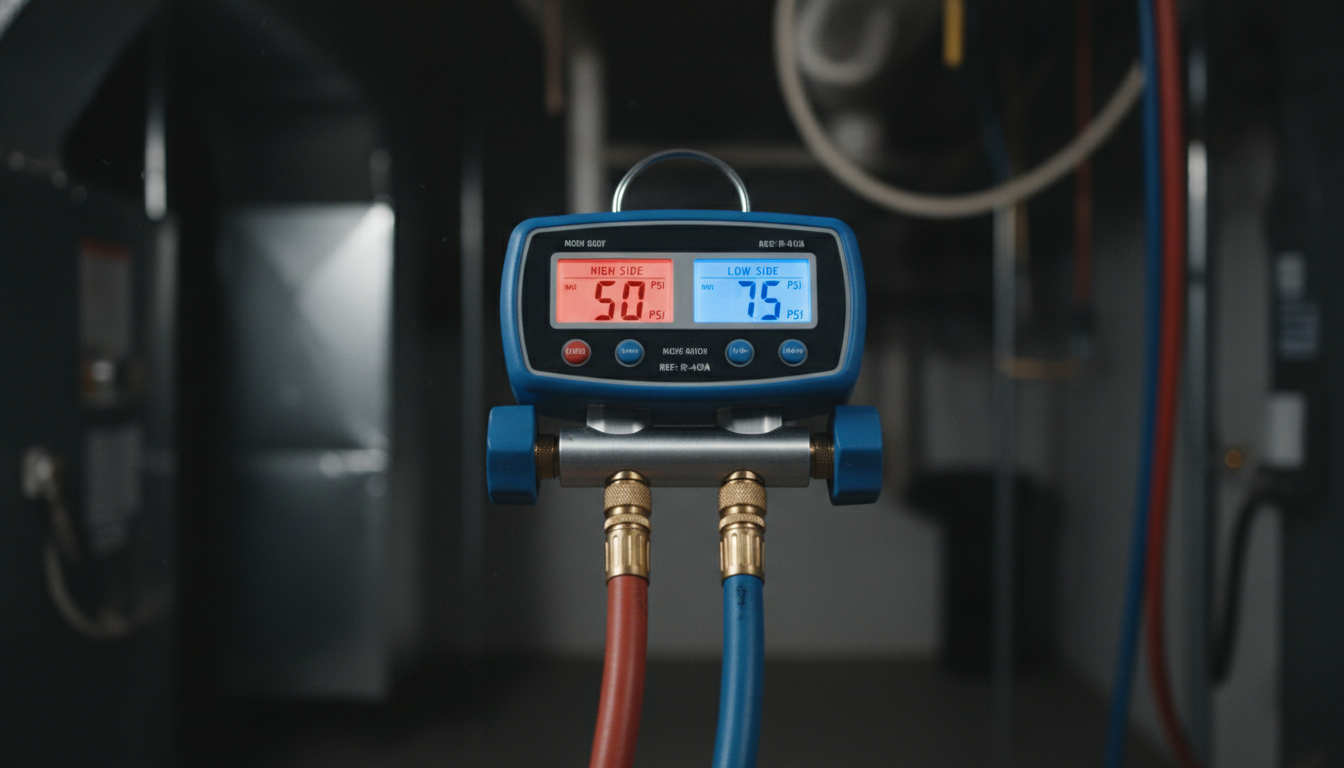
A practical diagnosis
We start with the symptom, then check the thermostat, the filter (a 1-inch or a 4-inch, whichever the equipment takes), return and supply airflow, electrical components, drains, controls, and the outdoor unit. In an older home, access and duct routing can be part of the answer.
Repair usually makes sense when the problem's limited and the rest of the system's serviceable. Replacement gets more likely when failures keep returning, a major component changes the economics, or the existing setup makes a reliable repair difficult.
Floodplain planning
Tell us whether the proposed work changes equipment location, structure, elevation, drainage, access, or other site conditions. We'll write it down before we recommend a path.
We document the system and the practical HVAC scope. The local authority explains which property or permit questions apply. We won't guess at their answer.
Floodplain programs differ by community. Read the local floodplain management guide before you rely on a general answer.
What may change
If a replacement means moving the equipment, raising its height, or changing the enclosure, we treat that as its own project question, not an automatic swap.
Can we actually reach the equipment and finish the work without turning a repair visit into an unplanned building project? We check that first.
Supply and return paths, separated ducts, and poor routing can affect comfort. We still tie any duct concern back to the actual symptom you called about.
The drain under the unit, water exposure, wiring, disconnects, and service clearances all get a closer look in a basement or other lower-level spot.
HUD-related guidance summarized by ASFPM describes comparing flood elevations with project-site elevations as part of a more detailed review. See the elevation context.
Repair or replacement
We'll tell you what the symptom is, which part or condition failed, and whether something else could bring it back.
Age alone doesn't settle it. Major components, your comfort needs, access, and the condition of the existing setup all matter too.
If the work affects location, structure, elevation, drainage, or other site conditions, we'll tell you to check with the responsible local office.
Local planning practices can influence development and permit decisions. Read the local planning context.
Before you call
You don't need to solve every planning question first. Bring us the symptoms, photos, service history, and any property information you already have.
We'll sort out which finding is about the HVAC system, which question is about project scope, and which item needs local confirmation.
Before the assessment
They may need different access, duct, return-air, electrical, drainage, or placement planning. We check the existing layout before we recommend a replacement.
No. It's a reason to verify the property and proposed work with the responsible local office. A routine repair can be a different question entirely from a replacement or relocation.
Turn the system off if water's spreading or the indoor unit's flooding. Don't bypass a float switch, open the equipment, or keep running a system that's creating a safety concern. Call us and we'll take it from there.
Point of Rocks service options
Tell us what changed, whether the equipment sits in an older retrofit or a lower-level space, and what property information you already have.