Gas, smoke, or carbon monoxide
Leave the home and call 911 or the utility from a safe location. Don't stay inside to find the source or test the furnace.
Oakdale, MD emergency HVAC guidance
No heat, no cooling, a leaking system, or a strange smell can turn a normal evening unsafe fast. First, separate the comfort problem from the hazards that need emergency services or the utility.
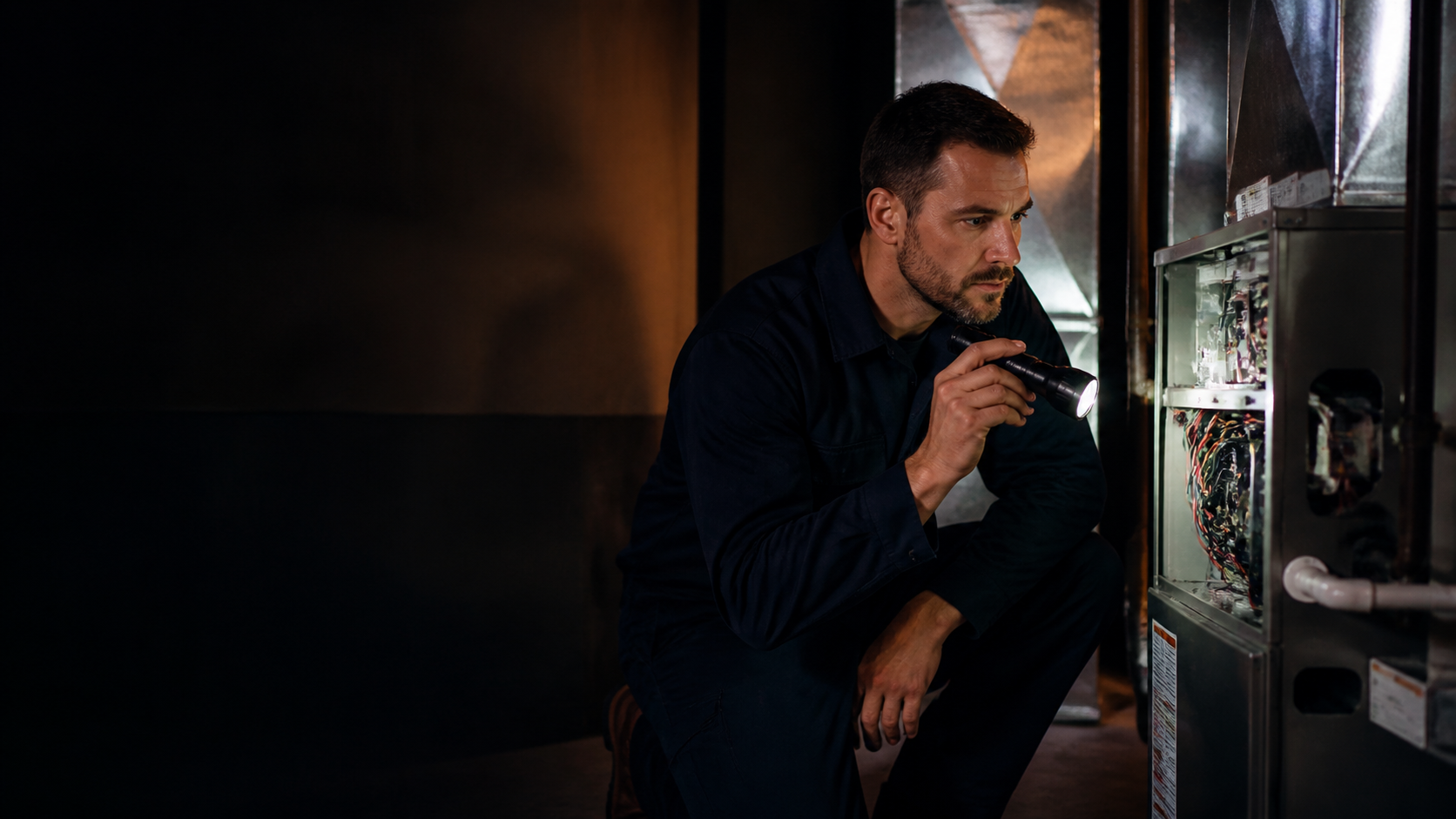
If there's no immediate danger but the system won't heat or cool, water's appearing near the equipment, or it keeps shutting down, call us for diagnosis rather than resetting it again and hoping the problem clears.
Sort the problem
An emergency's usually a problem that threatens safety, could damage the home, or leaves the household without heating or cooling in severe conditions. The symptom tells you how fast to stop guessing.
Leave the home and call 911 or the utility from a safe location. Don't stay inside to find the source or test the furnace.
Urgency rises once the weather turns severe, the indoor temperature swings toward freezing or past 90, or someone in the home's vulnerable to heat or cold.
Water near the equipment or ice on the unit can come from several causes. Stop running the system when it's safe and call us for a diagnosis.
A new mechanical sound, short cycling, a blank thermostat, or a breaker that trips again needs testing, not another reset.
Put safety first
Leave right away if you smell gas, see smoke, or suspect carbon monoxide. Call 911 for an immediate life-safety threat, and follow your utility's emergency instructions from a safe location. Don't stay inside to find the source.
Don't open the furnace, air handler, electrical panel, or outdoor unit to investigate. Don't handle refrigerant, gas controls, wiring, combustion components, or sealed equipment.
If water's active, shut off a nearby water source only when you can do it safely. Keep everyone away from electrical equipment that might be wet.
Only when the home is safe
These observations make the service call more useful. Stop if anything smells burned, looks damaged, or trips electrical protection a second time.
Confirm the mode, set point, display, batteries if it has them, and any alert. Note whether the screen's blank.
Inspect it without reaching into moving equipment. Replace it only when the system's safely off and you know the correct size, whether that's a 1-inch or a 4-inch.
Confirm the supply vents aren't closed or blocked by furniture. Don't remove registers or open ductwork.
Look for water, ice, debris, or visible damage around the indoor and outdoor equipment. Keep your hands out of the unit.
If the panel and area are dry and there's no warning sign, note one trip. Trips again? Leave it off and call us.
Find the model information and note when it started. A safe photo of a display, a leak, or ice helps explain the call.
A useful Oakdale reference
Oakdale School Road connects Oakdale Elementary, Oakdale Middle, and the Oakdale Recreation Center. Oakdale High's on Eaglehead Drive. Mentioning that school cluster or Oakdale Village gives us a useful orientation point without guessing at a street number.
After the home is safe
You don't need to know the failed part's name before you call. The change in sound, airflow, temperature, water, or odor's the useful starting point.
Tell us whether the system stopped, runs without heating or cooling, cycles, leaks, freezes, or makes a new sound.
We test the thermostat, controls, airflow, drain, motors, electrical parts, burners, or the refrigerant circuit - whatever the symptom points to.
Ask us what failed, what caused it, whether it could come back, and what the recommended repair's meant to change.
You should understand the immediate repair, the risk of putting it off, and why we are or aren't recommending replacement.
Repair or replace
Repair can make sense when the equipment's otherwise in reasonable condition, the failure's isolated, and the fix restores dependable operation without a larger safety or performance concern.
Replacement deserves more attention once failures repeat, a major component's failed, safety concerns remain, or comfort problems keep coming back. Age matters, but it's not a universal cutoff.
What did we find? What caused the failure? What does the repair change? What happens if you put it off?
Keep the choice tied to the equipment's condition, its repair history, its expected service life, and the comfort of your Oakdale home.
Before you call
When there's no immediate safety danger, the best next step's a clear HVAC diagnosis. When there's gas, smoke, or a carbon monoxide concern, handle that danger first.
Gas odor, smoke, a burning electrical odor, a carbon monoxide alarm, or another immediate danger comes before HVAC service. Leave the home and call the right emergency service or utility. No heat, no cooling, water, ice, loud new sounds, repeated shutdowns, or a breaker that trips again need prompt HVAC diagnosis, with urgency shaped by the weather and who's in the home.
Keep people away from wet electrical equipment and note where the water's coming from. If you can safely stop the equipment, do it, then call us for diagnosis. A blocked drain, a frozen coil, a plumbing connection, or something else can create the same visible puddle.
Call us quickly when the noise is new, loud, worsening, or paired with a burning smell or lost heating or cooling. Turn the system off if it's safe and describe the sound. You don't need to guess which part failed.
Confirm the address before you call us. Give us the full address, the symptom, the equipment type, and the urgency so we can start with useful information.
Tell us what changed, what the thermostat shows, and whether you see water, ice, or unusual odors. If the home isn't safe, leave first and call 911 or the utility from outside.