A symptom isn't a diagnosis
Warm air, weak airflow, a blank thermostat, water, ice, or a new sound can all come from more than one problem. We follow the symptom to an actual finding instead of guessing at a part.
Libertytown HVAC repair
Libertytown grew up around the crossroads where MD-26, MD-75, and MD-31 meet, and the housing shows it: decades-old places with retrofitted systems on some lots, newer builds on others. Know what failed before we talk replacement. We start with the equipment in your home and the change you're feeling, then we diagnose before we recommend a part. If replacement comes up, we'll tell you why.
Start with the failure
Tell us what you can feel, hear, or see. The timing, the thermostat setting, and which rooms are affected help us separate an equipment problem from an airflow, control, or drainage problem.
Warm air, weak airflow, a blank thermostat, water, ice, or a new sound can all come from more than one problem. We follow the symptom to an actual finding instead of guessing at a part.
We look at what failed, the shape the rest of the system's in, how big the repair is, and whether this same problem keeps coming back.
An addition, a finished basement, or how you actually use a room can change how a problem shows up in a Libertytown house.
A diagnosis with a decision attached
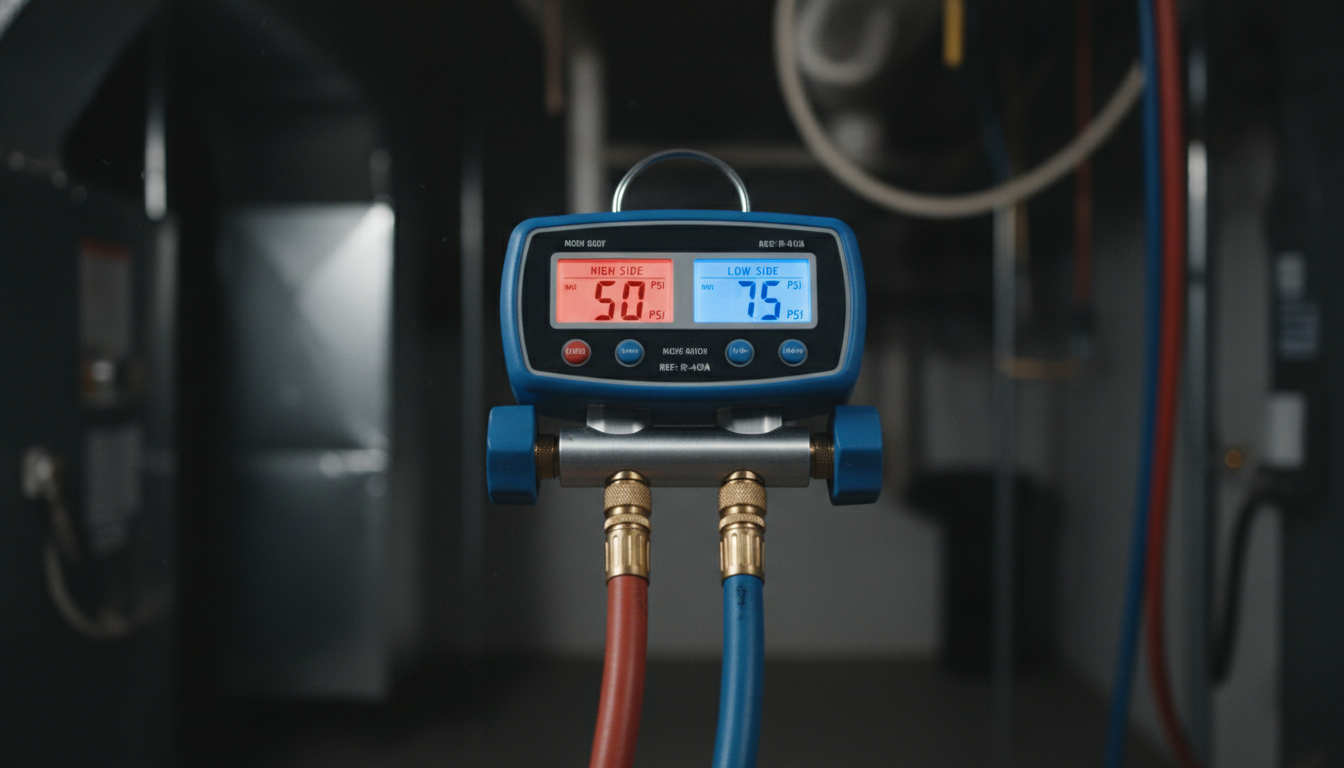
A useful visit explains what the system's doing, what we tested, and what the result means for your home. You don't need to know every test name. You do need to know what the test showed - whether that's a cooling system that's lost its 15-to-20-degree drop between the air going in and the air coming out, or a control board that won't hold a signal.
Before you request service
Your notes won't replace testing. They just keep the visit from starting with "it's not working" and nothing else.
Write down whether it hit all at once or got worse over a few days, and whether it's the whole house or just one room.
Note the mode, the temperature it's set to, and any error code on the display. Don't open the equipment to chase a blank screen.
If it's safe, look at a dirty filter, a closed register, or a tripped breaker. Don't reset a breaker more than once if it trips again.
A new noise, a smell, water, ice, weak airflow, a system that starts and stops. Those details give us a better place to start.
Don't remove access panels, touch live electrical or gas components, open a refrigerant circuit, or keep resetting a breaker that trips again. Those steps are ours to take.
Repair or replacement
A repair number isn't useful next to a vague replacement suggestion. We start by explaining what failed, what the work fixes, and what's still uncertain.
A smaller repair is often the right call when the system's otherwise been dependable and the work we're proposing fixes a clear control, airflow, drainage, or electrical problem.
Ask us what caused the failure, whether we've addressed that cause, and what signs would tell you the problem's coming back.
It's time for a real replacement conversation when breakdowns keep coming back, a safety concern remains, the equipment's in poor shape, or a major repair would leave other problems unresolved.
Age alone doesn't explain what failed. We tie the recommendation to the actual component, the service history, safety, and the condition of the system as a whole.
Frederick County context
Homes in Libertytown and the surrounding county don't share one layout or one problem. An older house with an addition, a finished basement, or ducts that run through the attic will show a symptom differently than a newer build on a fresh system. Tell us the home's age if you know it, the rooms affected, and anything that's changed recently.
When you request service in Frederick, Urbana, Walkersville, Middletown, New Market, Mount Airy, Ballenger Creek, or another Frederick County community, those same three details are enough to start.
Libertytown service options
Questions homeowners ask
No. We tie the recommendation to what we actually confirmed failed. Equipment condition, repeat breakdowns, safety concerns, and how big the repair is can all change that.
You should know what failed, what the work fixes, what's included in the price, and how we'll test the equipment once it's done.
You can note the thermostat, filter, vents, airflow, sounds, water, and error codes when it's safe to look. Don't remove panels, touch wiring, or open gas or refrigerant components.
No. Each system has different parts and different clues. A boiler, heat pump, furnace, or ductless system gets a diagnostic path that fits what's actually in your home.
Tell us what changed and what your equipment is doing before you decide what comes next.