A repair may still be the right answer
One failed part - a control, a sensor, a drain backup - doesn't settle the replacement question when the rest of the system still has years in it.
HVAC replacement in Ijamsville should start with a real problem, not a sales pitch. Maybe the system's needed 3 repairs in the last year. Maybe certain rooms never feel right, a major part failed, or the equipment's just getting harder to keep running.
The useful question is whether replacement actually solves the problem better than another repair, and whether the new system fits the house.
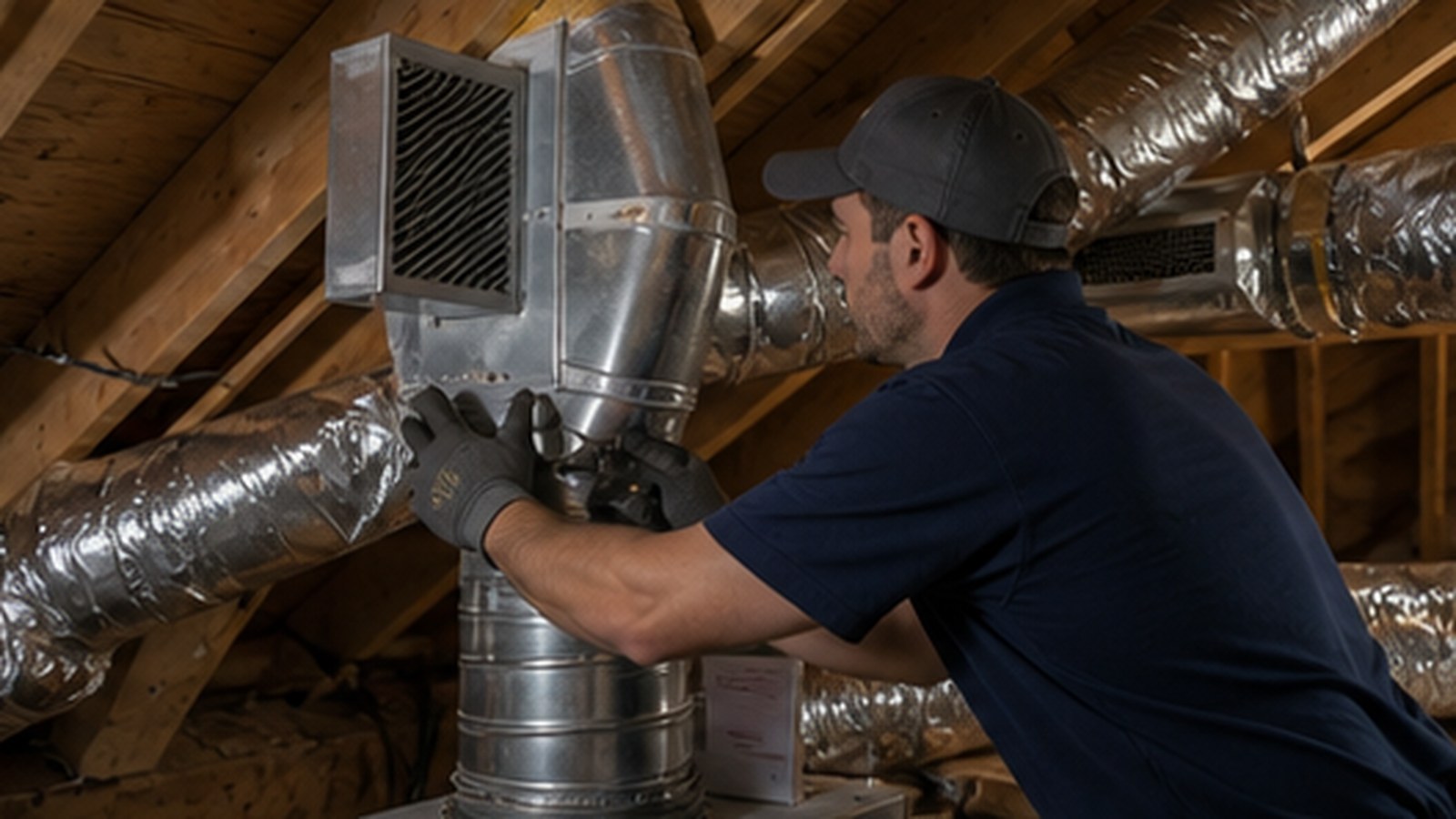
Age alone doesn't decide it. The evaluation weighs the symptom, the repair scope, and what the house actually needs.
One failed part - a control, a sensor, a drain backup - doesn't settle the replacement question when the rest of the system still has years in it.
2 or 3 failures in a season, unsafe equipment, parts nobody stocks anymore, or comfort that keeps sliding - that's when replacement becomes worth a real comparison.
The new system has to fit the ducts, the airflow, and the electrical service - and the plan has to account for how the crew gets the old unit out.
An older village house and a newer Linganore-area build don't just differ in age - the duct layouts, controls, electrical setups, and access limits can be entirely different animals.
Pay attention to the rooms that started the call. A bedroom that stays warm, a basement that feels damp, or a second floor with weak airflow tells the evaluator something about the whole comfort problem. Mention additions, remodeled areas, closed-off rooms, odd thermostat behavior, and any history of uneven temperatures.
A warm bedroom, a damp basement, weak airflow on the 2nd floor, or another uneven pattern gives the evaluation a real starting point.
Ductwork and return airflow decide how conditioned air actually moves. A new unit can't fix a restriction, leak, or layout problem on its own.
Thermostat controls, drainage, electrical service, and access can all change what a practical replacement involves in this particular home.
A clear evaluation gives you a visible sequence before any work begins. The recommendation should stay tied to the problem you actually wanted solved.
We start with the equipment history, what the house has been doing, and whatever changed in the last year or 2.
We set the repair option next to the replacement option, so you can see what each one is actually meant to fix.
We walk the ducts, the airflow, the drainage, and the electrical service - and we spend time in any room that's still uncomfortable.
After installation, we test the airflow and the controls - and we stand in the rooms that started the call.
A new air handler can't fix a duct problem, and a new condenser can't fix a return that's starved for air. Checking those details first keeps the new equipment from getting blamed for a problem that lives somewhere else in the house.
No. A focused repair can make sense when the equipment's serviceable and the problem is limited. Replacement becomes the stronger option when failures repeat, a major part fails, safety changes the decision, or the system no longer fits the home's comfort needs.
Not automatically. Home size, ductwork, return airflow, electrical service, controls, drainage, and access can all differ from one property to the next. The system should fit your home and the problem you're trying to solve.
Ask what it means for the rest of the system. One failed part - a control, a sensor, a drain backup - doesn't settle it by itself. A diagnosis tells you whether a focused repair's enough.
The equipment information if it's easy to find, recent repair history, the rooms and symptoms that concern you, and anything about additions, ductwork, access, or thermostat behavior. Those details separate the real problem from a guess about which part needs replacing.
Bring the equipment history, comfort problem, and any addition or ductwork concern. We'll start with a clear scope for the problem in your home.