Static Pressure Problems
Causes, Symptoms, and HVAC Diagnosis
Static pressure problems can show up as weak airflow, uneven rooms, whistling, or an HVAC system that runs longer than it used to. The question is simple: is something making it too hard for air to move?
The answer may be a loaded filter, a blocked return, a damaged duct, a dirty coil, a blower issue, or a design limitation. Testing narrows that list — it doesn't automatically identify one failed part or prove the system needs replacement.
For a Frederick County homeowner, the useful next step is to recognize the pattern, make the few safe checks, and ask for a measured diagnosis when the problem remains.
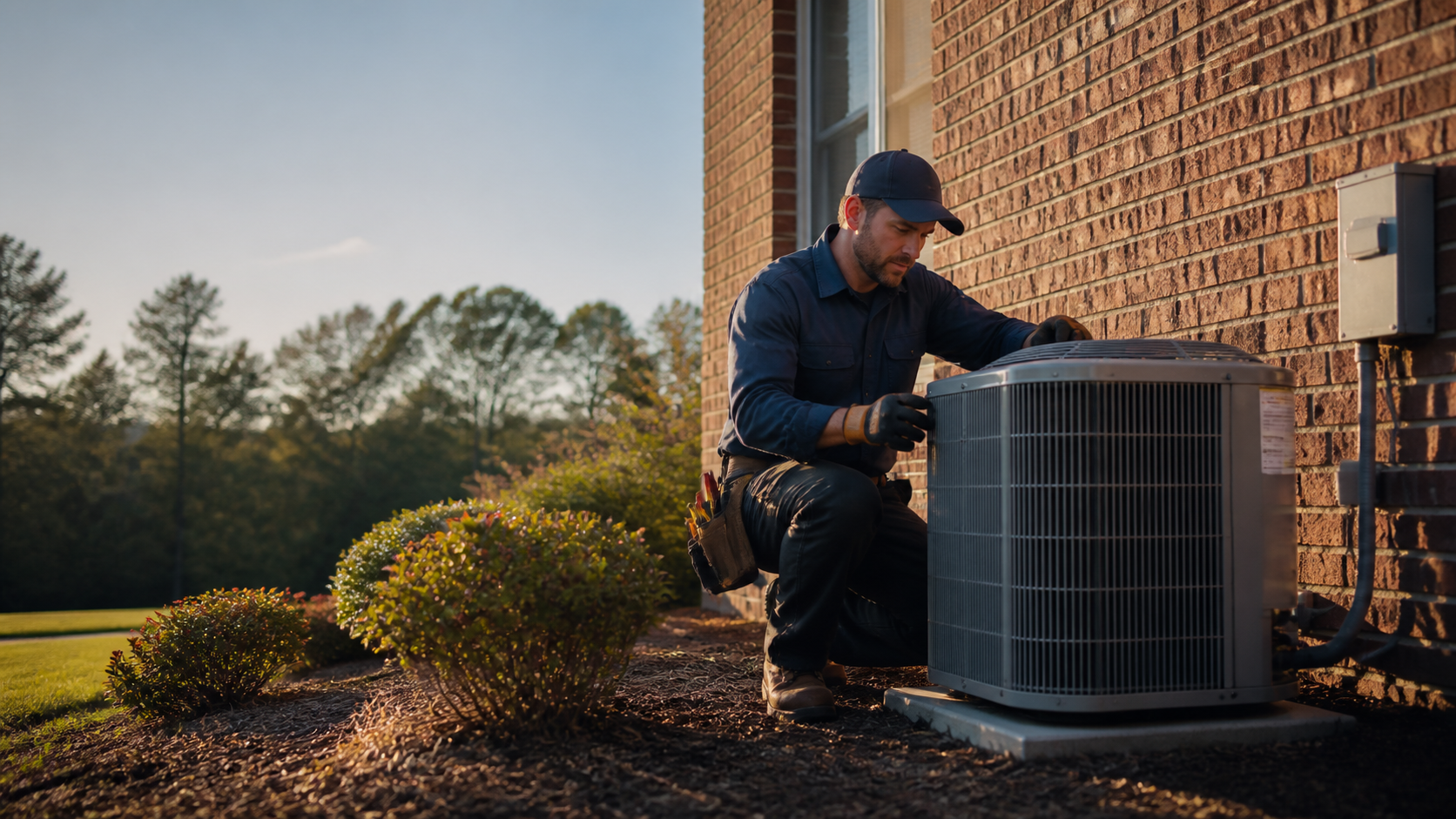
Check the air path
Turn the thermostat off before handling the filter. Confirm it is the correct size and airflow direction, then make sure supply registers and return grilles are open and not covered.
Stop before the equipment
Do not drill pressure ports, open a furnace cabinet, handle refrigerant, change wiring, bypass a safety control, or work on gas combustion equipment.
Bring useful details
Note which rooms have weak airflow, whether the problem affects heating or cooling, how long the system runs, and whether ice, noise, or repeated shutdowns appeared.
What does static pressure mean in an HVAC system?
Static pressure is the resistance an HVAC blower has to overcome as it moves air through filters, ducts, coils, grilles, and other components. Every narrow turn, blocked opening, dirty surface, leak, and restrictive component changes how hard the blower has to work.
The supply side carries conditioned air toward the rooms, while the return side brings room air back to the equipment. Both sides matter when a technician evaluates the air path through a home.
Static pressure is related to airflow, but it is not the same measurement. A pressure reading can help show system health and, when compared with blower data, help estimate airflow.
It should not be presented as direct airflow by itself.
You can't solve the whole problem from the number alone. The measurement locations and the equipment manufacturer's allowable range matter, so static pressure is a diagnostic clue rather than a universal pass-or-fail number.
- The supply side moves conditioned air toward the rooms.
- The return side brings room air back to the equipment.
- Filters, ducts, coils, grilles, leaks, and openings can add resistance.
- Pressure readings need equipment and blower context to be useful.
What are the signs of static pressure or airflow restriction problems?
Look for a pattern rather than one isolated symptom. Possible signs include weak air at several supply registers, one room or floor that stays warmer or cooler, long run times, whistling or rushing sounds, a furnace that cycles off on a safety limit, an air conditioner that develops ice, or a filter that looks heavily loaded soon after replacement.
A dirty filter can reduce air volume and cause a furnace to overheat enough to trigger a safety shutoff. Whistling can also come from a clogged filter or duct gaps.
These signs overlap with thermostat, blower, coil, refrigerant, electrical, and sizing problems. Treat them as a reason to inspect the air path and equipment, not as proof that static pressure is the only issue.
- Air feels weaker at several supply registers than it did before.
- One room or floor is consistently warmer or cooler than the rest of the house.
- The system runs for long periods without reaching the thermostat setting.
- You hear whistling, rushing, or a loud return-air sound.
- The furnace shuts down on a safety limit or the air conditioner develops ice.
- The filter looks heavily loaded soon after replacement.
What causes static pressure problems in a home HVAC system?
Filters protect equipment, but they also add resistance. As a filter collects particles, its pressure drop can increase.
A higher MERV rating is not automatically better for every system; the fan, filter slot, and available surface area have to accommodate the filter.
The blower also needs a clear way to pull air back from the home. Furniture, rugs, closed return grilles, a dirty filter, or an undersized return duct can reduce that path.
Flexible duct can sag or pinch when it is not properly supported. Duct leaks create a different problem: air escapes through disconnected joints or openings instead of reaching the room.
A leak in an attic or crawlspace can waste conditioned air outside the living area.
A damaged coil or blower wheel can add resistance too. Most of these conditions take an inspection that ties the restriction to the system's measured pressure and airflow before anyone names a fix.
- A loaded or overly restrictive filter.
- Blocked or undersized return air.
- Crushed, kinked, leaking, or poorly supported ducts.
- A dirty indoor coil or blower wheel.
- A duct or equipment design limitation that needs measured evaluation.
How does an HVAC professional check for static pressure problems?
A useful diagnosis connects the reading to the equipment and symptom. A technician may ask when the airflow changed, which rooms are affected, and whether the problem happens in heating, cooling, or both.
The inspection can include the filter, openings, visible ductwork, coil, blower, equipment configuration, and room balance. A manometer and pressure taps measure relevant supply and return pressures.
The technician compares total external static pressure with the equipment manufacturer's allowable range and uses blower data to measure or estimate airflow. Duct leakage or room balance checks may be appropriate when the pattern points that way.
- Ask when the airflow changed and which rooms are affected.
- Check the filter, openings, visible ducts, coil, blower, and equipment configuration.
- Use a manometer and pressure taps at relevant supply and return locations.
- Compare total external static pressure with the manufacturer's allowable range.
- Use blower data and additional duct or balance checks when indicated.
What can a homeowner safely check before scheduling HVAC service?
Start with parts intended for routine homeowner access. Turn the thermostat off before handling the filter, then confirm the filter is the correct size, installed in the airflow direction, and not visibly loaded with dust.
Make sure supply registers and return grilles are open and not covered by furniture, curtains, rugs, or storage. You can also look for a new whistling sound, a loose visible duct connection, or a crushed section that is visible without opening equipment or entering an unsafe area.
Write down which rooms have weak airflow, whether the problem affects heating or cooling, how long the system runs, and whether ice or repeated shutdowns appeared. Filters should fit snugly without being bent or crushed.
Do not drill pressure ports, open a furnace cabinet, handle refrigerant, change wiring, bypass a safety control, or work on gas combustion equipment. If the filter and visible openings are fine but the airflow problem remains, the next useful step is measured diagnosis.
- Confirm the filter size, fit, airflow direction, and visible condition.
- Open supply registers and return grilles.
- Move furniture, curtains, rugs, or storage away from air openings.
- Note the affected rooms, operating mode, run time, ice, noises, and shutdowns.
- Stop at visible, routine checks and leave sealed equipment to a professional.
When should static pressure problems be treated as an HVAC repair issue?
Schedule an HVAC diagnosis when weak or uneven airflow persists after a filter and obstruction check, especially when several rooms are affected. The technician should determine whether the restriction is in the return, supply ducts, filter setup, coil, blower, or controls.
Treat ice on the indoor coil, repeated furnace safety shutdowns, a burning smell, a breaker that keeps tripping, or a sudden and severe loss of airflow as reasons to turn the system off and seek professional help.
Restricted airflow can be associated with an overheated furnace or frozen coil, but those symptoms can have other causes. Excessive pressure drop can damage furnaces, freeze coils, and strain blower motors.
If the issue is a maintenance item, the fix may be straightforward. If a return is undersized, a duct is damaged, or an equipment component is failing, the repair should be scoped from the measured condition.
Replacement is a separate decision that depends on age, safety, repair history, and overall system condition.
- Persistent weak or uneven airflow after the simple checks.
- Ice on the indoor coil or repeated furnace safety shutdowns.
- A burning smell, repeated breaker trips, or sudden severe airflow loss.
- A restriction that needs equipment access or pressure measurements.
- A repair-versus-replacement decision that requires more than static pressure alone.
Why can static pressure problems look different from one Frederick County home to another?
Homes in Frederick County can have very different air paths. Older homes, additions, crawlspaces, and converted rooms may have longer runs, altered returns, or flexible duct routed through tight spaces.
Write down whether the weak room is far from the equipment, whether the problem started after a renovation or filter change, and whether every register feels weak or only one branch does. The pattern helps a technician decide where to measure first, but it does not replace testing.
- Older homes and additions may have altered returns or longer stretches of duct.
- Crawlspaces and tight routing can affect flexible duct condition.
- A single weak branch points to a different starting place than whole-house weakness.
- Renovation or filter-change timing can help explain what changed.
What should you ask for when requesting a static-pressure diagnosis?
When you call an HVAC professional, describe the comfort change and ask clear questions. You don't need to diagnose the part before asking for help.
A clear description, filter size and type, rooms affected, and any ice, noise, or shutdown history give the technician a useful starting point. Ask for a straight explanation of what is restricting the air and which next step fits the condition in your home.
For a Frederick County homeowner, that is the useful meaning of static pressure testing: turning weak airflow or uneven comfort into a measured HVAC problem with a sensible path forward.
- Can you check total external static pressure on the supply and return sides?
- What does the equipment manufacturer list as the allowable range?
- What airflow does the blower data or airflow test indicate?
- Is the filter adding more pressure drop than this system can handle?
- Are the return and supply ducts sized, connected, and supported well enough for the measured airflow?
- Is the issue a repair, duct correction, maintenance item, or larger equipment decision?
Answers to the usual follow-up questions
What is static pressure in an HVAC system?
Static pressure is the resistance an HVAC blower has to overcome as it moves air through filters, ducts, coils, grilles, and other components. It is related to airflow, but it is not the same measurement.
Can a filter cause high static pressure?
Yes. A loaded filter can reduce air volume and increase pressure drop. A filter that is too restrictive for the system can do the same even when clean. Confirm the size and fit, and ask a technician which filter the system can handle.
Can a filter cause high static pressure?What are common signs of a static pressure problem?
Weak airflow at several registers, uneven rooms, long run times, whistling or rushing sounds, a furnace safety shutdown, an iced air conditioner, or a filter that loads quickly can all point to an airflow restriction.
How does a technician measure static pressure?
A technician uses a manometer and pressure taps to measure relevant supply and return pressures, then compares total external static pressure with the equipment manufacturer's allowable range and considers blower data.
Can a homeowner fix a static pressure problem?
A homeowner can replace a visibly loaded filter with the correct size, open supply registers and return grilles, and move visible obstructions. Do not open sealed equipment, drill pressure ports, handle refrigerant, change wiring, or work on gas combustion equipment.
Does high static pressure mean the system needs replacement?
No. Static pressure is a diagnostic clue. The cause may be a filter, obstruction, duct, coil, blower, control, or design limitation. Replacement is a separate decision based on age, safety, repair history, and the condition of the overall system.