HVAC Replacement Estimate Checklist
What Belongs on Your Quote Before You Decide
A new system is one of the bigger bills you'll face as a homeowner, so a replacement estimate deserves a careful read before you sign anything.
A good estimate is more than a single number. It names the equipment and the sizing, then the labor, the permit, and the warranty. A vague one-line price hides the parts that matter most.
Here's what a complete estimate needs to show, what drives the price up and down, and the questions that keep your quote honest. Use it to compare two bids side by side and spot the gaps.
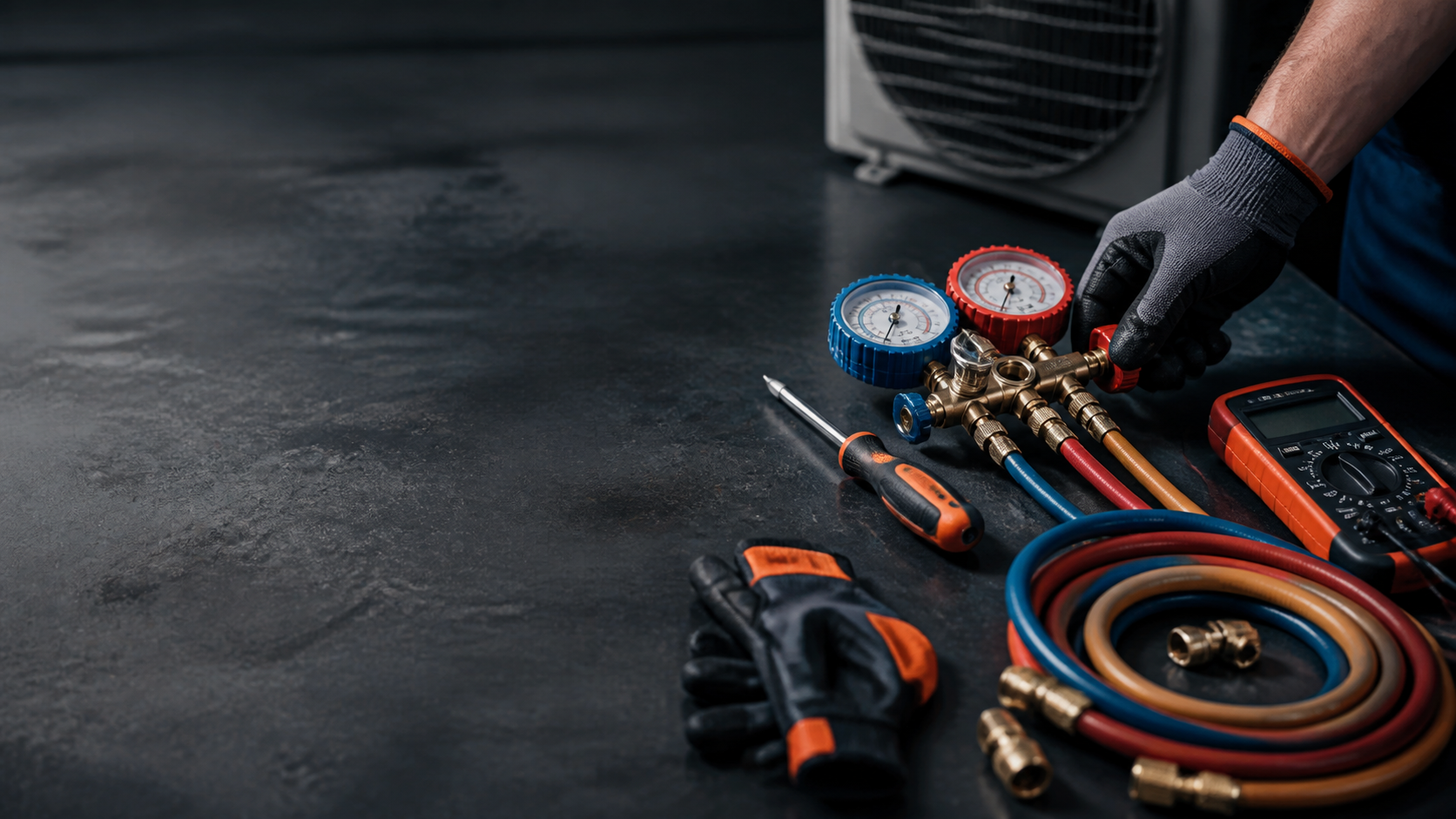
Must be in writing
The exact model and the sizing basis, then the labor, the permit, and the warranty terms. A one-line total with no detail is a red flag. Ask for each part broken out.
What moves price
System size and efficiency rating, then ductwork condition, hard access, and timing. A peak-season install costs more than an off-season one. A duct fix adds labor.
Before you sign
Get a second written quote. Confirm we calculated the sizing, not guessed. Ask what the warranty covers and who handles the permit and inspection.
What a replacement estimate is for
An estimate does two jobs. It tells you the price, and it tells you exactly what you're buying.
Both matter — a low number on a vague quote can cost you more in the end.
A new system is a long-term purchase. You'll live with this equipment for years, so the estimate needs to show the model, the size, and the work in plain detail.
Prices here are directional, not fixed. Frederick companies set their own rates, and equipment and material costs shift over time.
Use this checklist to read a quote, not to argue over a dollar figure.
Think of the estimate as a preview of the contract. Everything you expect to happen belongs on paper before any work starts.
If it isn't written down, nobody promised it.
It also gives you a fair way to compare companies. Two bids on the same home cover the same work, in theory.
When you can read each line, you can tell whether a lower price means a better deal or a thinner job. That's what makes the comparison honest.
- The estimate sets the price and spells out the work.
- A new system lasts years, so detail matters.
- Prices vary by company — treat them as directional.
- If it's not in writing, nobody promised it.
The equipment and sizing line
Your estimate needs to name the exact equipment. Look for the brand, the model number, and the efficiency rating.
A quote that just says "new AC" or "new furnace" leaves too much room for substitution.
Sizing is the part most homeowners miss. We match the system to your home with a load calculation — not a guess based on the old unit.
An oversized system short cycles and wears out faster.
A right-sized system runs longer, cycles evenly, holds humidity down in a muggy Frederick summer, and lasts. Ask the company how they sized it.
A real answer points to a calculation, not a swap for the same size as before.
If a bid swaps in a bigger system "to be safe," slow down. Bigger isn't better.
An oversized unit cools fast, then shuts off, leaving the air clammy and your bill higher. The right size is the one your home actually needs.
- Look for the brand, model number, and efficiency rating.
- We match the size to your home with a load calculation, not a guess based on the old unit.
- An oversized system short cycles and wears out faster.
- Ask how they sized it — expect a real calculation.
The typical Frederick range
Think in tiers, not exact dollars. A straight swap of the same type and size sits at the low end.
Changing system types, going bigger, or adding duct work pushes toward the high end.
The low tier is a like-for-like replacement that reuses your existing ducts and electrical. The work is mostly pulling the old unit and setting the new one.
It's the friendliest on the budget.
The high tier adds scope. New ductwork, switching from a furnace to a heat pump, a high-efficiency unit, or a tight install spot all add labor and materials.
More scope, more cost.
Where you land depends on your home and the system you choose. Use these tiers to set your expectations before the quote arrives.
A simple same-size swap and a full system change with duct work are worlds apart, even though both count as replacements.
- Low tier: like-for-like swap reusing ducts and electrical.
- Middle tier: higher-efficiency unit, minor duct or electrical work.
- High tier: system-type change, new ductwork, hard install spot.
- Tiers are directional — your quote depends on your home.
What drives the price up
Size and efficiency are the first drivers. A larger system costs more, and a high-efficiency unit costs more up front than a standard one, though it can lower your monthly bill.
Ductwork is the hidden one. If your ducts leak, run the wrong size, or need rerouting, that work stacks on top of the equipment cost.
A new system on bad ducts won't perform well, so the fix is worth it.
Access and timing add cost too. A unit tucked in a tight attic or crawlspace takes more labor.
A peak-season install during a Frederick heat wave or a winter cold snap can carry busy-season pricing.
- Bigger and higher-efficiency systems cost more up front.
- Duct repair or rerouting adds labor and materials.
- Hard access in attics or crawlspaces adds labor time.
- Peak-season installs can carry busy pricing.
What brings the price down
Reusing sound ductwork and electrical keeps the bill lower. If your ducts test tight and the wiring is in good shape, the install is mostly the equipment and the labor to set it.
Off-season timing helps. Book a replacement in spring or fall, before the rush, and you'll skip the busiest weeks and get room to compare quotes without pressure.
A like-for-like swap is the simplest job. Keeping the same system type and a right-sized unit means less custom work.
The more standard the install, the lower the labor.
Rebates and financing can change the math, but treat both as items to verify, not assume. Utility rebates and manufacturer offers change over time, so confirm what's current before you count on one.
A real estimate lists any rebate as a checked figure, not a vague promise.
- Reuse sound ductwork and electrical where possible.
- Book in spring or fall to skip the busy season.
- Keep the same system type for a simpler install.
- Verify any rebate or offer before you count on it.
What line items belong on your quote
A complete quote breaks the price into parts. You should see the equipment cost, the labor, any duct or electrical work, the permit, and disposal of the old unit as separate lines.
Separate lines let you compare two bids fairly. If one quote is far cheaper, the line items show whether it skipped the permit, used a smaller unit, or left out duct work.
The detail tells the story.
Watch for vague bundling. A single "labor and materials" line with no breakdown makes it hard to see what you're paying for.
Ask the company to split out the parts so the total adds up in plain view.
A good quote also states what's not included. If old duct repair or an electrical upgrade might come up mid-job, an honest estimate flags it as a possible add-on instead of springing it on you later.
- Equipment, labor, duct and electrical work as separate lines.
- Permit, inspection, and old-unit disposal listed out.
- Avoid a single bundled total with no detail.
- Possible add-ons flagged up front, not after the job starts.
Permits, inspection, and code
A system replacement usually needs a permit, and an inspector checks the work. The estimate needs to say who pulls the permit and whether the price bakes in the fee.
A licensed company handles the permit and the inspection as part of the job. Skipping the permit to save a little is a false economy — it can cause trouble at resale, and it means nobody ever checked the work.
Frederick County sets the local permit and inspection process. Confirm the company pulls the permit in your name or theirs and schedules the inspection.
A real estimate treats this as standard, not an extra you have to chase.
Ask to see the permit and the passed inspection when the job is done. That paperwork is your proof the install met code, and it protects you if you ever sell the home.
- Most replacements need a permit and an inspection.
- The estimate names who pulls the permit and the fee.
- Never skip the permit to shave the price.
- Get the permit and passed inspection paperwork at the end.
Warranty terms to read
A new system carries two kinds of warranty. The manufacturer covers the parts.
The company covers the labor and the install. The estimate should spell out both, with their lengths.
Read the fine print on the parts warranty. Many require you to register the system after install, and some require regular maintenance to stay valid.
Ask the company who registers it and what keeps it active.
The labor warranty matters just as much. A part can be free under warranty while the labor to swap it isn't.
A company that stands behind its install offers a labor warranty in writing.
Ask what voids the warranty. Skipped maintenance, an unpermitted install, or a non-matching part can all do it.
Knowing the rules up front keeps a covered repair from turning into a surprise bill years later.
Get the warranty terms in writing with the estimate, not as a verbal promise. A warranty you can read is one you can hold the company to.
If a bid stays vague on coverage or length, ask for the details before you sign — not after a part fails.
- Expect a manufacturer parts warranty and a labor warranty.
- Check whether the parts warranty needs registration.
- Confirm the labor warranty length in writing.
- Ask what voids coverage — maintenance, permits, parts.
Questions that protect your quote
A few plain questions keep a replacement quote honest. Ask how they sized the system.
The answer should point to a load calculation, not the size of your old unit.
Ask for the price broken into lines — equipment and labor, then ducts, permit, and disposal. A quote you can read line by line is a quote you can check against another bid.
Ask who pulls the permit, who schedules the inspection, and what the warranty covers. These aren't extras.
They're part of a complete job, and a good company answers without hesitation.
Finally, get a second written quote on a job this size. Two estimates side by side show whether the price, the sizing, and the work are fair.
A good company won't mind you comparing. The bid that explains itself clearly is usually the one to trust.
- Ask how they sized the system — expect a calculation.
- Ask for equipment, labor, ducts, and permit as separate lines.
- Confirm who handles the permit, inspection, and warranty.
- Get a second written quote and compare line items.
What a fair replacement estimate includes
A fair estimate names the equipment, the sizing basis, and the full scope before any work starts. You should know the model, the size, and the work in detail when you sign.
It separates the costs so you can read them. Equipment, labor, duct or electrical work, the permit, and disposal each show up as their own line.
Nothing important hides in a bundle.
A fair estimate states the warranty and the permit plainly. It tells you what's covered, who pulls the permit, and what might come up as an add-on mid-job, so nothing surprises you later.
Watch for pressure. A quote that's only good today, or a push to sign before you compare, is a reason to slow down.
A sound system and an honest bid will still be there tomorrow. Take the time to read the lines and get a second opinion.
- Names the equipment, the sizing, and the full scope up front.
- Separates equipment and labor, then ducts, permit, and disposal.
- States the warranty and the permit clearly.
- No high-pressure deadline to sign before you compare.
Answers to the usual follow-up questions
What should an HVAC replacement estimate include?
It names the exact equipment, shows how you sized the system, and breaks out labor, duct or electrical work, the permit, and old-unit disposal as separate lines. It also states the warranty. A vague one-line total is a red flag — ask for the detail before you sign.
Should my new system be the same size as the old one?
Not automatically. The right size comes from a load calculation for your home, not a match to the old unit. An oversized system short cycles, leaves the air humid, and wears out faster. Ask the company how they sized it.
Should my new system be the same size as the old one?Why is one replacement quote so much cheaper than another?
The line items usually explain it. A cheaper bid may skip the permit, use a smaller or lower-efficiency unit, or leave out duct work. Compare the quotes line by line, not just the bottom number. The cheapest price isn't always the complete job.
Do I need a permit to replace my HVAC system?
Most replacements need a permit and an inspection in Frederick County. A licensed company pulls the permit and schedules the inspection as part of the job. Never skip the permit to save money — it leaves the work unchecked and can cause trouble at resale.
Are HVAC rebates and tax credits worth counting on?
Only after you verify them. Utility rebates and manufacturer offers change over time, and tax credit rules change year to year. Confirm what's current before you build it into your budget. A fair estimate lists any rebate as a checked figure, not a promise.
Should I get more than one replacement estimate?
Yes, on a job this size. Two written quotes side by side show whether the price, the sizing, and the work are fair. A good company won't mind you comparing. The bid that explains its line items clearly is usually the one to trust.
Should I get more than one replacement estimate?