One Room Stays Hot? What It Means and What to Check in a Frederick Home
One stubborn room in a comfortable house is usually a more specific problem than an air conditioner on its way out. Maybe the room isn't receiving enough conditioned air. Maybe its return path is pinched. Maybe a duct is leaking into the attic — or the room simply collects more heat through a window, wall, or ceiling than the system can carry away.
Which is why dropping the thermostat another two degrees rarely rescues a hot bedroom, office, or upstairs room. The hot room is a genuinely useful symptom; it just isn't a conviction of any single part. Pattern, airflow, room, and equipment all get a vote.
Begin with the supply register, the return path, the filter, the door, and whatever in the room makes heat. Stop at safe observation — and if the room stays hot or the system throws a new warning sign, bring in a diagnosis.
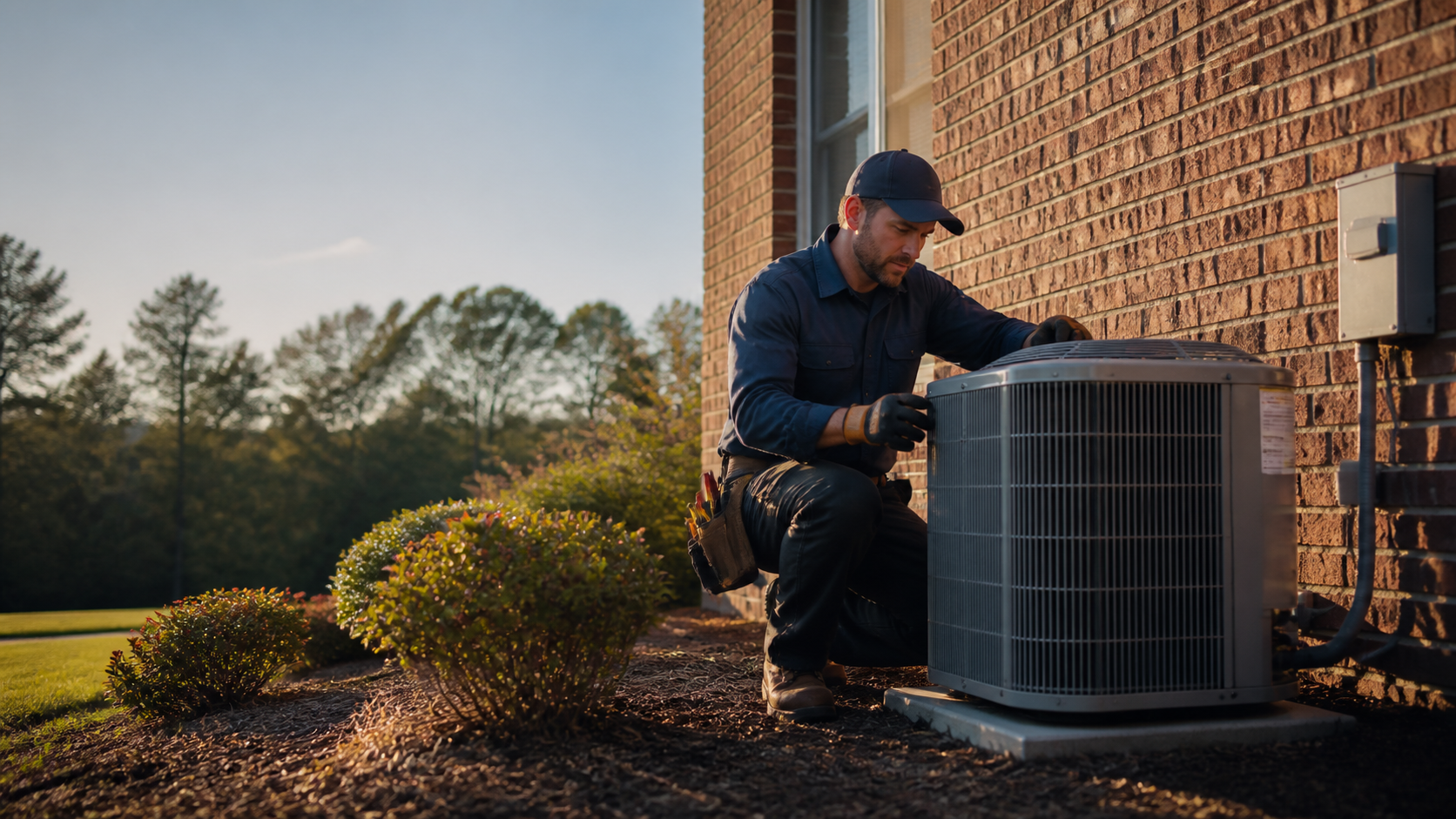
Check first
Confirm the thermostat setting, then hold a hand at the hot room's supply register and at a comfortable room's register for comparison. Clear the register and return, check the filter, and see whether the door changes anything.
Stop at observation
No opening equipment panels, handling refrigerant, bypassing a safety switch, nudging a fan blade, or resetting a breaker twice. Those moves create safety problems and erase the evidence a technician needs.
What to tell us
Which room, when it turns uncomfortable, whether the door matters, how its airflow compares with other rooms, and any ice, water, humidity, noise, or new operating pattern you've noticed.
Why does one room stay hot when the rest of the house is cool?
Interrogate the pattern first. Is the room hot around the clock, or mostly after lunch?
Did this arrive suddenly, or has that room always lost the argument? Does it cool off when the door stands open?
Does the supply register push strong air or barely whisper? Each answer sorts a delivery problem from a heat-gain problem.
The cast of usual suspects: a closed or blocked supply register, a restricted return grille, reduced airflow system-wide, a leaking or under-insulated duct, or extra heat arriving through a window, an attic, an exterior wall, or the ceiling. Sometimes the equipment or its controls have simply changed their behavior.
The Air Conditioning Contractors of America names duct airflow as a common cause of uneven room temperatures — alongside insulation, windows, and the direction a room faces. The symptom narrows the search; it doesn't hand you the failed part.
- A supply register may be shut, blocked, or delivering less than its neighbors.
- A return grille may be blocked — or unable to pull air once the door closes.
- A duct may leak, come apart, restrict flow, or lack insulation.
- Windows, sun, an attic, an exterior wall, or a ceiling may pour in more heat than the system removes.
What can you safely check when a room is not cooling?
Everything useful here happens with the air handler closed and your hands away from refrigerant. Compare the hot room against a comfortable one and write down the differences.
Confirm the thermostat mode, set point, and fan setting are what you think they are. Check the filter, and replace or clean it only as the filter frame and equipment instructions permit — don't muscle a thicker or higher-rated filter into a slot built for something else.
Check whether the hot room's supply register is open and free of furniture, rugs, and curtains. Find the return grille if the room has one, and clear the boxes and fabric off it.
Then run the door test: leave it open for an evening and see if the room behaves differently. That's the whole checklist — observation, not surgery.
- Thermostat, filter, supply register, return grille — in that order.
- Airflow in the hot room versus a comfortable room.
- Direct afternoon sun, a warm ceiling, condensation, unusual humidity, or a window that radiates heat.
- No opened panels, added refrigerant, bypassed safety switches, or repeated breaker resets.
How do airflow and a closed door affect a hot room?
The system needs a round trip: conditioned air arrives through the supply register, and room air leaves through the return path back to the equipment. Break either leg and the cycle limps.
Pinch the return and the room goes stuffy while the supply weakens — even with the blower running hard. A closed bedroom door can trap warm air in a house with a single central return; if the room improves with the door open, the return arrangement is asking for a closer look.
Ducts are the highways in between, and leaks, holes, sloppy connections, and thin insulation all shrink the delivery. So treat weak register airflow as a clue, not a conclusion — a technician can test the duct path and the system instead of reading the room's temperature like tea leaves.
- Keep the return grille clear of furniture, boxes, and fabric.
- Leave the hot room's door open for a while and watch what changes.
- A room that improves door-open may need a better return-air path.
- Weak airflow points at ducts or equipment — test before repairing.
Can windows, insulation, or an attic make one room stay hot?
Absolutely. A room can enjoy perfectly good airflow and still run hot because it takes on more heat than its neighbors.
Large or sun-facing windows, a ceiling under a baking attic, an exterior wall, air leakage, and missing or settled insulation all inflate a room's cooling load.
Air sealing and insulation attack different halves of the problem: sealing stops unwanted air sneaking through cracks and joints, while insulation slows heat moving through the structure itself. If the room peaks on sunny afternoons or stays uncomfortable despite steady supply air, one or both may belong in the plan.
More cooling is not automatically the answer. A duct modification won't fix a window or attic problem, and insulation won't repair a restricted blower or a leaking duct.
If the room feels muggy, put a number on it with a cheap humidity gauge — EPA recommends below 60 percent, ideally 30 to 50.
- Look for direct sun, a warm ceiling, an exterior wall, or a window hotter than the rest.
- Note whether the trouble follows the afternoon sun or lasts all day.
- Separate envelope heat gain from an airflow or equipment fault.
- A bigger system or a colder thermostat is not a cause-of-heat fix.
When does a hot room point to an HVAC repair or maintenance problem?
A room that has always run warm is probably telling you about the house's distribution or envelope. A room that suddenly turned hot — or a problem spreading into other rooms — puts the equipment and airflow under suspicion instead.
Book a diagnosis when you notice much weaker airflow, a filter that fouls unusually fast, ice on the equipment or refrigerant line, water near the indoor unit, humidity on the rise, constant on-off cycling, a new noise, warm air during a cooling call, or an outdoor unit that won't run.
A few symptoms skip the line entirely. Smoke, a gas odor, a carbon-monoxide alarm, burning electrical smells, or any immediate electrical danger: leave the area and get emergency help.
Troubleshooting stops at those, every time.
- A sudden change outranks a room that has always run warm.
- Ice, water, new noise, constant cycling, or warm air in cooling mode: test it.
- Rising humidity can ride along with airflow, drain, or cooling trouble.
- Gas odor, smoke, CO alarm, or electrical danger: leave first.
What fixes can help a room that stays hot?
The honest answer is that the inspection picks the fix. The menu runs from clearing an obstruction or a maintenance item, to sealing or repairing ducts, to improving a return path, balancing distribution, fixing insulation or air leakage, or correcting a control issue — and the recommendation should tie a specific remedy to a specific finding.
Zoning earns its place when rooms or floors have genuinely different comfort needs and the system can support the design. A ductless mini-split delivers room-specific cooling without ductwork, though capacity, placement, drainage, electrical needs, and how it coexists with the rest of the house all still count.
Be wary of one-size answers. The best filter depends on the particular system — one that's too restrictive just trades an odor for an airflow problem.
And replacement should follow a diagnosis, not stand in for one.
- Duct repair, return-air improvements, balancing, or maintenance may solve it outright.
- Insulation or air sealing belongs in the plan when heat gain is the driver.
- Zoning or a ductless system fits genuinely different comfort needs.
- Ask what the inspection found and why the fix answers that finding.
What should you tell an HVAC provider in Frederick?
Before you call, build the file: the room, when it heats up, whether the door was open or closed, the thermostat reading, how the airflow stacks up against other rooms, and whether the system runs nonstop or cycles normally. Add filter condition, visible ice or water, odd sounds or smells, and any recent remodeling, window, insulation, or ductwork changes.
Describe the symptom before accusing a component. 'The upstairs bedroom gets hot after 2 p.
m., the register is weak, and it improves with the door open' gives a provider more direction in one sentence than 'I think the blower's bad' gives in ten.
The right next step for a persistent hot room is a diagnosis that weighs the room, the air distribution, the envelope, and the equipment together. Then ask what was tested, what the test showed, and how the recommendation connects back to the room that started all this.
- Room, timing, thermostat reading, door position, airflow comparison.
- Filter condition, ice, water, humidity, noise, odors, and recent home changes.
- What the system is doing — not which part you've decided failed.
- The cause in plain language before approving repair or replacement.
The five-minute room audit
Thermostat setting confirmed, hot-room register compared against a comfortable room, register and return cleared, filter checked, door test run. Five minutes, zero tools, and you've either found the fix or built half the diagnosis for whoever comes out.
Keep the results with the system's service record — a hot room that gets documented tends to get solved once, instead of becoming an annual mystery.
- Setting, register, return, filter, door: the whole audit, in one pass.
Answers to the usual follow-up questions
Why is one room hotter than the rest of my house?
Three usual reasons: the room isn't receiving enough conditioned air, its return path is restricted, or it's gaining more heat through a window, attic, wall, or ceiling than the system removes. Start with the register, return, filter, and door — then arrange testing if the room stays hot.
Why is one room hotter than the rest of my house?Will closing vents in other rooms send more air to the hot room?
Don't use closed vents as a DIY balancing act. Shutting registers raises pressure inside the duct system, stresses the blower, pushes more air out through leaks, and can contribute to coil or cycling problems. Leave balancing to a technician.
Why does my upstairs bedroom stay hot when the downstairs is fine?
Heat rising is only part of it. Upstairs rooms collect more heat from the roof and attic, and a long stretch of duct delivers less air by the time it arrives. Watch whether the problem tracks the afternoon sun, whether the door matters, and how the register airflow compares downstairs.
Can a dirty filter make just one room hot?
It can. A clogged filter drags down airflow for the whole system, and the room at the end of the line loses enough of its share to stay hot while rooms near the equipment coast. Replace it with the correct type and size, then watch a full cooling cycle.
Is a hot room an emergency?
Usually it's a comfort problem — but heat turns urgent when it's unsafe for someone in the house, so move anyone at risk somewhere cooler. Gas odor, smoke, a CO alarm, burning electrical smells, or immediate electrical danger are a different category: leave and get emergency help first.
Can a duct leak cause one hot room?
Yes. A leak in the branch feeding that room lets conditioned air escape before it arrives, and a crushed or restricted run cuts delivery the same way. Low airflow is the clue; let a technician test the duct and system before picking the repair.