Heat Pump Repair Cost in Frederick, MD
What Affects the Price
There is no single honest number for heat pump repair, because the same symptom can hide very different jobs. What failed, how much testing it takes, which refrigerant is involved, how reachable the equipment is, and when you call all shape the quote.
A control or airflow repair is a different universe from a refrigerant leak, a reversing valve, or a compressor. Until someone tests the system, any price is a coin flip with decimals.
Here is how the pieces fit, and what to ask for so the number you approve is attached to a diagnosis instead of a guess.
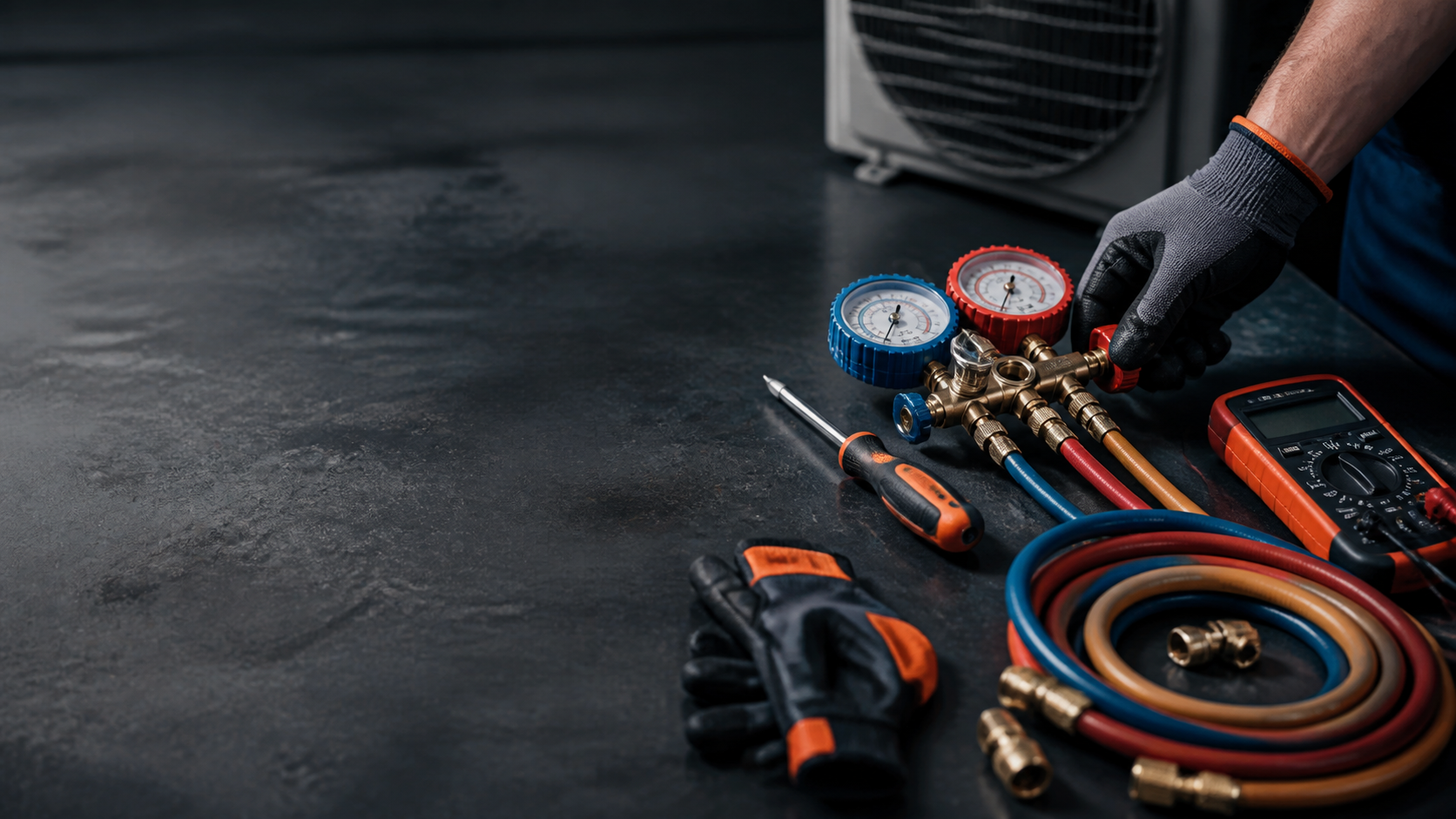
Diagnosis comes first
One symptom can come from a thermostat, an airflow restriction, an electrical condition, a drain problem, or the refrigerant circuit. A useful estimate ties the price to test results.
Access changes the work
A part in an open utility area is not the same job as one in a tight attic, crawlspace, or a ductless head on the wall. System type and duct condition move the scope too.
Repair or replacement
Repair fits an isolated failure on otherwise sound equipment. Compare replacement when the system ages, repairs repeat, energy use climbs, or comfort problems persist.
Why there is no single heat pump repair price
The symptom does not identify the failed part, and until it does, the price cannot be honest. Weak heating might be a $20 airflow problem or a major refrigerant failure.
Diagnosis time, parts, labor, refrigerant, access, and the condition of the surrounding equipment all end up in the quote. Ducted and ductless heat pumps add their own testing and access differences.
What protects you is a written scope attached to test results, not a number copied from a chart on the internet.
- The symptom does not identify the failed part by itself.
- Diagnosis, parts, labor, refrigerant, access, and equipment condition all affect the quote.
- Ducted and ductless heat pumps may need different testing and access work.
- A written scope beats an unexplained online number.
The main factors that change the cost
Start with diagnosis: someone has to test before anyone can price, and that time is part of the job.
Then the component itself and the labor to replace or repair it. The same part can carry very different labor depending on what surrounds it.
Access matters more than people expect: a component in an open utility area is not the same job as one in a tight attic, crawlspace, or concealed ductless head. System type, duct condition, and airflow can change the scope of what gets done.
Refrigerant work adds its own weight, and the refrigerant type, the equipment's age, and the condition around the unit all influence it. Timing is the last factor, and after-hours service is priced differently from a scheduled visit.
- Diagnosis and testing
- The failed component and the labor to replace or repair it
- Access, system type, duct condition, and airflow
- Refrigerant leak work, refrigerant type, equipment age, and the condition around the unit
Which symptoms should lead to a diagnosis?
Write down the mode, the thermostat display, the rooms affected, when it started, and anything you see or hear. Facts age better than impressions.
Check the thermostat setting, the filter, and the outdoor unit's clearance without opening any equipment. Do not open electrical panels, handle refrigerant, or keep resetting a tripping breaker.
Persistent ice, water, weak airflow, or operation that is simply wrong deserves professional diagnosis rather than another week of watching.
- Record the mode, thermostat display, rooms affected, start date, and anything you see or hear.
- Check the thermostat setting, filter, and outdoor unit clearance without opening equipment.
- Do not open electrical panels, handle refrigerant, or repeatedly reset a tripping breaker.
- Turn to professional diagnosis for persistent ice, water, weak airflow, or unusual operation.
What should happen during a heat pump repair visit?
The visit should open with the testing: what condition did the measurements actually find? That finding, not the symptom, drives the recommendation.
The recommendation should say which repair is proposed and exactly what it includes, from parts to labor to testing.
If the quote only papers over the symptom without touching the cause, that is worth knowing now rather than in six weeks.
On older equipment, ask for the options: what repair restores now, and what replacement would change. Both belong in writing.
- What condition did the testing find?
- Which repair is recommended, and what does it include?
- Does the quote address the cause or only a temporary symptom?
- What are the repair and replacement options if the equipment is older?
When does repair beat replacement?
Repair is reasonable when the failure is isolated and the rest of the equipment is in good condition. One broken part on a healthy system is a repair story.
Replacement earns the comparison when repairs repeat, energy use rises, or comfort problems persist no matter what gets fixed.
Age alone is a factor, not a verdict, and a single failure on a well-kept system proves nothing about next year.
On an older system, ask whether the recommendation is a repair, a retrofit, or full replacement, and compare what each option actually solves rather than only the first price.
- Repair is reasonable when the failure is isolated and the rest of the equipment is in good condition.
- Compare replacement when repairs repeat, energy use rises, or comfort problems remain.
- Ask whether an older-system recommendation is a repair, retrofit, or full replacement.
- Compare what each option solves, not only the first price.
What should Frederick homeowners check before hiring?
Ask for the Maryland HVACR license information relevant to the work. That is a fair question, and a fair company answers it without pausing.
Ask whether the technician handling refrigerant is certified to do so, since that work carries its own requirements. Confirm who performs the work and what the quoted scope includes.
Ask how the repair gets tested after completion. A company that plans its own verification is telling you how it works.
- Ask for the Maryland HVACR license information relevant to the work.
- Ask whether the technician handling refrigerant is certified to do so.
- Confirm who will perform the work and what the quoted scope includes.
- Ask how the repair will be tested after completion.
A practical next step in Frederick
Bring the model information, the symptom, the start date, the thermostat display, and the filter condition to the call. Add any water, ice, noise, or airflow observations.
Ask for diagnosis first and a written repair scope before approving work. On an aging system or one with repeat repairs, request both the repair and the replacement options.
That sequence, diagnosis, scope, then price, is what makes the number mean something.
- Bring the model information, symptom, start date, thermostat display, and filter condition.
- Share any water, ice, noise, or airflow observations.
- Ask for diagnosis first and a written repair scope before approving work.
- Request both repair and replacement options when the system is older or repairs repeat.
The order of operations
Test, then scope, then price. Any other order means someone is guessing with your money.
Keep each written scope with the unit's service history so the next decision starts from evidence.
- Diagnosis first. Always.
Answers to the usual follow-up questions
What is the cheapest heat pump repair?
There is no reliable cheapest repair until the system is tested, because the same symptom can sit behind a small electrical part or a major component. The honest path is diagnosis, then a scoped price.
Why is a reversing valve repair so expensive?
A reversing valve sits inside the refrigerant circuit, so the job involves refrigerant recovery, brazing, and time. The part plus the controlled refrigerant work is what moves the price.
Why is a reversing valve repair so expensive?Is ice on my heat pump a costly repair?
Not necessarily. Ice can come from airflow, drainage, defrost controls, or refrigerant conditions, and some of those are modest repairs. Testing decides what the ice costs.
Is ice on my heat pump a costly repair?Is it cheaper to repair or replace my heat pump?
It depends on the diagnosis, the equipment's age and condition, the repair scope, and your comfort history. Repair fits an isolated failure; replacement earns comparison when repairs repeat or comfort keeps slipping.
Why does an emergency heat pump repair cost more?
After-hours calls often carry different labor conditions, and the underlying repair does not shrink because it is late. Ask how the timing charge and the repair scope are priced separately.
How can I lower my heat pump repair cost?
Keep the filter fresh, the outdoor unit clear, and the maintenance current, and treat small symptoms early before they grow. Then ask for diagnosis and a written scope so you pay for the actual repair, not a guess.