Why Is My AC Running All Day in Frederick? Causes and Next Steps
If your AC is running all day in Frederick, the clock alone does not tell you whether something is wrong. A very hot afternoon can keep a properly working system running for long cycles as it moves heat out of the house.
The better question is whether the home is reaching the thermostat setting, whether the air coming from the registers feels cool, and whether anything unusual is happening around the equipment.
If the system runs continuously while the house stays warm, airflow feels weak, ice forms, water appears, or the thermostat does not respond, treat the pattern as a troubleshooting clue. An AC diagnosis can separate a simple issue from an equipment problem.
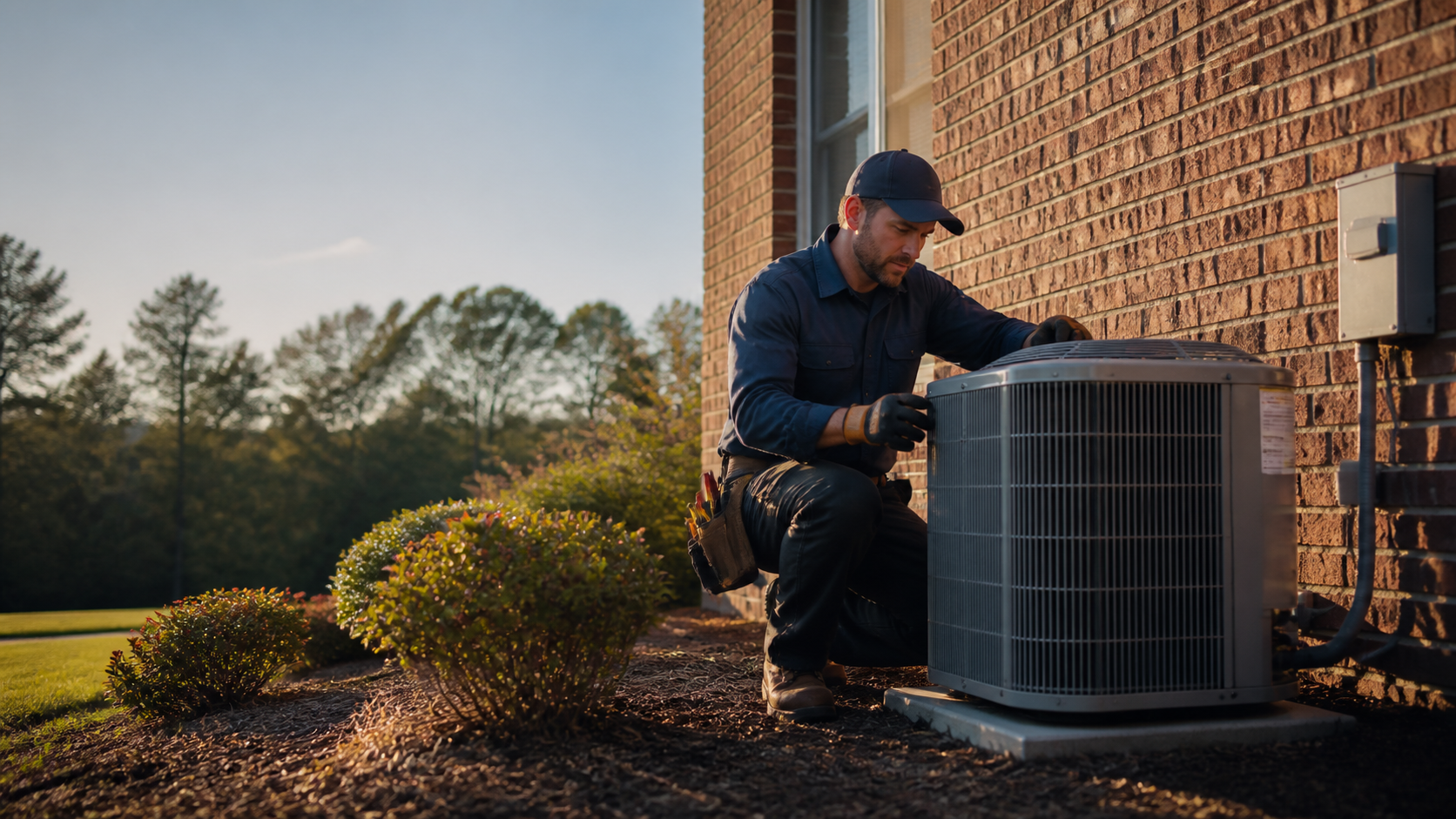
May be normal
A hot, humid afternoon can create long cycles. If the home holds the thermostat setting, the air from the registers feels cool, and the system eventually cycles off, it may simply be carrying a heavy load.
Schedule a diagnosis
If the house stays warm, airflow is weak, one room falls behind, humidity rises, or the system never improves comfort after several hours, the run time is a useful repair clue.
Have these details ready
Note the thermostat setting, actual indoor temperature, airflow strength, when the long run began, whether you see ice or water, and whether the problem affects the whole home or only certain rooms.
Is it normal for an AC to run all day during a heat wave?
Sometimes. An air conditioner moves heat from inside the home to the warmer outdoor air.
The hotter the afternoon and the more heat entering the house, the longer the system may need to run.
A long cycle is less concerning when the indoor temperature is holding near the thermostat setting, the air from the registers is cool, and the system eventually cycles off. Continuous operation becomes more concerning when the temperature keeps climbing or the system has not improved comfort after several hours.
Look at the pattern rather than trying to name a failed part. Is one room warm while the rest of the house is comfortable?
Is airflow weaker than usual? Did the change start after a filter change, thermostat change, storm, or unusually hot day?
Those details help narrow the next step.
- Holding the thermostat setting during peak heat usually means the system is carrying a heavy load.
- A house that keeps warming while the AC runs means cooling is falling behind.
- Run time by itself does not prove that a part has failed.
- Comfort, airflow, and the change from the usual pattern matter more than the clock.
What can I check safely before calling for AC repair?
Keep the inspection limited to things you can observe or adjust without opening the equipment. Confirm that the thermostat is in cooling mode, the fan setting is what you expect, and the displayed temperature seems believable.
A thermostat that reads the room incorrectly can make the system appear to run constantly.
Then check the filter. A clogged filter restricts airflow and reduces the system's ability to cool effectively.
Use the correct size and type for your equipment. Walk through the home and make sure return grilles and supply registers are not blocked by furniture, rugs, or closed doors.
Compare airflow in a comfortable room with airflow in the warmest room. Check the outdoor unit visually for leaves, grass, or other debris that could obstruct it, but do not remove panels or reach into the cabinet.
Also look for water around the indoor equipment and ice on the refrigerant lines or coil area.
If you see active water, protect nearby belongings and arrange service rather than dismantling the drain pan or air handler. If you see ice, turn cooling off and arrange professional help.
- Confirm thermostat mode, fan setting, and displayed temperature.
- Replace a visibly clogged filter with the correct size and type.
- Open blocked supply registers and clear furniture or rugs from returns.
- Look for outdoor debris, water, or ice without opening equipment.
- Do not handle refrigerant, wiring, panels, or a drain line.
What causes an AC not to shut off?
The same symptom can come from several conditions, so run time alone does not prove a failed part. Restricted airflow is one possibility: a dirty filter, blocked return, closed register, blower problem, or duct restriction can keep the system from delivering enough cooling to the rooms.
Dirty evaporator or condenser coils can reduce cooling ability and make the system run longer. Refrigerant is another possibility, especially when the air is not cooling well or ice appears.
Low refrigerant may indicate a leak, and adding refrigerant without finding the cause does not solve the underlying problem.
The thermostat may be misreading the room, or the house may be gaining more heat than the system can remove. Duct leakage, poor connections, insulation gaps, strong sun through windows, and an undersized or aging system can all change the load.
The right diagnosis considers the equipment and the home together.
- Restricted airflow from filters, returns, registers, blowers, or ducts.
- Dirty coils that cannot transfer heat effectively.
- Low refrigerant or a leak, especially when ice or weak cooling appears.
- A thermostat reading, duct, insulation, sizing, or heat-gain problem.
- A part failure that needs testing instead of a guessed replacement.
Which signs mean the long run time is a repair problem?
Use the symptoms to decide how quickly to move. If the system runs for hours but the house reaches the setting and the air feels cool, monitor it and schedule maintenance if the pattern is new or worsening.
If the house stays warm, supply airflow is weak, or only certain rooms are uncomfortable, schedule an AC diagnosis. Record the thermostat setting, indoor temperature, outdoor conditions, and which rooms are affected.
If you see ice, turn the cooling system off. Ice can be associated with restricted airflow or a low refrigerant charge, and continuing to run the system can compound the problem.
If water is pooling around the indoor unit, address it before it reaches flooring, drywall, or stored belongings.
If the thermostat is blank, the system trips a breaker repeatedly, or you smell burning from the equipment, stop resetting it and seek qualified service. Do not open electrical panels or handle wiring.
If you smell gas or a carbon monoxide alarm goes off, leave the house and call 911 from outside.
- Monitor a long cycle that holds the thermostat setting and delivers cool air.
- Schedule diagnosis for a warm house, weak airflow, uneven rooms, or rising humidity.
- Turn cooling off for ice or active water and protect nearby belongings.
- Stop resetting equipment after repeated breaker trips or a burning smell.
- Leave first for gas odor or a carbon monoxide alarm, then call 911 from outside.
Could the house or ductwork be making the AC run longer?
Yes. The air conditioner may be operating normally while the house loses cooled air or gains heat faster than expected.
Duct losses can come from leaks, holes, or poor connections. Attic insulation, air sealing, window solar gain, and rooms added or remodeled over time can also affect comfort.
If one room is always warmer, a duct or insulation issue may deserve attention. If the system cools downstairs but not an upper floor, compare airflow and look at the location and condition of the ductwork.
If the thermostat is satisfied but a room still feels uncomfortable, the equipment may not be the only issue.
A home may also be asking more of the system than it can remove during the hottest part of the day. Note whether the problem appears only in the afternoon, whether the house recovers later, and whether large temperature changes make the system work harder.
- One warm room can point to duct, return, insulation, or air-sealing problems.
- Upper floors may fall behind when attic heat and duct losses combine.
- Afternoon-only problems can reflect the home's heat load rather than one failed part.
- A diagnosis should check the house and ductwork as well as the equipment.
Should I repair an AC that runs all day or replace it?
Start with a diagnosis. Long run time does not prove that replacement is necessary, and an older system does not make every repair a bad decision.
The choice depends on what failed, the system's condition, repair history, safety, efficiency, and whether duct or insulation problems would remain after a new outdoor unit is installed.
If an older system uses R-22, that fact alone does not require replacement. Identify the equipment and ask what repair options are available.
Do not buy an unapproved substitute or attempt a refrigerant recharge yourself.
For a healthy system that maintains temperature, maintenance may be the right next step. For a system that runs all day and leaves the home warm, a diagnosis should look at airflow, thermostat operation, coils, refrigerant, drainage, ductwork, and the home's heat load.
- Ask what failed and what the testing showed before discussing replacement.
- Consider repair history, safety, efficiency, and the condition of the rest of the system.
- Do not replace equipment solely because it uses an older refrigerant.
- Fixing ducts, drainage, or airflow may matter even after equipment replacement.
What should I tell the technician when I call?
Describe what the system is doing instead of naming the repair you think it needs. Share the thermostat setting, actual room temperature, when the long run started, whether airflow changed, whether there is ice or water, and whether the problem affects the whole house or only certain rooms.
Also mention whether the pattern began suddenly or built as the weather warmed. That helps separate a load problem from a new equipment problem.
If a filter change, thermostat change, storm, outage, or recent service came first, include that detail.
A useful visit ends with the long run time explained. Ask what was checked and why the recommended repair addresses it.
That gives you a clearer repair-versus-replace decision based on the actual condition of the equipment and the home.
- Thermostat setting compared with the actual indoor temperature.
- How long the system runs without a break and when the pattern began.
- Whether airflow is cool, weak, or different from room to room.
- Any ice, water, humidity change, unusual smell, or repeated breaker trip.
- Whether the issue affects the whole home or only certain rooms.
When the long run is just the weather
Ninety-six degrees with humidity, sun on the west wall, and a system that holds its setting and finally cycles off at dusk — that's a heat wave, not a repair ticket. The equipment is simply doing a bigger job than usual.
Note the days it happens. If the pattern matches the forecast and the house stays comfortable, the clock on the side of the unit isn't counting down to anything.
- Setting held, cool air at the registers, cycle ends at night — normal.
Answers to the usual follow-up questions
Is it bad for my AC to run all day during a heat wave?
Not always. A properly working AC can run for hours during a Frederick heat wave while it holds the temperature you set. It becomes a concern when the house keeps warming, airflow turns weak, humidity rises, or ice appears.
How can I tell if my AC is keeping up or falling behind?
Compare the thermostat setting with the actual indoor temperature. If the home stays near the setting and the register air feels cool, the system is keeping up. If the temperature climbs for hours and never recovers, cooling is falling short.
How can I tell if my AC is keeping up or falling behind?Why does my AC run nonstop in the afternoon but rest in the morning?
Afternoon heat, sun through the windows, and humidity push the home's load higher. A system may keep up in the morning and fall behind later, especially when airflow, refrigerant, ductwork, or sizing is already marginal.
Will running my AC all day spike my electric bill?
Long runtime during a heat wave raises energy use, which is expected when the AC is keeping up. A sharp increase paired with poor cooling is different: it means the system is using power for hours without holding the temperature and needs diagnosis.
Will running my AC all day spike my electric bill?Should I turn my AC off to give it a rest during a heat wave?
If the system is holding the temperature, there is no need to turn it off just to give it a rest. If you see ice or the air turns warm, turn cooling off, set the fan to AUTO, and check the filter and vents before running it again.
Could my AC just be too small for my home?
Sometimes. A system can hold temperature in mild weather and fall behind only during the hottest afternoons because of sizing, long ducts, weak returns, insulation, or air leakage. A technician can measure airflow and the home's load before suggesting a larger unit.