AC Contactor Repair Cost Factors and Electrical Symptoms
If you are searching for AC contactor repair cost, you probably want a straight answer before approving work. The hard part is that a contactor is only one possible cause of an air conditioner problem, and the part itself is not the whole repair. A fair quote may include diagnosis, the correctly matched component, labor, inspection of related electrical parts, and testing after the repair.
That is why a responsible HVAC company should diagnose the failure before giving you a firm repair recommendation. A part-only number from a generic listing cannot tell you whether the contactor fits your equipment, whether the control signal is reaching it, or whether a capacitor, wiring problem, breaker, compressor, or condenser fan is involved.
The useful answer starts with what your system is doing right now: whether the indoor blower runs, whether the outdoor unit is silent or buzzing, and whether the equipment keeps running after the thermostat stops asking for cooling. Those details separate a contactor symptom from the bigger electrical and mechanical problems that can wear the same disguise.
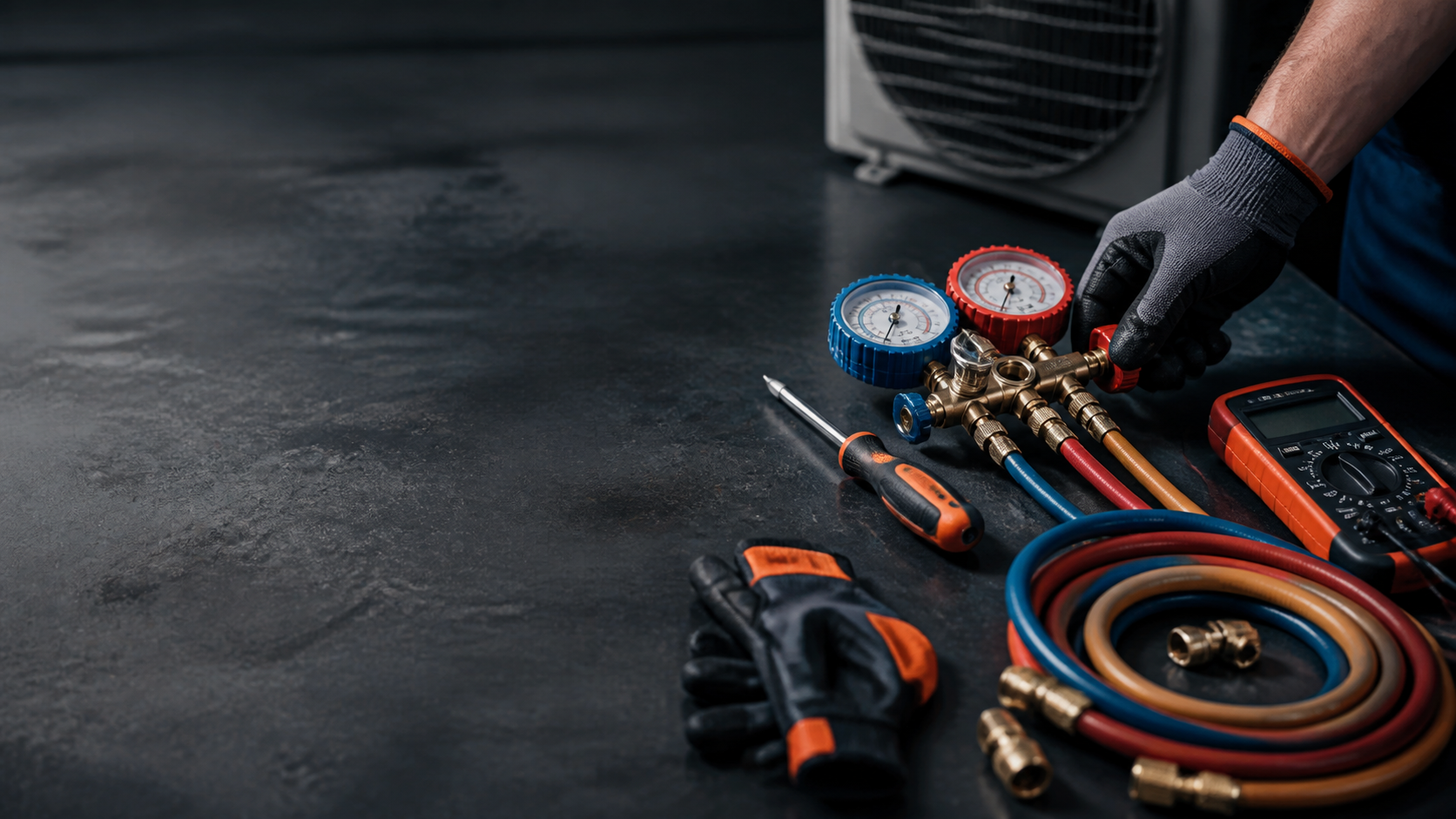
What the contactor does
A low-voltage thermostat signal energizes the contactor coil, and the contacts close the higher-power circuit feeding the outdoor components.
Bad contactor symptoms
The indoor fan may run while the outdoor unit stays silent, buzzes, or starts intermittently. A stuck contactor can keep the outdoor equipment running after the call for cooling ends.
What moves the quote
Diagnosis, the correctly matched part, labor and access, related electrical faults, the condition of the rest of the AC, and testing after the repair all affect the work.
What does an AC contactor do?
An AC contactor is an electrically controlled switch. In a typical central air conditioner, a lower-voltage control signal energizes the contactor coil.
The contacts then close a higher-power circuit that feeds major outdoor components.
In homeowner terms, the contactor is the handoff between the thermostat's request for cooling and the outdoor unit's power circuit. If that handoff does not happen, the indoor blower may run while the outdoor condenser stays quiet.
If the contacts stick closed, the outdoor equipment may keep running after the thermostat is satisfied.
The contactor is not a universal explanation for every AC failure. The thermostat, control wiring, disconnect, breaker, capacitor, fan motor, compressor, airflow, and refrigerant circuit can all affect what you see.
That is why replacing a part based on a sound or a search result can leave the actual problem unresolved.
- The contactor switches a higher-power circuit for the outdoor AC components.
- A thermostat control signal tells the contactor when cooling is requested.
- A contactor problem can leave the indoor blower running while the condenser stays off.
- A stuck contactor can keep the outdoor equipment running after the thermostat is satisfied.
What are the signs of a bad contactor?
The phrase bad contactor symptoms usually describes a pattern rather than one unmistakable sign. A professional diagnosis becomes more focused when you can describe what the indoor and outdoor equipment are doing.
The first group can happen when a contactor is not closing, but it can also point to a missing control signal, a power interruption, a capacitor problem, or a motor or compressor issue. A unit that will not start is a symptom, not proof that the contactor is the failed part.
The last two symptoms need extra care. A compressor contactor welded closed can keep an AC unit running with constant power.
A unit that will not shut off is not a reason to open the panel and inspect the switch yourself.
- The indoor fan runs, but the outdoor AC unit does not start.
- The thermostat asks for cooling, but the condenser is silent.
- The outdoor unit makes a buzzing or humming sound without starting normally.
- The AC starts intermittently, then fails to start on another cycle.
- The system blows warm air because the outdoor refrigeration cycle is not operating.
- The outdoor unit keeps running after the thermostat stops asking for cooling, or the breaker trips when the system tries to start.
What makes AC contactor repair cost vary?
Contactor replacement cost in Frederick can vary because the work is not always the same from one house to the next. A complete quote may account for several separate questions, starting with whether the contactor is actually the failed part.
A technician may need to determine whether the contactor is receiving the right control signal, whether its contacts are opening and closing correctly, and whether another fault caused the symptom. A contactor that looks worn is not automatically the root cause of a no-cooling problem.
The replacement also needs to match the equipment. Electrical ratings, configurations, model, voltage, load, terminals, and the design of the outdoor unit can affect part selection.
A burned connection, damaged wire, weak capacitor, failed disconnect, repeated breaker trip, or motor problem can change the work required.
An installed repair includes more than handing over a component. The service process may include safe power isolation, access to the equipment, removal and installation, inspection of connections, and a test of the system after the work.
The rest of the AC matters too: repeated failures, rising energy bills, poor comfort, humidity, noise, or major component concerns may call for a broader evaluation.
- Diagnosis confirms whether the contactor is the failed part.
- The replacement must match the equipment's electrical requirements.
- Related wiring, capacitor, disconnect, breaker, motor, or compressor problems can expand the work.
- Access, safe power isolation, installation, inspection, and post-repair testing belong in the conversation.
- The condition of the rest of the system can change whether repair is the sensible choice.
What should a clear repair quote include?
When you ask about AC contactor repair cost, ask for enough detail to compare the recommendation with the actual problem. A clear explanation walks from the symptom to the test to the proposed part to the work included in the price.
Ask which symptom was diagnosed and what test confirmed the cause. The recommendation may be to repair the contactor, repair another part, or complete more diagnosis.
The quote should also make clear whether diagnosis and post-repair testing are included or billed separately.
If the system is older or has had repeated repairs, ask what a replacement evaluation would add. That explanation should cover what is failing, what a repair would address, what it would not, and why the equipment's condition changes the math.
- What symptom was diagnosed, and what test confirmed the cause?
- Is the recommendation to repair the contactor, repair another part, or complete more diagnosis?
- What contactor is being proposed, and is it matched to the equipment?
- Does the amount include the part, labor, access, and post-repair testing?
- Were damaged wires, a capacitor, a disconnect, or another electrical fault found?
- Is the system safe to operate while you decide, or should it remain off? If the system is older or has repeated repairs, what would a replacement evaluation add?
What can I safely check before calling for service?
You can collect useful information without opening the outdoor electrical compartment. Check that the thermostat is set to cooling with the target below the room temperature.
Look at the air filter and replace it only if you know the correct size and type for your system. Check whether a breaker appears tripped if you are comfortable observing the panel.
Do not remove the condenser panel, press the contactor, bridge terminals, test live wiring, or handle a capacitor. A capacitor can hold a high-voltage charge even after power is off.
If a breaker trips again immediately, stop resetting it. Burning odors, smoke, visible electrical damage, or ice also change the situation.
Turn the system off if you can do so safely and arrange professional help.
Refrigerant work is another firm boundary. Do not attempt to add refrigerant or troubleshoot a leak yourself.
- Note whether the indoor blower runs and whether the outdoor unit is silent, buzzing, or running.
- Check the thermostat setting, filter, and breaker only from a safe position.
- Keep the outdoor electrical compartment closed.
- Do not press the contactor, bridge terminals, test live wiring, or handle a capacitor.
- Stop resetting a breaker that trips again and arrange professional help.
Should I repair the contactor or replace the AC system?
A contactor problem by itself does not automatically mean the whole air conditioner needs to be replaced. The sensible decision depends on the system's age, maintenance and repair history, comfort, efficiency, and the condition of larger components.
A straightforward electrical repair may be a reasonable way to restore cooling when the rest of the system is operating well. Replacement earns a harder look when the contactor issue arrives with frequent breakdowns, steadily rising bills, poor comfort in several rooms, persistent humidity, loud operation, or another major repair.
Even then, ask for the findings behind the recommendation. Anyone steering you toward a new system should be able to explain what is failing, what a repair would fix, what it would leave broken, and why the equipment's condition tips the choice.
- A contactor problem alone does not automatically require system replacement.
- Age, repair history, comfort, efficiency, and larger components affect the decision.
- Frequent breakdowns, rising bills, poor comfort, humidity, noise, or another major repair justify a broader evaluation.
- Ask for the evidence behind any replacement recommendation.
What should I ask an HVAC company in Frederick County?
For a home in Frederick, Urbana, Walkersville, Middletown, New Market, Mount Airy, Ballenger Creek, or another Frederick County community, start with the symptom you can observe: 'The indoor fan runs, but the outdoor unit is silent,' or 'The AC keeps running after the thermostat stops.' Include when it started and whether the problem is constant or intermittent.
Then ask the HVAC professional to explain the diagnosis, the recommended contactor or other part, the work included in the quote, and any related condition that affects the repair decision. You do not need to guess the part name or agree to a system replacement before you understand the evidence.
That approach gives you a more useful answer than a generic AC contactor repair cost number. You get a diagnosis tied to your equipment, a repair scope you can evaluate, and a clear next step for getting the house comfortable again.
- Describe the observable symptom rather than guessing the failed part.
- Ask what test supports the diagnosis.
- Ask what the quote includes and whether related electrical problems were found.
- Ask whether the system is safe to operate while you decide.
The one-sentence version of what it does
If you remember nothing else: the thermostat asks, the contactor answers, and the outdoor unit gets power. When the asking and the answering fall out of sync — silent unit, buzzing unit, or a unit that won't quit — that switch is one of the first things worth testing.
Knowing that much keeps the service call grounded in how your equipment actually behaved.
- Thermostat asks, contactor answers, outdoor unit runs — that's the chain.
Answers to the usual follow-up questions
How much does it cost to replace an AC contactor?
There is no single useful number without testing the system. The quote can include diagnosis, the correctly matched contactor, labor, access, inspection of related electrical parts, and post-repair testing. Ask for a written quote tied to your equipment before approving work.
What are the symptoms of a bad AC contactor?
A silent outdoor unit while the indoor fan runs, a buzzing or humming unit that will not start, intermittent starting, warm air, or an outdoor unit that keeps running after the thermostat stops can all be contactor symptoms. They can also point to a capacitor, wiring, power, motor, compressor, or control problem, so testing matters.
What are the symptoms of a bad AC contactor?Can I replace an AC contactor myself?
Do not. The contactor is part of a high-voltage outdoor unit, and a nearby capacitor can hold a dangerous charge even after power is off. Keep the panel closed, note the symptom, and arrange professional service.
Why did my new contactor fail again so fast?
A repeat failure can point to an unresolved problem elsewhere, such as a control, wiring, capacitor, motor, compressor, or another electrical fault. Ask the technician to test why the first contactor failed instead of replacing the part without checking the cause.
Is a failing contactor an emergency?
A contactor symptom is not automatically an emergency, but lost cooling can become urgent when heat creates a safety risk for people in the home. Do not open the equipment to investigate. If there is smoke, burning odor, visible electrical damage, or a breaker that trips again, turn the system off if safe and arrange professional help.
Should I replace the capacitor at the same time?
Only if it tests weak or is otherwise shown to be part of the problem. A contactor symptom can overlap with a capacitor failure, but a healthy component does not need replacement simply because the contactor failed. Ask what was tested and why the additional work is recommended.