AC Clicking Sounds
Relay, Contactor, and Control Board Trouble Signs
A clicking sound from the AC can be normal or an early warning. The difference is in the timing. One click as cooling starts is the system doing its job. Repeated clicking, or clicking that ends with no cooling, is the system trying to start and failing.
Most clicks come from electrical switches. These small parts connect and disconnect power to the compressor and fans. When one weakens, the click can turn into a rapid clatter, a click with no cooling, or a click that trips the breaker.
Here is what normal clicking sounds like and what trouble adds to it. You will learn the few safe checks and how to describe the sound so the repair visit starts at the right test.
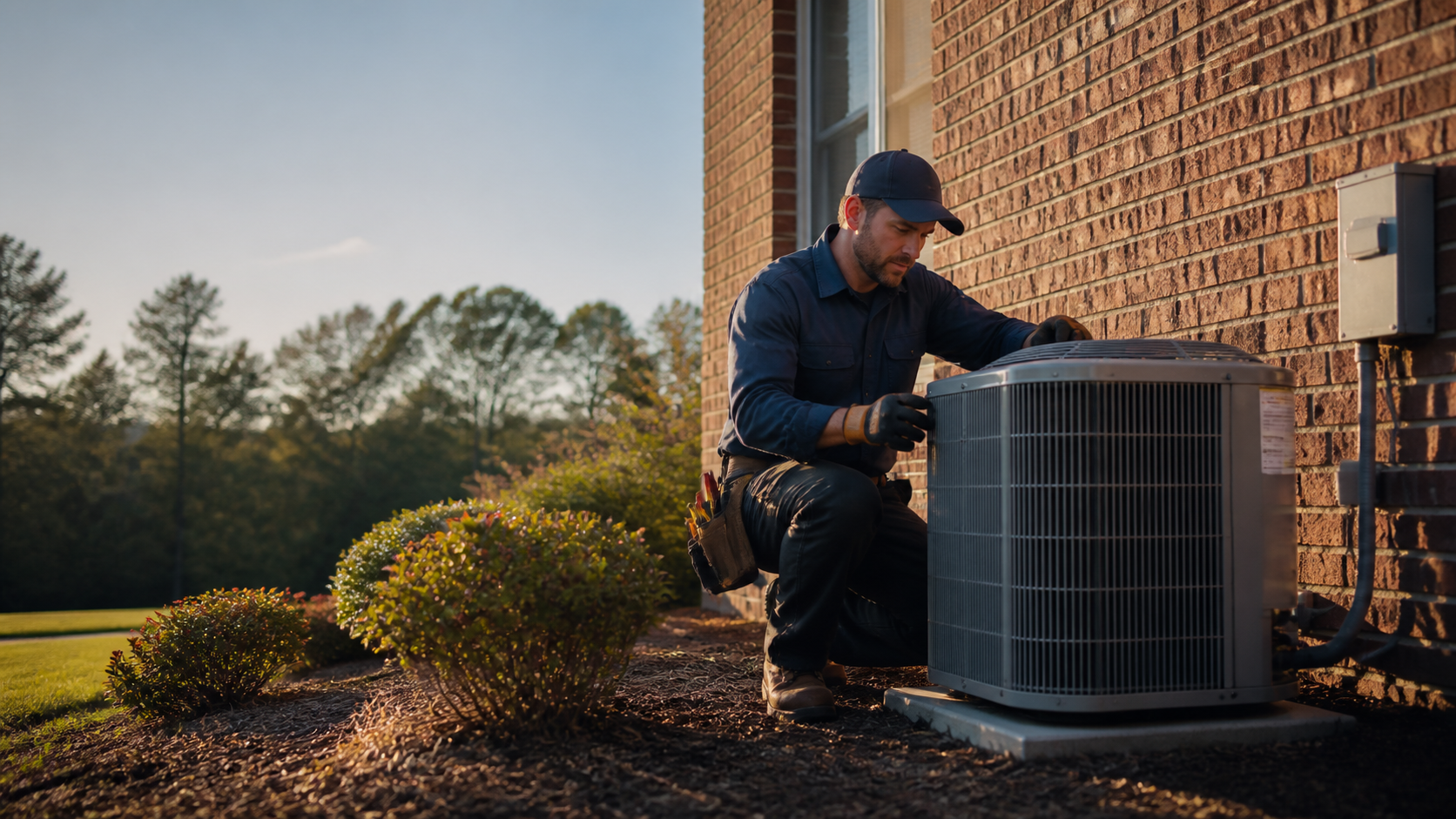
Check first
Note when the clicking happens and whether cooling follows. Set the thermostat to COOL below room temperature. Check the filter. One click at startup with normal cooling is usually nothing to worry about.
Stop here
Stop for rapid or constant clicking, a click with no cooling, a burning smell, or a breaker that trips. Do not open the electrical compartment, touch the contactor or capacitor, or push-start a fan. Those carry real electrical risk.
What to tell us
Where the click comes from. How often it repeats. Whether cooling follows. Any burning smell or breaker trip. When it started. That pattern tells us more than guessing whether it's the contactor or the capacitor.
The short answer first
Almost every click in an AC comes from an electrical switch opening or closing. When the thermostat asks for cooling, small parts connect power to the compressor and fan motors, and that connection makes a click.
One clean click, then the system humming to life, is exactly what should happen.
Trouble shows up when the click stops leading to a running system. A part that can no longer make a clean connection will click and release, click and release.
So you hear repeated or rapid clicking while the AC never settles into cooling. The switch is the same.
It just is not holding.
Note the pattern. One startup click with cooling is normal.
Rapid clicking, a click with no cooling, or clicking that ends in a breaker trip points at a failing switch. Those sealed electrical parts belong to a tech, so your job is to listen and describe, not to open anything.
- Most AC clicks are electrical switches connecting power.
- One clean click into a running system is normal.
- Repeated or rapid clicking means a switch is not holding.
- The pattern of the click points at the cause better than a guess.
Normal clicks you can ignore
Not every click is a problem, and chasing the harmless ones wastes a service call. One click when cooling starts and another when it stops are the normal sound of the system switching power on and off.
If a clean click leads into the hum of the outdoor unit and cold air follows, the clicking is just the system working.
The thermostat clicks too. Many thermostats make a soft click as they call for cooling or heating, and a relay inside the air handler makes a similar sound.
These are quiet and occasional, and the system always responds. That is very different from a steady clatter.
The way to tell normal from trouble is to pair the click with the result. Click, then cooling, then quiet running is normal.
Click with nothing, click repeating without the system catching, or clicking with a burning smell or a tripped breaker is worth a call. Noticing that pairing is the most useful thing you can do.
- One click at start and stop is normal switching.
- Thermostats and air-handler relays click softly and occasionally.
- Normal clicks are always followed by the system running.
- Pair the click with the result to tell normal from trouble.
The contactor: clicking that does not start the unit
The contactor is the heavy-duty switch that connects power to the outdoor unit. It takes a beating every cooling cycle through hot Frederick summers, and over time the contacts can pit, stick, or burn.
When that happens, the contactor clicks but cannot pass clean power, so the unit clicks without truly starting.
The telltale sign is a click at the outdoor unit with no hum and no spinning fan, or a click followed by a brief struggle and then silence. Sometimes the contactor chatters, a rapid series of clicks, as it tries and fails to hold.
That chatter wears it faster.
A failing contactor is not a homeowner repair. It sits inside the electrical compartment next to the capacitor, which holds a charge, and working there carries real shock risk.
The safe move is to note the click-with-no-start pattern at the outdoor unit and let a tech test the contactor and the rest of the starting circuit.
- The contactor is the main power switch for the outdoor unit.
- Pitted or stuck contacts click without passing clean power.
- A click with no hum or no fan spin is the telltale sign.
- The contactor sits by the charged capacitor. Tech only.
Relays and the capacitor: rapid clicking and failed starts
Relays are the smaller switches that route power inside the system. A weak relay can click rapidly as it fails to hold.
Rapid, machine-gun clicking often means a switch is energizing and dropping out over and over, unable to make a connection that lasts long enough to start a motor.
The capacitor often sits behind that pattern even though it does not click itself. The capacitor gives the compressor and fan the jolt they need to start.
When it weakens, the motor cannot get going, so the contactor or relay keeps trying and clicking while nothing turns. A humming outdoor unit with a still fan, plus clicking, often points here.
Both the relay and the capacitor live in the electrical compartment, and the capacitor can hold a dangerous charge even with the power off. This is no-touch territory.
A tech can test the capacitor and the relays together, because rapid clicking, a failed start, and a humming-but-still fan are usually one connected story.
- Rapid clicking means a switch keeps dropping out.
- A weak capacitor can stop the motor from starting at all.
- A humming unit with a still fan plus clicking points at the capacitor.
- Relays and capacitors carry a charge and stay sealed. Never touch them.
The control board: erratic clicking and confused behavior
The control board is the system's traffic director. It tells each part when to switch on, and a failing board makes some of the most confusing clicking.
Relays on the board can click erratically, fire in the wrong order, or push the system into behavior that does not match what the thermostat asked for.
The signs are less about one stuck part and more about inconsistency. Cooling that starts and stops at random, clicking that does not line up with the thermostat, or a system that acts different from one cycle to the next can point at the board.
That is different from a stuck contactor or capacitor. It is the cause that makes the system seem to have a mind of its own.
A control board needs a real diagnosis, not a guess, and it is not a homeowner part. Boards can fail in ways that mimic other faults, so a tech rules out the simpler switches first and tests the board's outputs before condemning it.
That order matters, because replacing a board to fix an actual contactor problem wastes money.
- The control board sequences when each part switches on.
- Erratic clicking out of step with the thermostat can point at the board.
- Random start-stop cycling is a board-style symptom.
- A tech rules out simpler parts before condemning the board.
When clicking comes with a breaker trip or burning smell
Clicking turns from a comfort problem into a safety one the moment it pairs with electrical warning signs. A click that ends with the breaker tripping, a burning or hot-plastic smell near the unit, or visible scorching means stop and call — do not try again.
Reset a tripped breaker once and watch. If it trips again, especially with clicking or any smell, stop resetting it.
Repeated trips signal an electrical fault, and forcing power back to a faulting circuit risks the equipment and the home. This is the clearest line between a homeowner check and a hands-off situation.
These signs do not mean panic. They do mean shut the system off and call rather than keep listening to it click.
A scorched contactor, an arcing relay, or a shorted board is an electrical repair. The safe role is to cut power at the thermostat, leave the breaker off if it keeps tripping, and let a tech open the compartment.
- Clicking plus a breaker trip or burning smell means stop.
- Reset a tripped breaker once. Do not reset it repeatedly.
- A hot-plastic smell or scorching is an electrical repair, not a retry.
- Cut power and call rather than keep running a clicking, tripping unit.
The safe checks before you call
A few things are safe to check, all of them outside the electrical compartment. Set the thermostat to COOL below room temperature, since a system being told to cycle on and off can click without any part being faulty.
Replace the battery if the thermostat screen looks off, because power glitches can cause odd switching.
Check the filter and airflow too. A system that starts and stops every few minutes (short cycling) because of a choked coil can click more than normal.
Clearing a dirty filter or a blocked return sometimes settles clicking that came from all that cycling. Give it a full cooling cycle to judge.
Stop at the cabinet door. Do not open the electrical compartment to find the clicking part.
Do not touch the contactor or capacitor. Do not push-start a stalled fan with a stick.
That is both dangerous and useless once a part has failed. Listening, locating the sound, and noting the pattern is the full safe role.
- Confirm the thermostat is on COOL below room temperature.
- Replace the thermostat battery if the screen looks off.
- Clear a dirty filter or blocked return that may cause cycling.
- Never open the electrical compartment or push-start a fan.
What the visit should test
A good visit traces the sound to a tested part instead of swapping the obvious one. Expect the tech to test the capacitor, check the contactor's contacts and coil, and inspect the relays and control board outputs.
They should measure whether the compressor and fan draw the current they should when the switch closes.
Those tests tell apart causes that click alike. A pitted contactor, a weak capacitor, a failing relay, and a faulty control board can all make clicking with a failed start.
The right repair depends on which one the tech finds. Ask what the tech tested and what the readings showed before approving a part, especially the control board.
If the visit jumps quickly to replacing the board or the whole system, slow down and ask why. A clicking AC is often a contactor or capacitor, among the more straightforward repairs.
That is a very different decision than a dead compressor in an aging system. You deserve the reasoning that connects the test to the recommendation, in plain words.
- Expect capacitor, contactor, relay, and control-board testing.
- Expect current readings on the compressor and fan at start.
- Ask which test result points to the part.
- Slow down if the visit jumps to a board or full replacement.
What to do while you wait
While you wait, stop making the system retry a failed start. Repeated clicking with no cooling means a part is straining, and cycling power again and again can wear the contactor faster or stress the compressor.
If the unit only clicks without running, turn cooling off at the thermostat rather than letting it clatter.
Keep the house livable with simple steps in the Frederick heat. Close the blinds on the sunny side.
Run ceiling fans to move air. Hold off on the oven and dryer while the AC is struggling through the hottest part of the day.
These do not fix a switch, but they hold comfort until the visit.
Leave the equipment in its safest state. Do not open the electrical compartment.
Do not reset a breaker that keeps tripping. Do not push-start the fan.
Keep the area around the outdoor unit clear so the tech can reach the electrical access fast, and note the clicking pattern while it is fresh.
- Turn cooling off if the unit only clicks without running.
- Close blinds, run ceiling fans, and skip the oven and dryer midday.
- Do not open the compartment, reset a tripping breaker, or push-start the fan.
- Keep the outdoor unit area clear and note the clicking pattern.
What to tell us when you call
Describe the sound and its result before guessing at a part. Saying "the outdoor unit clicks every few seconds but the fan never spins and there is no cooling" tells us far more than "I think the contactor is bad."
The specifics that separate a contactor problem from a control-board one are worth including. Where the click comes from: the outdoor unit, the indoor air handler, or the thermostat.
How often it repeats. Whether cooling follows.
Whether the outdoor fan spins. When it started.
If it began after a storm or a power blip, say so, because power events stress switches.
If the clicking comes with a warning sign, lead with that. A burning smell, a breaker that keeps tripping, or scorching moves the situation from a comfort repair to an electrical one.
Safety details always come first when you call.
- Lead with the sound and whether cooling follows it.
- Say where the click comes from and how often it repeats.
- Note whether the outdoor fan spins and when it started.
- Flag any burning smell or breaker trip first.
Answers to the usual follow-up questions
Is it normal for my AC to click when it turns on?
Yes. One click as cooling starts and another as it stops are normal switching sounds, and a clean click that leads into the unit running is nothing to worry about. Repeated or rapid clicking, or a click that never leads to cooling, means trouble. That points at a failing switch.
Why does my AC click but not turn on?
A click with no start usually means a switch cannot make a clean connection, most often a pitted contactor or a weak capacitor that cannot start the motor. These live in the charged electrical compartment, so the safe step is to note the pattern and have a tech test them.
Why does my AC click but not turn on?What does rapid clicking from my AC mean?
Rapid, repeated clicking usually means a relay or contactor is energizing and dropping out over and over because it cannot hold, often because a weak capacitor will not let the motor start. Turn the system off and call rather than letting it keep clattering.
Is a clicking AC dangerous?
Clicking by itself is usually an electrical-repair issue, not an emergency. But clicking with a burning or hot-plastic smell, visible scorching, or a breaker that keeps tripping is a safety concern. Cut power, stop resetting the breaker, and call rather than keep running it.
Could clicking just be my thermostat?
Yes. Many thermostats and air-handler relays make a soft click when calling for cooling, and that is normal when the system responds. A dead battery or a system that keeps starting and stopping can also cause extra clicking, so check the thermostat setting and the filter before assuming an outdoor-unit fault.
Could clicking just be my thermostat?What details help most when my AC is clicking?
Keep it plain. Tell us where the click comes from, how often it repeats, whether cooling follows, whether the outdoor fan spins, and any burning smell or breaker trip. Those details help us send the right tech with the right parts.